Playbooks
Singleback
OffenseExample Plays from Singleback


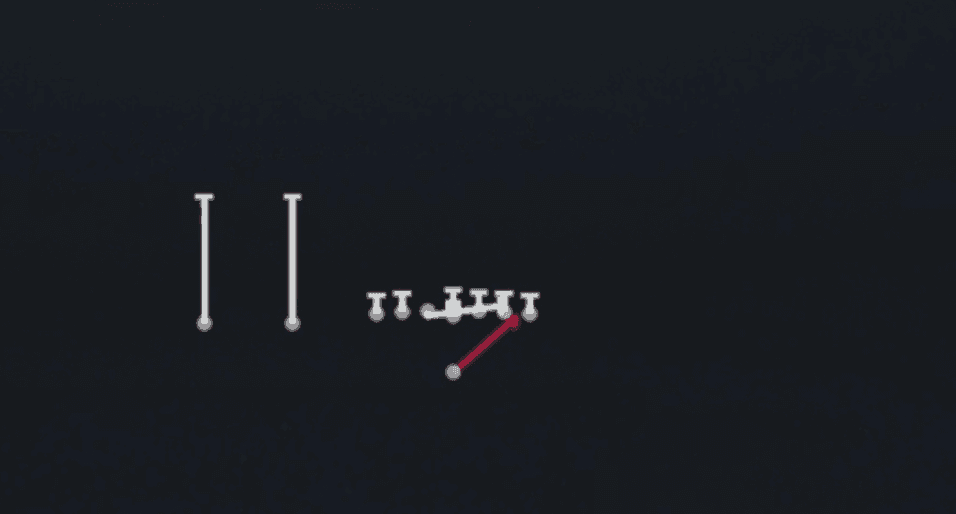


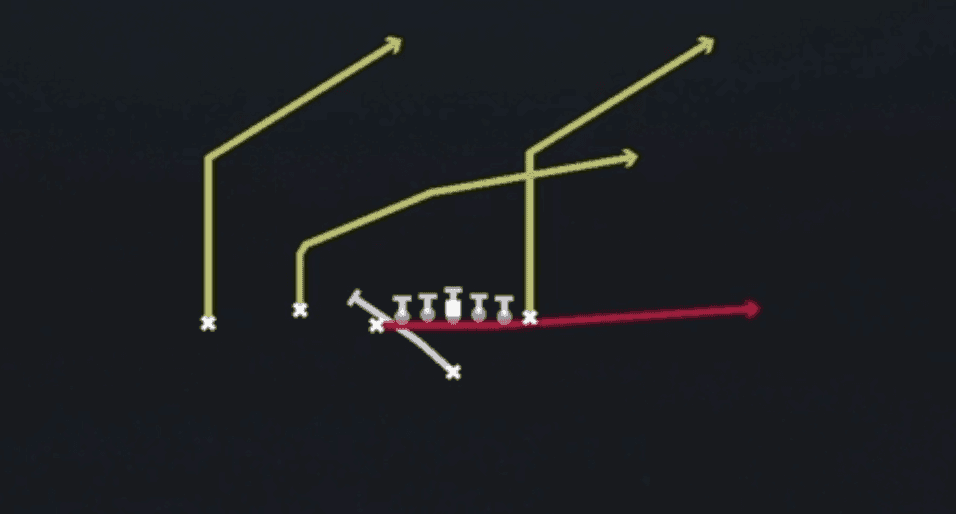


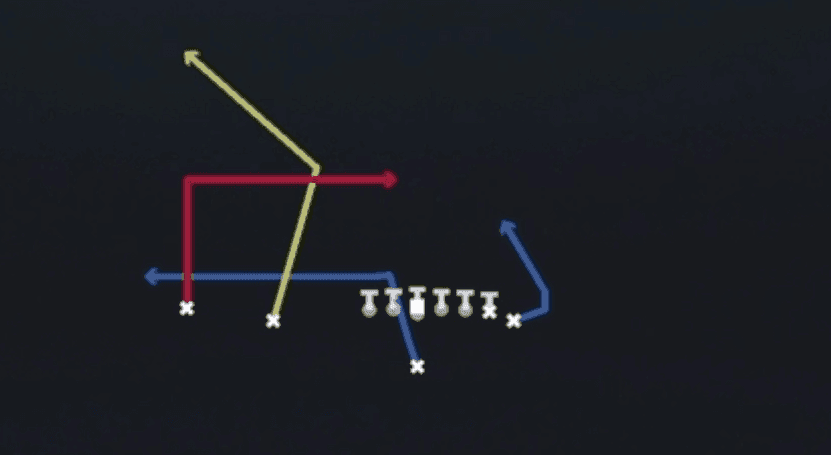


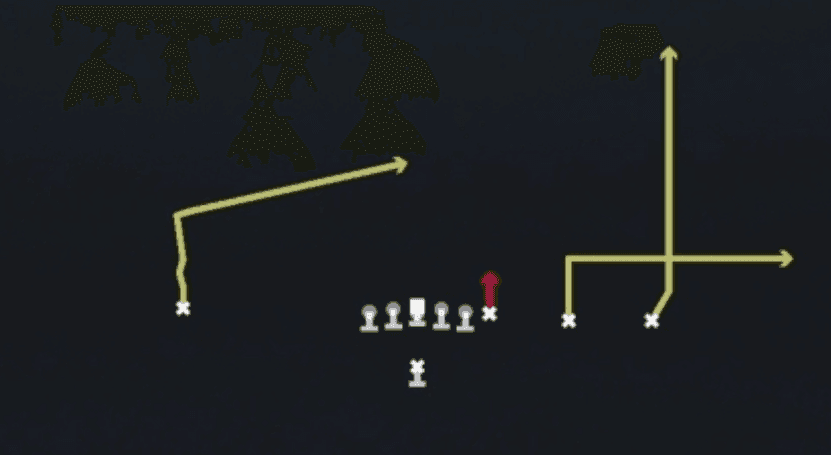
Overview
Singleback puts the quarterback under center with one running back aligned roughly seven yards deep, which leaves four eligible receivers to spread, stack, or tighten around the core. With 1449 plays across 63 sets and personnel ranging from 10 (Spread) to 23 (Wing Pair Heavy, Ace Overload), it is one of the deepest formations in Madden. You can line up in a compressed 13 personnel look like Ace Close or Wing Tight Nasty. You can show a balanced 12 personnel box like Deuce Close or Tight Doubles. You can also empty the defense out with Doubles, Trips Open, or Spread. Because the back sits directly behind the quarterback, the defense gets no pre-snap read on run direction, and every set can threaten inside zone, outside zone, power, or counter to either side.
The core philosophy is under center play action paired with a downhill run game. Hard play fakes pull linebackers into the box, which opens intermediate windows behind the second level for dig, deep over, and flood concepts. Sets like Bunch, Bunch TE, Bunch X Nasty, U Off Trips Cluster, and Y Trips Close compress receivers and generate natural rubs against man coverage. Y Trips, Trips, and U Off Trips overload one side of the field to stress Cover 3 and Cover 4 rotations with three level flood reads.
The formation also creates matchups through tight end placement. Y Off, U Off, and Tight Flex variations move the tight end off the ball or detach him into the slot, which forces the defense to show its hand. If a linebacker follows him, you have a man coverage tell and a speed mismatch. If a nickel corner rolls down, you can run at the lighter box with 12 or 13 personnel blocking angles. Wing, Wing Slot, and F Wing Slot alignments add a kick out or lead blocker on the edge without giving up a pass threat.
At a Glance
Singleback fits West Coast and power run schemes best, where timing routes off under center drops and a downhill ground game set up heavy play action. It also supports multiple and pro style play callers who want to live in one formation and vary personnel from 10 to 23 to manipulate defensive packages. Rosters with a strong running back, a versatile tight end who can block and win in the slot, and a quarterback with good play action and throw on the run accuracy get the most value from it.
Strengths
- Massive play art library (1449 plays) lets you run the same concept from multiple sets and personnel groups, which kills pattern recognition from opponents who key on formation tendencies.
- Under center play action from Ace Close, Deuce Close, and Wing Tight produces some of the best linebacker bite in the game, opening deep crossers, post wheels, and boot flood rollouts against Cover 3 and Cover 1.
- Compressed sets like Bunch, Bunch X Nasty, U Off Trips Cluster, and Y Trips Close generate built-in rubs and pick concepts that shred Cover 1 and Cover 0 man coverage without needing hot routes.
- Personnel flexibility from 10 to 23 lets you stay in one formation while forcing defensive substitutions, so you can catch base defense against Spread or Doubles and dime packages against Wing Pair Heavy or Ace Overload.
- Motion and shift options (tight end across the formation, wing to slot, fly motion from Trips) reveal man versus zone pre-snap and reset leverage for zone beaters or man beaters on the fly.
Weaknesses
- Quarterback under center has a slower drop and less time to read pressure, so Mug Six and edge nano blitzes from Odd and Nickel fronts can get home before deep play action concepts develop.
- Heavy 13 and 23 personnel sets like Ace Overload, Wing Pair Heavy, and Wing Tight Nasty telegraph run, and opponents will crash the box with a user linebacker or safety filling the A gap.
- A user controlled middle linebacker or hook lurker can sit on the dig and deep over windows that Singleback play action relies on, forcing throws into traffic on the most common concepts.
- Compressed Bunch and Cluster sets are vulnerable to Cover 2 Match and Cover 4 Palms, where zone defenders pass off crossing routes cleanly and the rub advantage disappears.
- Spread and Doubles sets from Singleback give up the shotgun read advantage, so screens and quick game develop slower than equivalent Gun looks and are easier to jump with a user flat defender.
Usage Tips
Pair a Deuce Close or Ace Close inside zone with the matching play action from the same set so your play art looks identical pre-snap, then attack whichever defender bites based on how they played the previous run.
On first and 10 or second and short, use 12 personnel Tight Doubles or Wing Tight to force base defense, then audible to a boot flood or play action rollout if you see a single high safety and a loaded box.
Against heavy man pressure, get into Bunch, Bunch TE, or U Off Trips Cluster and hot route the point man to a slant or drag while the backs stay in to block, turning the blitz into an easy rub completion.
Motion the tight end across in Y Off or U Off sets before the snap: if a defender travels with him, you have man coverage and should hit crossers or wheel routes, and if the defense only bumps, check to a zone beater like a flood or smash.
On third and medium, avoid telegraphing with 13 or 23 personnel; use Y Trips, Trips Open, or Doubles Flex from 11 personnel to keep the run threat honest while running three level flood or mesh concepts.
Sets (63)
 Ace Double Wing232 RB · 3 TE · 0 WR21 playsSpecialistsGadget
- Bunch Base212 RB · 1 TE · 2 WR15 playsSpecialistsGadget
- Deuce Close Tilt212 RB · 1 TE · 2 WR18 playsSpecialistsGadget
- F Wing Slot212 RB · 1 TE · 2 WR15 playsSpecialistsGadget
- East Tight131 RB · 3 TE · 1 WR9 playsSpecialistsGadget
 Wing Pair131 RB · 3 TE · 1 WR34 playsSpecialistsGadget
 Wing Tight131 RB · 3 TE · 1 WR49 playsSpecialistsGadget
 Wing Tight Left131 RB · 3 TE · 1 WR12 playsSpecialists3DRBGadgetPower HB
 Wing Tight Nasty131 RB · 3 TE · 1 WR11 playsSpecialists3DRBGadgetPower HB
 Wing Tight U131 RB · 3 TE · 1 WR23 playsSpecialists3DRBGadgetPower HB
 Wing Tight Z131 RB · 3 TE · 1 WR31 playsSpecialistsGadget
 Ace121 RB · 2 TE · 2 WR74 playsSpecialistsGadget
 Ace Close121 RB · 2 TE · 2 WR10 playsSpecialistsGadget
 Ace Slot121 RB · 2 TE · 2 WR36 playsSpecialistsGadget
 Bunch Ace121 RB · 2 TE · 2 WR28 playsSpecialistsGadget
 Deuce121 RB · 2 TE · 2 WR17 playsSpecialistsGadget
 Deuce Close121 RB · 2 TE · 2 WR46 playsSpecialistsGadget
 East121 RB · 2 TE · 2 WR20 playsSpecialistsGadget
 U Off121 RB · 2 TE · 2 WR10 playsSpecialistsGadget
- U Off Close121 RB · 2 TE · 2 WR9 playsSpecialists3DRBGadgetPower HB
 U Off Stack121 RB · 2 TE · 2 WR10 playsSpecialists3DRBGadgetPower HB
 U Off Trio121 RB · 2 TE · 2 WR7 playsSpecialists3DRBGadgetPower HB
 U Off Trips121 RB · 2 TE · 2 WR12 playsSpecialists3DRBGadgetPower HB
- U Off Trips Cluster121 RB · 2 TE · 2 WR15 playsSpecialists3DRBGadgetPower HB
 Wing121 RB · 2 TE · 2 WR56 playsSpecialistsGadget
 Wing Close121 RB · 2 TE · 2 WR27 playsSpecialists3DRBGadgetPower HB
- Wing Flex121 RB · 2 TE · 2 WR10 playsSpecialistsGadget
 Wing Flex Close121 RB · 2 TE · 2 WR27 playsSpecialistsGadget
 Wing Pair Heavy121 RB · 2 TE · 2 WR15 plays
 Wing Slot121 RB · 2 TE · 2 WR73 playsSpecialistsGadget
- Wing Slot Over121 RB · 2 TE · 2 WR5 playsSpecialistsGadget
 Wing Stack121 RB · 2 TE · 2 WR22 playsSpecialistsGadget
 Y Trips TE Slot121 RB · 2 TE · 2 WR18 playsSpecialistsGadget
 Ace Overload111 RB · 1 TE · 3 WR9 plays
 Bunch111 RB · 1 TE · 3 WR41 plays
 Bunch TE111 RB · 1 TE · 3 WR30 playsSpecialistsGadget
 Bunch X Nasty111 RB · 1 TE · 3 WR41 playsSpecialists3DRBGadgetPower HBSLWR
 Doubles111 RB · 1 TE · 3 WR71 playsSpecialistsGadgetSLWR
 Doubles Flex111 RB · 1 TE · 3 WR26 playsSpecialistsGadget
 Doubles North111 RB · 1 TE · 3 WR16 playsSpecialistsGadgetSLWR
- Doubles South111 RB · 1 TE · 3 WR15 playsSpecialistsGadget
 Doubles Y Off111 RB · 1 TE · 3 WR20 playsSpecialistsGadgetSLWR
 Doubles Y Off Close111 RB · 1 TE · 3 WR22 playsSpecialistsGadgetSLWR
- Doubles Y Off Flex111 RB · 1 TE · 3 WR18 playsSpecialists3DRBGadgetPower HBSLWR
 Doubles Y Open111 RB · 1 TE · 3 WR12 playsSpecialistsGadgetSLWR
 Doubles Y-Slot Close111 RB · 1 TE · 3 WR6 playsSpecialists3DRBGadgetPower HBSLWR
 Tight Doubles111 RB · 1 TE · 3 WR13 playsSpecialists3DRBGadgetPower HBSLWR
 Tight Flex111 RB · 1 TE · 3 WR12 playsSpecialistsGadgetSLWR
 Tight Y Off111 RB · 1 TE · 3 WR30 playsSpecialistsGadgetSLWR
 Tight Y Off Flex111 RB · 1 TE · 3 WR21 playsSpecialists3DRBGadgetPower HBSLWR
 Toad X Nasty111 RB · 1 TE · 3 WR16 playsSpecialists3DRBGadgetPower HBSLWR
 Trey111 RB · 1 TE · 3 WR10 playsSpecialistsGadgetSLWR
 Trio111 RB · 1 TE · 3 WR15 playsSpecialistsGadgetSLWR
 Trips111 RB · 1 TE · 3 WR28 playsSpecialistsGadgetSLWR
- Trips Close111 RB · 1 TE · 3 WR12 playsSpecialistsGadgetSLWR
 Y Off Trio111 RB · 1 TE · 3 WR12 playsSpecialistsGadgetSLWR
- Y Off Trio Close111 RB · 1 TE · 3 WR15 playsSpecialistsGadgetSLWR
- Y Off Trips111 RB · 1 TE · 3 WR15 playsSpecialistsGadgetSLWR
 Y Trips111 RB · 1 TE · 3 WR48 playsSpecialistsGadgetSLWR
- Y Trips Close111 RB · 1 TE · 3 WR18 playsSpecialistsGadgetSLWR
- Y Trips Close Wing111 RB · 1 TE · 3 WR15 playsSpecialistsGadgetSLWR
 Spread101 RB · 0 TE · 4 WR33 playsSpecialists3DRBGadgetSLWR
 Trips Open101 RB · 0 TE · 4 WR24 playsSpecialists3DRBGadgetSLWR