Playbooks
Weak I
OffenseExample Plays from Weak I


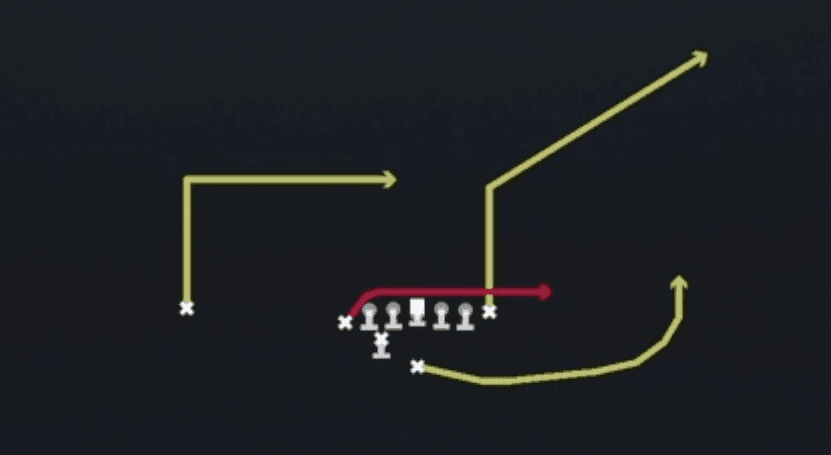


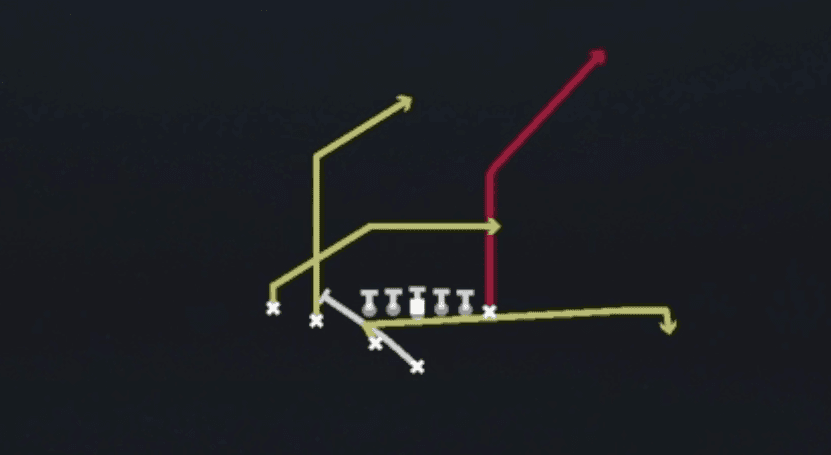

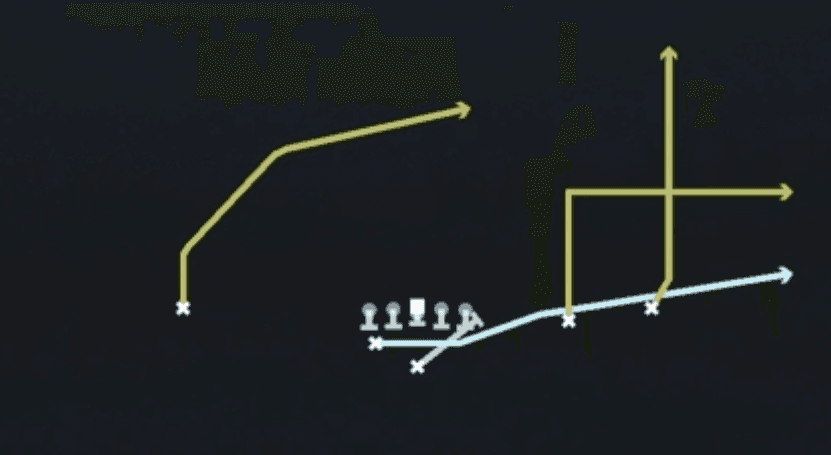


Overview
Weak I is a two back I formation variant where the fullback aligns offset toward the weak side (away from the tight end) and the halfback sits at full depth directly behind the quarterback. That offset puts a lead blocker on the edge before the snap, so every weak side run gets an extra hat at the point of attack. The quarterback is under center, which keeps play-action believable. Across its 13 sets (Close, Slot Flex, H U Off, Close Flex, Slot Open, Z Close, Slot Close, H Close Off, Wing, H Wing, Slot, 3wr Flex, and Pro), the formation shifts between 21, 22, and 20 personnel. You can go from a heavy two tight end surface to a three receiver look without leaving the Weak I family.
The core philosophy is balance: downhill power running built around the fullback, paired with play-action that punishes defenders who trigger on run keys. Offsetting the fullback forces the defense to declare its run fits early. Defenses often rotate a safety or bump a linebacker toward the fullback side, and that leaves the strong side flat and the seams thinner. Sets like Z Close, Close Flex, and Slot Close condense receivers near the formation. That creates natural rub and bunch style releases, which help against press man and stretch underneath zone defenders horizontally.
The lighter sets (Slot Open, Slot Flex, 3wr Flex) spread out the coverage while keeping the fullback in the backfield. This lets you isolate a slot receiver on a linebacker or nickel defender, and the defense still has to respect the lead run. In the Wing and H Wing sets, the extra attached blocker creates gap overloads, and those stress box counts and force defenders into bad angles. The result is a formation that dictates personnel matchups before the snap rather than reacting to them.
At a Glance
Weak I fits power run and play-action focused West Coast schemes, where the offense lives on downhill running and uses boot rollouts, crossers, and flood concepts off the same look. It works best with a strong offensive line, a physical halfback, a capable blocking fullback, and a QB with solid play-action and throw on the run ratings. The ideal play caller is patient and matchup driven, running to set up the pass and using personnel swaps between 21, 22, and 20 to create favorable defensive substitutions rather than living in spread empty looks.
Strengths
- The offset fullback gives you a lead blocker already aligned to the weak side edge, so Weak Zone, Iso, and Power runs hit fast with a numbers advantage against six man boxes.
- Play-action is elite from under center with two backs: fakes pull linebackers and even single high safeties downhill, opening deep crossers, posts, and boot flood concepts against Cover 3 and Cover 1.
- Personnel flexibility across 21, 22, and 20 lets you force the defense into bad substitution matchups, such as base defense against Slot Open or nickel against Wing and H Wing heavy runs.
- Condensed sets like Z Close, Close Flex, and Slot Close create natural rubs and stacked releases, which beat press man coverage and pair well with hot routing a slant or drag to the tight split.
- The fullback and halfback are both viable checkdown and flat options, so smart RB hot routes (angle, wheel, flat) punish blitz heavy defenders and overloaded man coverage.
Weaknesses
- Weak I tells the defense where the lead run is going, so opponents who read the fullback alignment can shade their front, slant the line weak, and user the weak side linebacker into the hole.
- With only two or three receivers out on most plays, Cover 2 Man, Cover 4 Drop, and dime heavy looks with a user robber can smother the few routes and bait forced throws.
- Under center dropbacks and play-action take longer to develop, which makes the QB vulnerable to edge nano blitzes and overload pressure from the side opposite the fullback.
- If you have no receiving weapon at tight end or fullback, the defense can bracket your top wideout and dare your backs to beat them underneath.
- Heavy sets like Wing and H Wing tip run tendencies, and savvy opponents will load the box with 4 3 or 46 looks and spin a safety down without fear of the vertical game.
Usage Tips
Establish the lead run on early downs from Close or Pro, then go to play-action out of the same set on 2nd and short or 1st and 10 once the user linebacker starts triggering downhill.
Flip the play before the snap to move the fullback's strength away from where the defense has shifted, and use motion or a formation audible to check whether the defense is in man or zone before committing to a concept.
Against heavy blitz or nano pressure, slide protect toward the edge threat and hot route a back to a flat or angle route to give yourself a quick outlet without leaving the formation.
In Slot Open or 3wr Flex, stack a zone beater like smash or flood on one side and hot route a drag or slant backside so you have a man beater if the coverage shell rotates late.
Save Weak I for 3rd and short and red zone packages where the power run and boot rollouts to the tight end or flat combine to stress goal line and Cover 0 defenses.
Sets (13)
 H U Off222 RB · 2 TE · 1 WR9 playsSpecialistsGadget
 H Wing222 RB · 2 TE · 1 WR10 playsSpecialistsGadget
 Wing222 RB · 2 TE · 1 WR12 playsSpecialistsGadget
 Close212 RB · 1 TE · 2 WR11 playsSpecialistsGadget
 Close Flex212 RB · 1 TE · 2 WR14 playsSpecialistsGadget
 H Close Off212 RB · 1 TE · 2 WR9 playsSpecialists3DRBGadgetPower HB
 Pro212 RB · 1 TE · 2 WR10 playsSpecialistsGadget
 Slot212 RB · 1 TE · 2 WR12 playsSpecialistsGadget
 Slot Close212 RB · 1 TE · 2 WR6 playsSpecialists3DRBGadgetPower HBSLWR
 Slot Flex212 RB · 1 TE · 2 WR17 playsSpecialistsGadget
 Z Close212 RB · 1 TE · 2 WR9 playsSpecialists3DRBGadgetPower HB
- 3wr Flex202 RB · 0 TE · 3 WR9 playsSpecialistsGadgetSLWR
 Slot Open202 RB · 0 TE · 3 WR12 playsSpecialistsGadgetSLWR