Playbooks
I Form
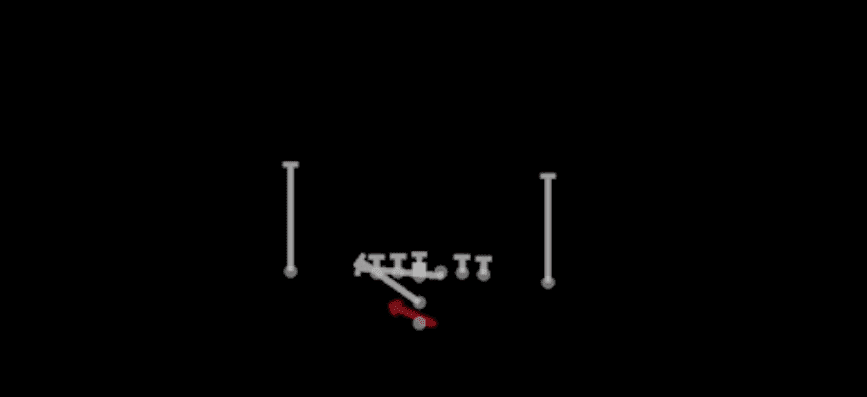
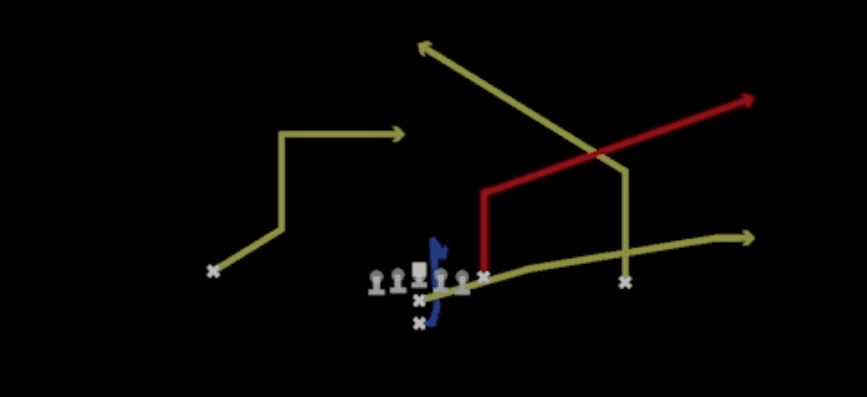
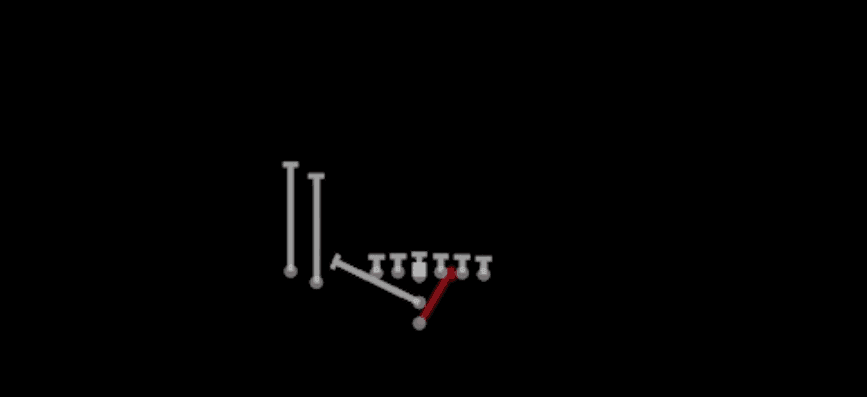
OffenseExample Plays from I Form





Overview
I Form stacks the fullback directly behind the quarterback with the halfback aligned deeper behind him, creating the classic downhill backfield that defines power football in Madden. Across its 17 sets and 330 plays, the formation flexes from heavy 22 personnel looks like Hulk, Tight, and H Tight, which bring two tight ends to the line, to 21 personnel staples like Pro, Close, Y Off, and Wing, and even 20 personnel spread looks like Slot Open that put three receivers on the field while keeping the two-back core intact. Close and Close Flex bunch receivers tight to the formation, while Slot Stack and Slot Flex create stacked and detached alignments that stress leverage.
The core philosophy is downhill run game married to play-action. The fullback gives you a dedicated lead blocker on Iso, Power O, Counter, and Toss, which forces defenses to commit a safety into the box. Once that eighth defender creeps down, I Form play-action concepts like Boot, PA Shot, and Deep Cross attack the vacated deep third and flat with max protection on the backside. The fullback also becomes a sneaky receiving threat in the flat that linebackers routinely lose track of.
I Form creates mismatches by forcing defenses into base or heavy personnel. When the opponent answers 22 personnel with bigger bodies, you can motion into Slot or Wing Over looks and isolate a tight end or slot on a slower linebacker. Wing and H Wing sets overload one side of the formation, giving you a numbers advantage on outside runs and flood concepts that stretch Cover 3 and Cover 4 flat defenders.
At a Glance
I Form fits power run and West Coast play-action systems best, rewarding play-callers who want to control the clock, win in short yardage, and build shot plays off run tendencies. It is ideal for rosters with a strong downhill halfback, a blocking fullback, a physical offensive line, and a quarterback with solid throw-on-the-run accuracy for rollouts. Air raid and heavy RPO callers will find it more situational, using Slot Open and Slot Flex as a change-up rather than a base look.
Strengths
- Dedicated lead blocker: the fullback gives Iso, Power O, and Counter a true kickout or lead block, producing consistent 4 to 6 yard gains that keep you ahead of the chains and set up long-yardage play-action.
- Elite play-action: heavy run tendencies sell PA Boot and PA Crossers hard, pulling user-controlled linebackers downhill and opening deep over routes and corner routes behind Cover 3 and Cover 1 Robber.
- Personnel flexibility: 330 plays across 21, 22, and 20 personnel let you stay in I Form while swapping from Hulk goal-line power to Slot Open spread looks, which makes defensive substitution matching difficult.
- Overload and motion options: Wing, Wing Over, and H Wing sets naturally overload one side, and motioning the fullback or tight end pre-snap creates quick flood concepts that out-number flat and curl defenders.
- Max protect for shot plays: keeping the fullback and tight end in to block neutralizes most five-man pressure, giving slower dropback quarterbacks time on dig and post combos against man coverage.
Weaknesses
- Predictable run tendencies: savvy opponents key the fullback alignment and run commit or crash the defensive line, stuffing Iso and Power before the lead block develops.
- Limited quick game: with only two or three receivers out on many plays, defenses can play Cover 2 Man or Cover 1 with a lurker and bracket your top target, leaving few hot options against pressure.
- Vulnerable to eight-man fronts: heavy looks like 46 Normal and Bear fronts with a user on the edge can overwhelm the offensive line, and nano blitzes off the edge beat the fullback on slow-developing play-action.
- User lurk on play-action crossers: a user dropping into the middle hook on PA Crossers or Deep Cross takes away the primary read, and the long play-action fake leaves little time to find a checkdown.
- Slower tempo against spread defenses: when opponents stay in nickel and rely on speed, heavy I Form sets can struggle to create separation on the perimeter against faster defenders.
Usage Tips
Establish Iso and Power O early from Pro or Tight, then come back to the exact same set with PA Boot on 1st and 10 or 2nd and short when the safety starts triggering downhill.
Hot route the fullback to a flat or wheel against Cover 3 and Cover 4, since linebackers often ignore him, and use it as your pressure release on play-action.
Read the box pre-snap: if the defense shows six or fewer in the box, audible to Toss or Stretch to the wide side, and if they walk down an eighth defender, check to a PA shot with a streak or post isolated on the backside.
Use Slot Open and Slot Flex on 3rd and medium to pull defenses out of heavy fronts, then run mesh, slant flat, or smash concepts with the fullback as a checkdown in the flat.
In the red zone and short yardage, go Hulk or H Tight with Power O or QB Sneak, then mix in PA Bootleg to the tight end on the corner once the defense loads the line of scrimmage.
Sets (17)
 H Tight222 RB · 2 TE · 1 WR14 playsSpecialistsGadget
- H Wing222 RB · 2 TE · 1 WR6 playsSpecialistsGadget
 Hulk222 RB · 2 TE · 1 WR6 plays
 Tight222 RB · 2 TE · 1 WR28 playsSpecialistsGadget
 Wing222 RB · 2 TE · 1 WR45 playsSpecialists3DRBGadget
- Wing Over222 RB · 2 TE · 1 WR6 playsSpecialistsGadget
 Close212 RB · 1 TE · 2 WR29 playsSpecialistsGadget
 Close Flex212 RB · 1 TE · 2 WR13 playsSpecialistsGadget
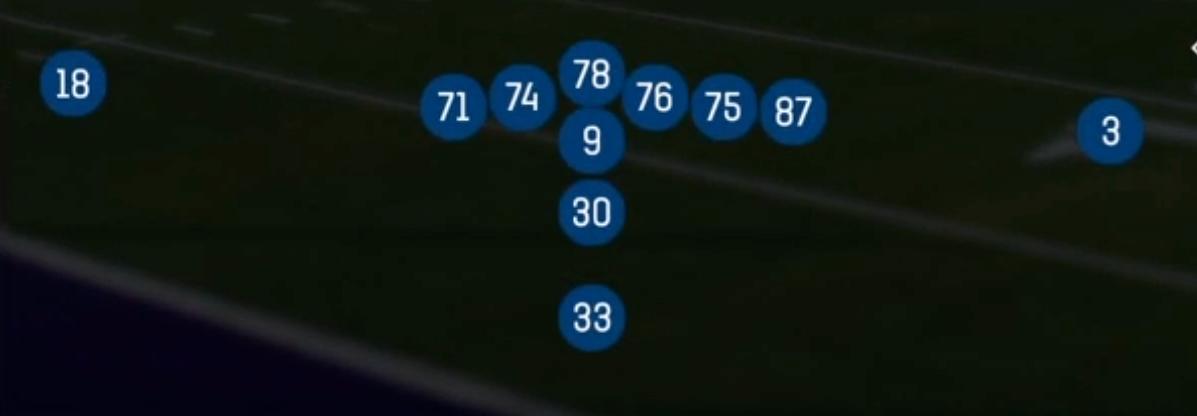 H Pro212 RB · 1 TE · 2 WR6 playsSpecialistsGadget
 Pro212 RB · 1 TE · 2 WR71 playsSpecialistsGadget
 Slot212 RB · 1 TE · 2 WR41 playsSpecialistsGadget
 Slot Close212 RB · 1 TE · 2 WR13 playsSpecialists3DRBGadgetPower HB
 Slot Flex212 RB · 1 TE · 2 WR6 playsSpecialistsGadget
 Slot Stack212 RB · 1 TE · 2 WR9 playsSpecialistsGadget
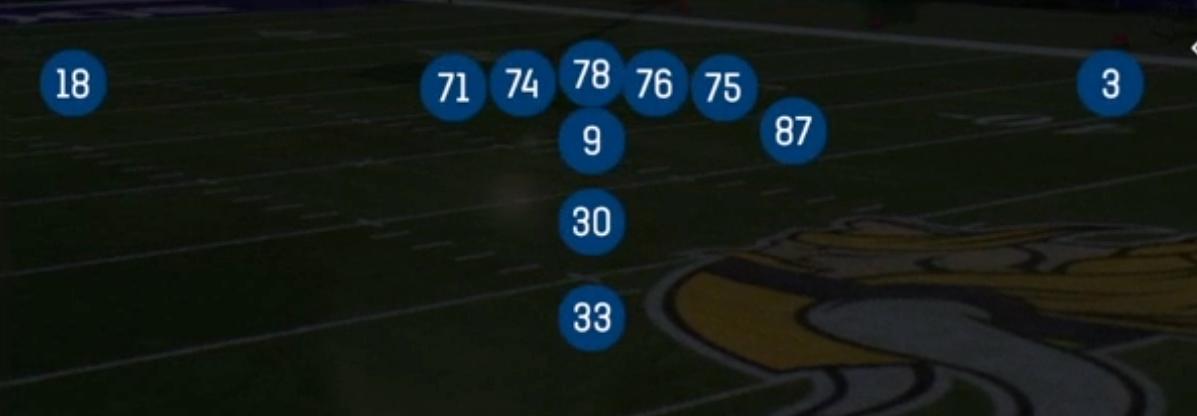 Y Off212 RB · 1 TE · 2 WR9 playsSpecialistsGadget
 Y Off Close212 RB · 1 TE · 2 WR19 playsSpecialists3DRBGadgetPower HB
 Slot Open202 RB · 0 TE · 3 WR9 playsSpecialistsGadgetSLWR