Playbooks
Pistol
OffenseExample Plays from Pistol

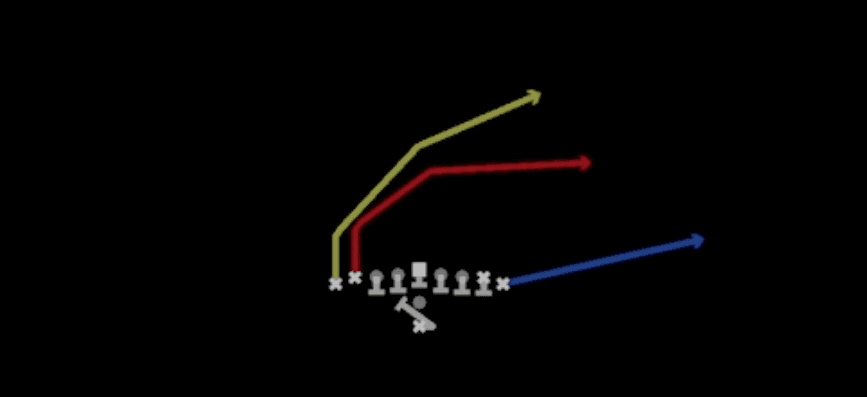


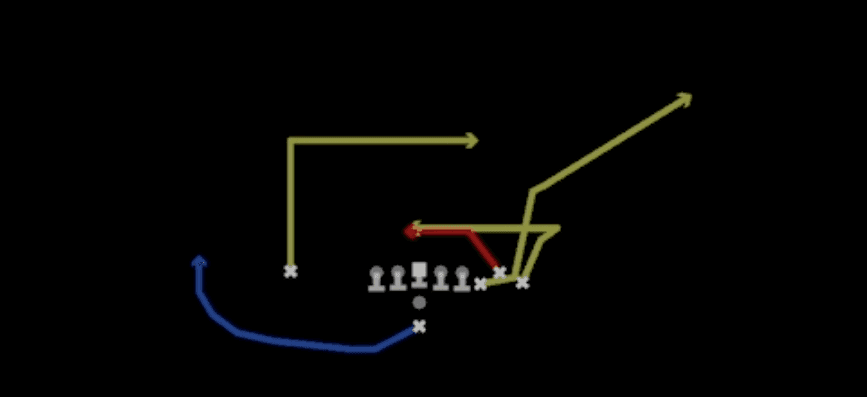


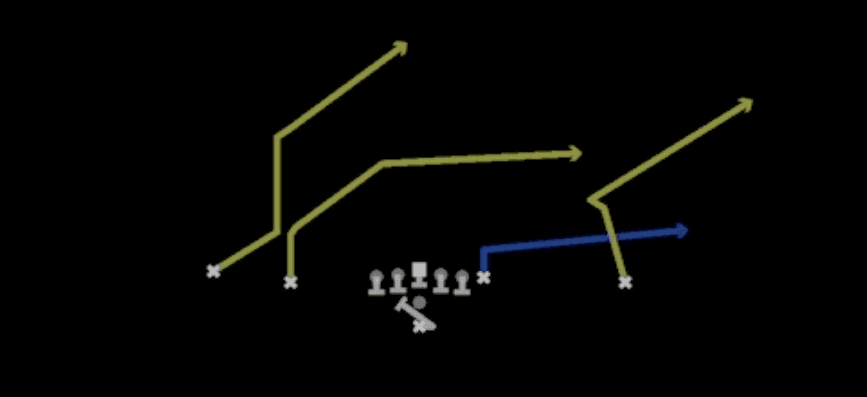

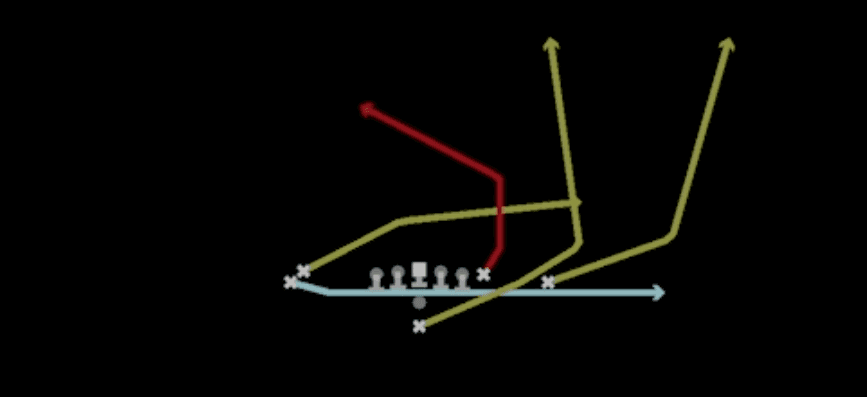
















Overview
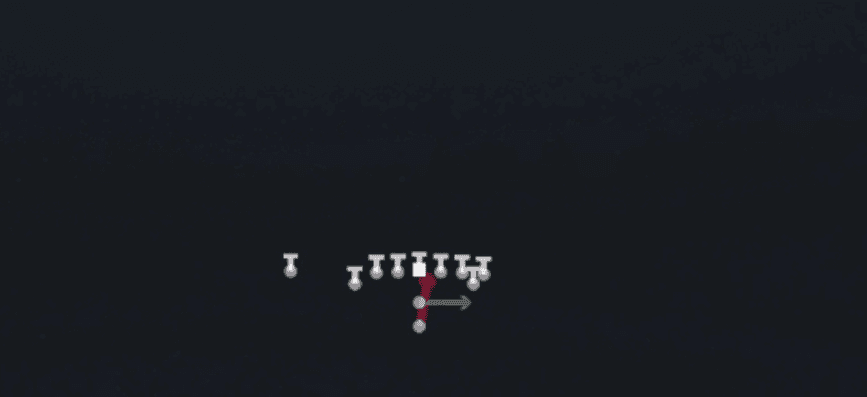
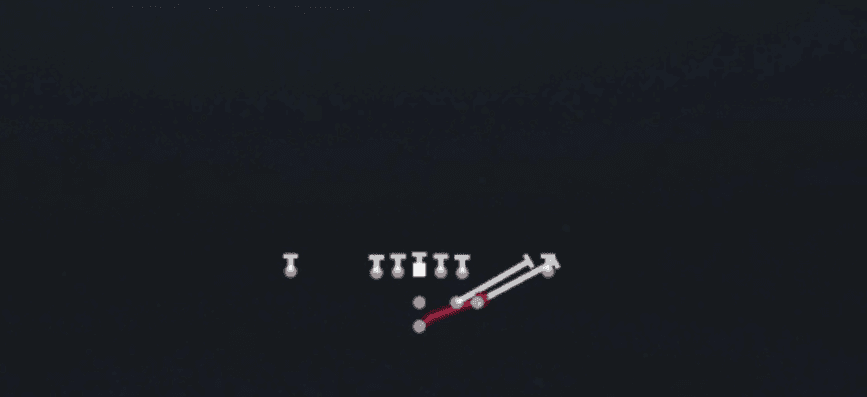
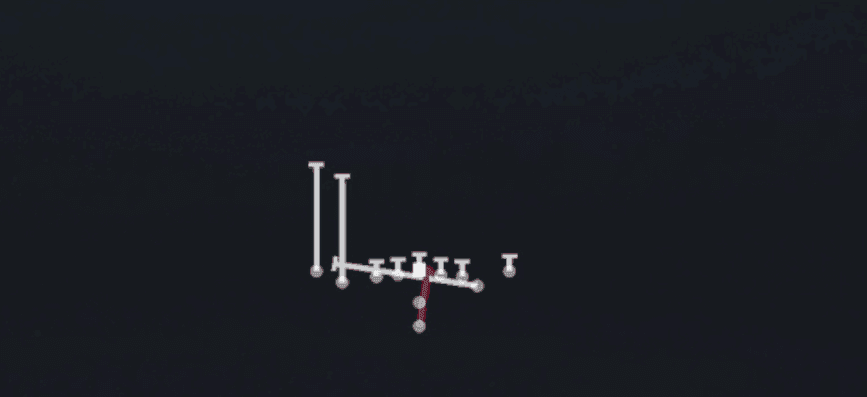
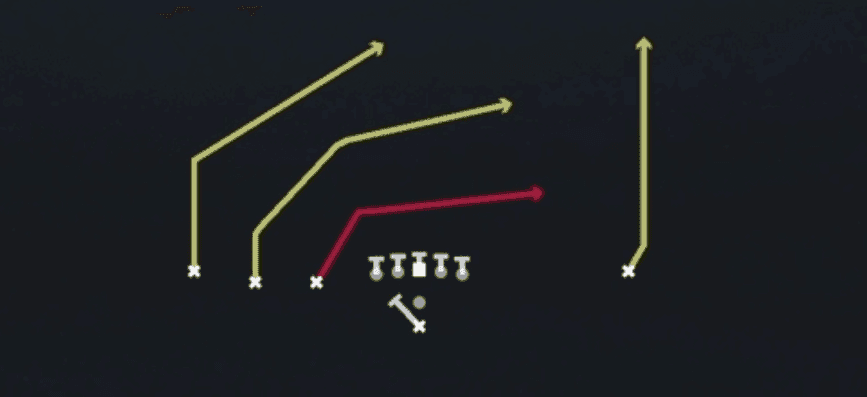
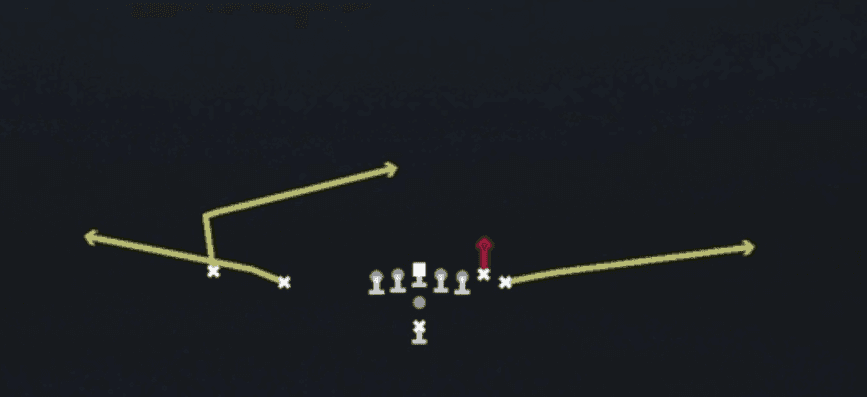
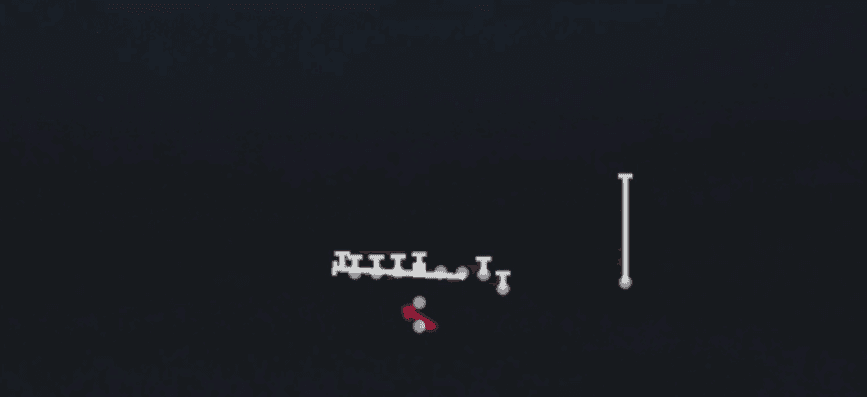
The Pistol aligns the quarterback roughly four yards behind the center, a hybrid depth between under center and shotgun, with the running back stacked directly behind him instead of offset. That straight-line alignment is the formation's core identity: the defense cannot read run direction from the back's pre-snap position, and the ball carrier gets a true downhill track to either A gap. With 888 plays spread across 51 sets and personnel ranging from 10 through 30, the Pistol stretches from heavy looks like Full House Pro, Full Panther, Full House TE, and Philly to spread concepts out of Spread, Trips Open, Bunch X Nasty, and Tight Slots.
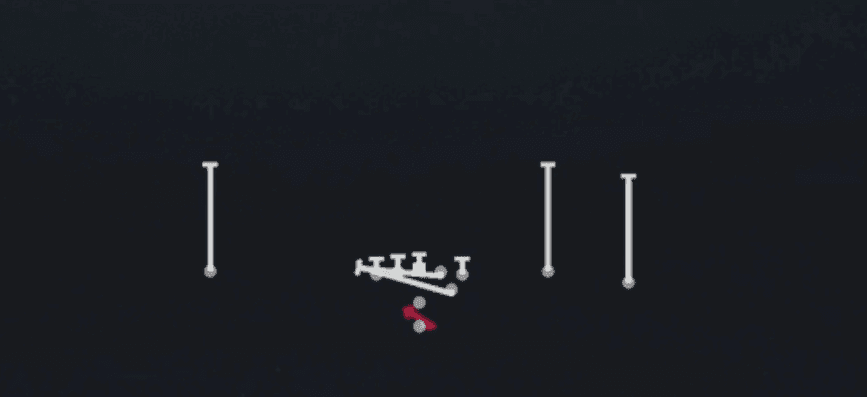
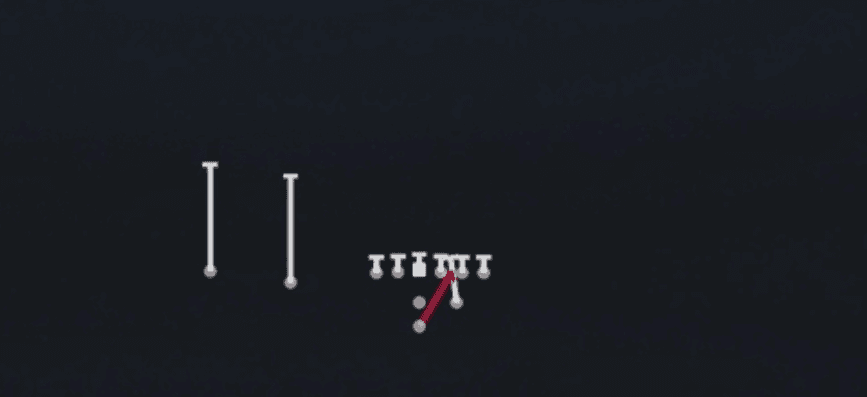
Philosophically, the Pistol marries a power run game with shotgun-style passing vision. The QB sees the field clearly from depth, while play-action and RPO fakes look identical to the downhill handoff, which freezes second-level defenders and pulls linebackers out of hook and curl zones. Heavy sets like Full House Base and Weak I Wing let you pound inside zone and power, then punish loaded boxes with boots and deep shots.
Mismatches come from personnel flexibility. U Off, Y Off Trips, and Doubles Y Off Stack move tight ends and H-backs off the line to create motion and leverage advantages, Bunch and Bunch TE sets stress man coverage with natural rubs, and Trips Y Over or U Off Trips overload one side of a Cover 3 or Cover 4 shell. Because run and pass share the same backfield look in nearly every set, defenders must respect both on every snap.
At a Glance
The Pistol fits RPO-heavy and power run systems best, blending downhill inside zone and counter with play-action shots and read option in the style of modern hybrid offenses. It rewards play-callers with a mobile QB, a physical one-cut running back, and versatile tight ends or H-backs who can move between U Off, Y Off, and in-line alignments. Spread and West Coast callers can also thrive in its 10 and 11 personnel sets, but the formation's true edge comes from pairing a punishing run game with identical-look play-action.
Strengths
- The stacked back gives zero run-direction tell, so inside zone, power, and counter hit downhill from either A gap and linebackers cannot cheat pre-snap.
- Play-action and RPO fakes are nearly indistinguishable from real handoffs, pulling hook defenders forward and opening dig, post, and seam windows behind them.
- Massive personnel range (10 through 30) lets you stay in one formation family while shifting from Full House Pro heavy looks to Spread and Trips Open, forcing the defense into slow substitution and mismatched packages.
- Bunch, Bunch TE, and Bunch X Nasty sets supply built-in rub concepts and natural stacks that beat press man and Cover 1 without needing heavy hot route work.
- Read option, zone read, and QB run concepts are well supported, making mobile quarterbacks a nightmare for defenses that rely on spy or contain without a user on the edge.
Weaknesses
- The QB sits shallower than shotgun, so interior pressure from nano blitzes and A gap overloads arrives faster, especially in empty or 10 personnel sets with no extra protection.
- Heavy sets like Full House, Full Panther, and Philly telegraph run to experienced opponents, who can load the box with Cover 0 or Cover 1 robber and user a linebacker into the downhill lane.
- A user-controlled lurk or robber sitting at 8 to 10 yards over the middle erases the primary play-action windows (dig and post), which many Pistol concepts rely on.
- Without a mobile QB, the read option and QB keep portions of the playbook lose their threat, letting defenders crash the dive on every zone read without fear.
- Flat and outside zone coverage tends to hold the stacked back in check on screens and swing routes, since the back must travel farther laterally than from an offset alignment.
Usage Tips
On first down, mix inside zone and power from Strong or Weak with play-action boots out of the same set, keeping identical pre-snap looks so the opponent cannot key tendencies.
When you spot a loaded box against heavy personnel, audible to a play-action rollout or hot route the TE to a streak and the flat receiver to a whip, beating Cover 0 and Cover 1 robber in one snap.
Use motion out of U Off, Y Off Trips, and Doubles Y Off Stack to identify man versus zone, then hot route the motioning player to a slant against man or a drag against zone.
On 3rd and short, deploy Full House Pro or Philly and run the RPO or QB sneak variant, forcing the defense to commit bodies inside before you check to a flat or quick out.
Slide protection toward the defense's blitz side and block the RB or TE whenever you see A gap pressure, because the Pistol's shallow QB depth gives you less time than shotgun against nano looks.
Sets (51)
 Full House303 RB · 0 TE · 2 WR15 playsSpecialistsGadget
 Ace Double Wing232 RB · 3 TE · 0 WR15 playsSpecialistsSLWR
 Full House TE222 RB · 2 TE · 1 WR10 playsSpecialistsGadget
 Weak I Wing222 RB · 2 TE · 1 WR9 playsSpecialistsGadget
 Full House Base212 RB · 1 TE · 2 WR14 playsSpecialistsGadget
 Full House Over Close212 RB · 1 TE · 2 WR6 playsSpecialists3DRBGadgetPower HB
 Full House Pro212 RB · 1 TE · 2 WR6 plays
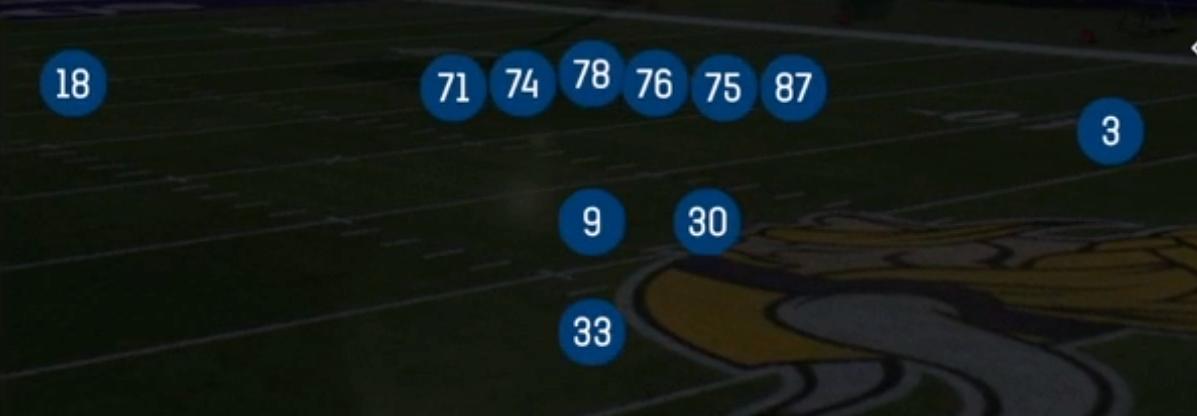 Strong212 RB · 1 TE · 2 WR37 playsSpecialistsGadget
 Strong Slot212 RB · 1 TE · 2 WR14 playsSpecialistsGadget
 Strong Slot Close212 RB · 1 TE · 2 WR9 playsSpecialists3DRBGadgetPower HBSLWR
 Strong Y Off Close212 RB · 1 TE · 2 WR10 playsSpecialists3DRBGadgetPower HB
 Weak212 RB · 1 TE · 2 WR9 playsSpecialistsGadget
 Weak Slot212 RB · 1 TE · 2 WR21 playsSpecialistsGadget
 Strong Slot Open202 RB · 0 TE · 3 WR25 playsSpecialistsGadgetSLWR
 Weak Slot Open202 RB · 0 TE · 3 WR22 playsSpecialistsGadgetSLWR
 East Tight131 RB · 3 TE · 1 WR6 playsSpecialists3DRBGadgetPower HB
 Wing Tight Z131 RB · 3 TE · 1 WR6 playsSpecialistsGadget
 Ace121 RB · 2 TE · 2 WR16 playsSpecialistsGadget
 Ace Slot121 RB · 2 TE · 2 WR20 playsSpecialistsGadget
 Deuce121 RB · 2 TE · 2 WR15 playsSpecialistsGadget
 Deuce Close121 RB · 2 TE · 2 WR15 playsSpecialists3DRBGadgetPower HB
 U Off121 RB · 2 TE · 2 WR12 playsSpecialists3DRBGadgetPower HB
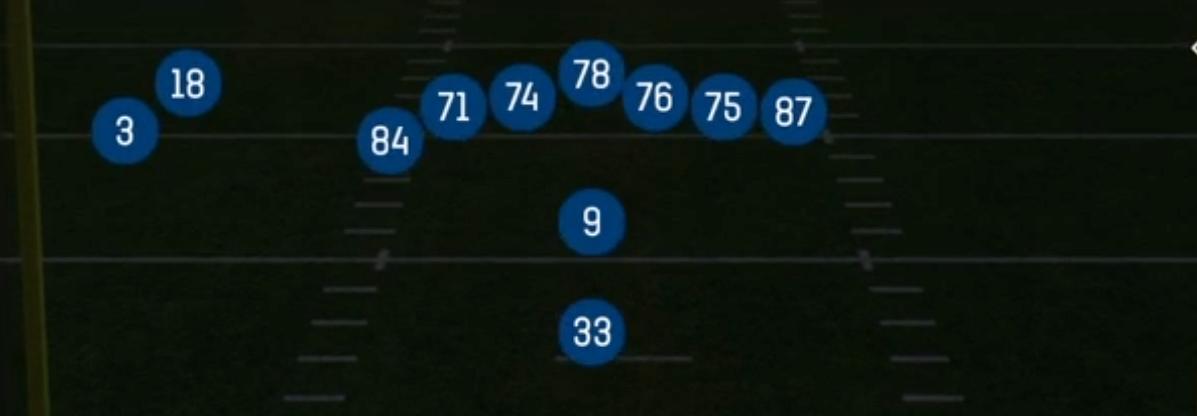 U Off Stack121 RB · 2 TE · 2 WR9 playsSpecialists3DRBGadgetPower HB
 U Off Trips121 RB · 2 TE · 2 WR30 playsSpecialists3DRBGadgetPower HB
 Wing121 RB · 2 TE · 2 WR18 playsSpecialists3DRBGadgetPower HB
 Wing Close121 RB · 2 TE · 2 WR13 playsSpecialists3DRBGadgetPower HB
 Wing Flex121 RB · 2 TE · 2 WR12 playsSpecialistsGadget
 Wing Flex Close121 RB · 2 TE · 2 WR17 playsSpecialists3DRBGadgetPower HB
 Wing Slot121 RB · 2 TE · 2 WR34 playsSpecialistsGadget
 Bunch111 RB · 1 TE · 3 WR37 playsSpecialistsGadget
 Bunch TE111 RB · 1 TE · 3 WR18 playsSpecialistsGadget
 Bunch X Nasty111 RB · 1 TE · 3 WR6 playsSpecialists3DRBGadgetPower HBSLWR
 Doubles111 RB · 1 TE · 3 WR26 playsSpecialistsGadgetSLWR
 Doubles Flex Hip111 RB · 1 TE · 3 WR9 playsSpecialistsGadget
 Doubles Hip111 RB · 1 TE · 3 WR17 playsSpecialists3DRBGadgetPower HBSLWR
 Doubles Y Off111 RB · 1 TE · 3 WR33 playsSpecialistsGadgetSLWR
 Doubles Y Off Stack111 RB · 1 TE · 3 WR18 playsSpecialistsGadgetSLWR
 Open Flex111 RB · 1 TE · 3 WR17 playsSpecialistsGadget
 Open Flex Close111 RB · 1 TE · 3 WR10 playsSpecialistsGadget
- Philly111 RB · 1 TE · 3 WR1 playsSpecialistsGadgetSLWR
- Spread Y Slot111 RB · 1 TE · 3 WR7 playsSpecialistsGadgetSLWR
 Tight Slots111 RB · 1 TE · 3 WR13 playsSpecialistsGadgetSLWR
 Tight Y Off Flex111 RB · 1 TE · 3 WR17 playsSpecialists3DRBGadgetPower HBSLWR
 Trips111 RB · 1 TE · 3 WR30 playsSpecialists3DRBGadgetSLWR
- Trips Y Over111 RB · 1 TE · 3 WR9 playsSpecialists3DRBGadgetPower HB
 Y Off Trips111 RB · 1 TE · 3 WR45 playsSpecialistsGadgetSLWR
 Y Trips111 RB · 1 TE · 3 WR22 playsSpecialistsGadgetSLWR
 Spread101 RB · 0 TE · 4 WR44 playsSpecialists3DRBGadgetSLWR
 Trips Left Open101 RB · 0 TE · 4 WR24 playsSpecialistsGadgetSLWR
 Trips Open101 RB · 0 TE · 4 WR30 playsSpecialistsGadgetSLWR
- Full Panther10 plays