Playbooks
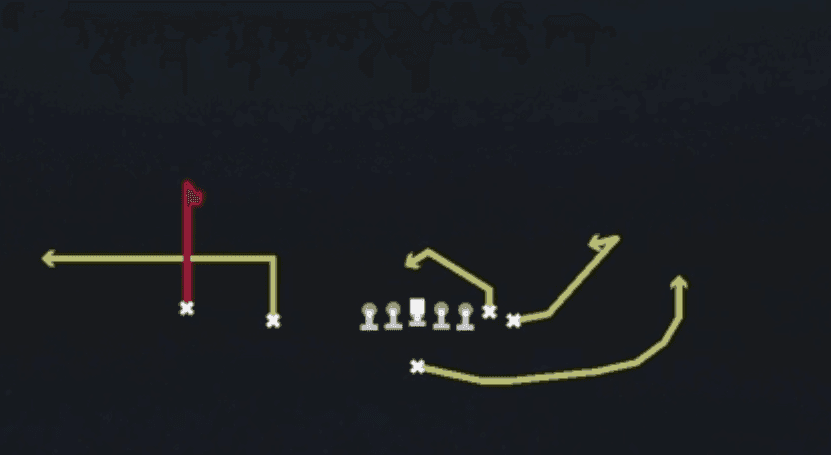
PA Y Screen

Quick Reference
Receiver routes
Depth-chart slots are shown as they line up in the base package for this set.
| Player | Side | Route |
|---|---|---|
| HB1 | Middle | Block and Release Hook |
| TE2 | Right | Wheel |
| WR1 | Left | Fade |
| WR2 | Left | Streak |
| TE1 | Right | Bubble Screen |
Read progression
- TE1 right, Bubble Screen
- HB1, Block and Release Hook or TE2 right, Wheel or WR1 left, Fade or WR2 left, Streak
Breakdown
PA Y Screen from Singleback Wing Slot is a play-action screen designed to punish overaggressive pass rushers and downhill linebackers. The two outside receivers run vertical routes up the seams to hold the corners and safeties deep while the Y (tight end) sneaks out to the flat behind a wall of blockers for the screen, shown by the short red route breaking away from the line. The QB opens with a play-action fake off the run look then works his primary read directly to the Y screen in the flat, using the vertical routes only as a clock-eating decoy against zone drops or aggressive man coverage.
Defensive Reads
Man beaters win here because the Y releasing late catches man defenders flowing away from the flat, so check if the defense is showing Cover 1 or Cover 0 pre-snap with tight man alignment on the outside receivers. Watch linebacker depth at the snap, if they crash hard on the play-action fake the screen lane opens instantly behind them. Zone shells with disciplined linebackers sitting in their drops and reading the QBs eyes will shut this down fast, especially Cover 3 sink or Cover 4 match zones with lurking Sam or Mike backers. Beware user-controlled defenders spying the backfield or sitting on screens, since a smart user linebacker can jump the route before the blockers get set. Blitz packages that send extra rushers off the edge can actually help the screen by removing defenders from the box, but interior blitzes that collapse the pocket quickly force the QB to rush the read.
Usage Tips
Call this play when you see linebackers creeping toward the line pre-snap or when the CPU or opponent has shown a heavy blitz tendency on early downs. Use it on second or third and short to medium so the screen still counts as a positive gain even if the defense sniffs it out late. Hold the play-action fake as long as possible with L2/LT to sell the run and let your blockers set up in front of the Y before releasing the ball. Pair this with PA FL Dive or PA Boot Y Sail earlier in a series so defenders start keying run action, which sets up the screen to hit wide open once they bite. Avoid throwing into the screen against defenses with fast flowing linebackers who read screens well, since the blockers need a beat to get out in front.
Other Plays in Wing Slot
 26 DuoDuo, Run Play, Power Run
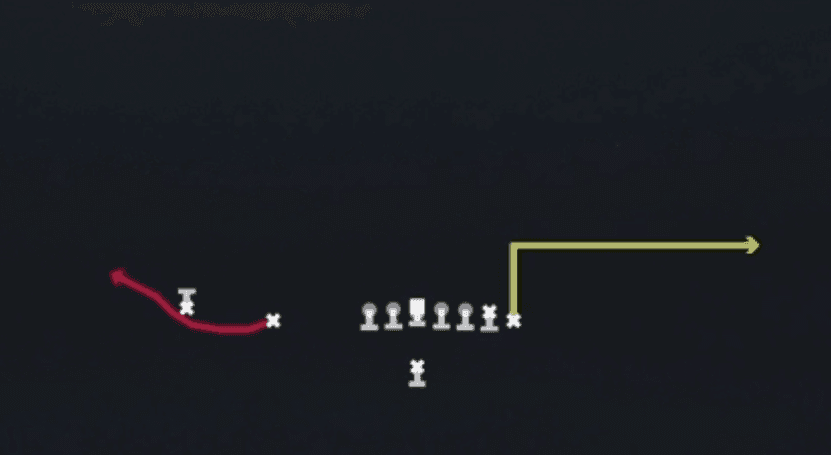 Bubble ScreenScreen Pass, Bubble Screen, Pass Play +1
 Counter UCounter, Run Play, Power Run
 DaggerDagger, Pass Play, Cover 2 Beater +6
 Dragon SpacingSpacing, Pass Play, Cover 3 Beater +5
 Four VerticalsFour Verts, Pass Play, Cover 2 Beater +6
 HB Ace PowerPower, Run Play, Power Run
 HB DiveDive, Run Play
- HB Mid ZoneRun Play
 HB MisdirectionMisdirection, Run Play
 HB PowerPower, Run Play, Power Run
 HB Power OPower, Run Play, Power Run
 HB SlamDive, Run Play
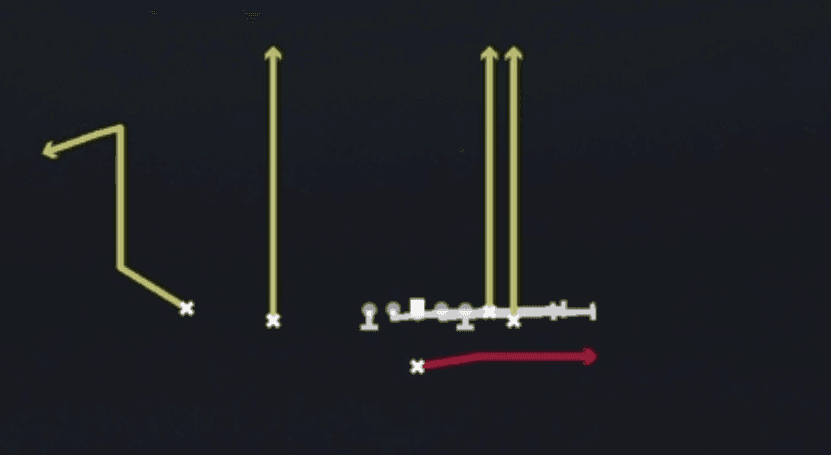 HB Slip ScreenScreen Pass, Hb Screen, Pass Play +2
 HB StretchOutside Zone, Run Play, Zone Run
- HB Toss StrongToss, Run Play
 HB Zone Alert BubbleInside Zone, Run Play, Zone Run +2
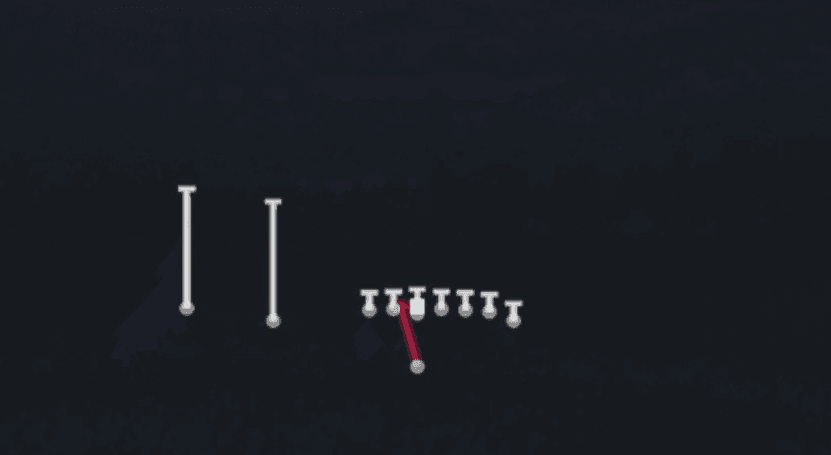 HB Zone WkInside Zone, Run Play, Zone Run
 H Misdirection StrMisdirection, Run Play
 H Zone StrRun Play, Outside Zone, Zone Run +1
 Inside Zone SplitInside Zone, Run Play, Zone Run
 Jet 6 Drive WheelWheel, Drive, Motion +7
 Jet HB PowerPower, Motion, Run Play +1
 Jet HB SlashMotion, Run Play
- Jet PA Boot ScreenScreen Pass, Corner, Streak +5
- Jet PA Boot SlideCorner, Deep Cross, Crosser +6
 Jet PA Boot Y LeakPlay Action, Motion, Pass Play +5
 Jet PA PowerPlay Action, Motion, Pass Play +4
 Jet SweepSweep, Jet Sweep, Motion +1
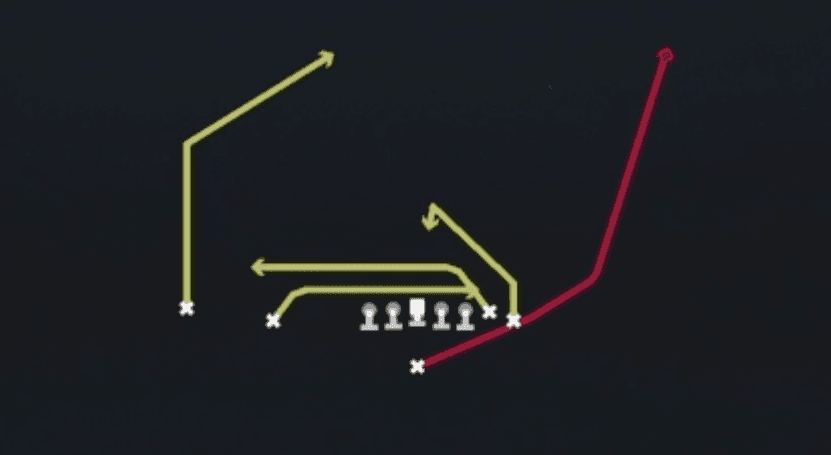 Mesh SpotSpot, Mesh, Pass Play +7
 Mtn Duo WrapDuo, Motion, Run Play +1
- Mtn HB Zone WKInside Zone, Motion, Run Play +1
 Mtn PA Z SlidePlay Action, Slide, Motion +6
 Mtn Wide Zone WkOutside Zone, Motion, Run Play +1
 Off TackleOff Tackle, Run Play
- Out N UpOut, Out And Up, Pass Play +2
 PA Boot SlidePlay Action, Slide, Pass Play +5
 PA Boot TE LeakPlay Action, Pass Play, Deep Cross +4
 PA Boot Y SailPlay Action, Sail, Pass Play +2
- PA Boot Y Sail (m20)Play Action, Sail, Pass Play +7
 PA Counter StrPlay Action, Pass Play, Deep Cross +5
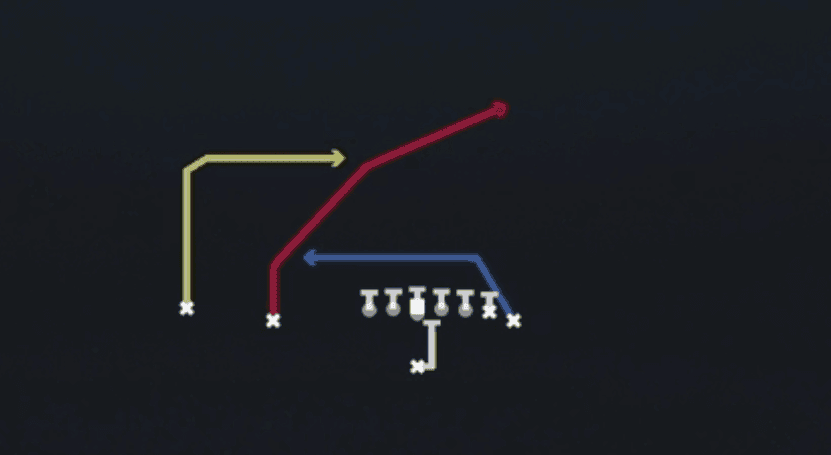 PA Cross Dig ShotPlay Action, Dig, Crosser +3
 PA DaggerPlay Action, Dagger, Pass Play +6
 PA FL DiveDive, Play Action, Pass Play +5
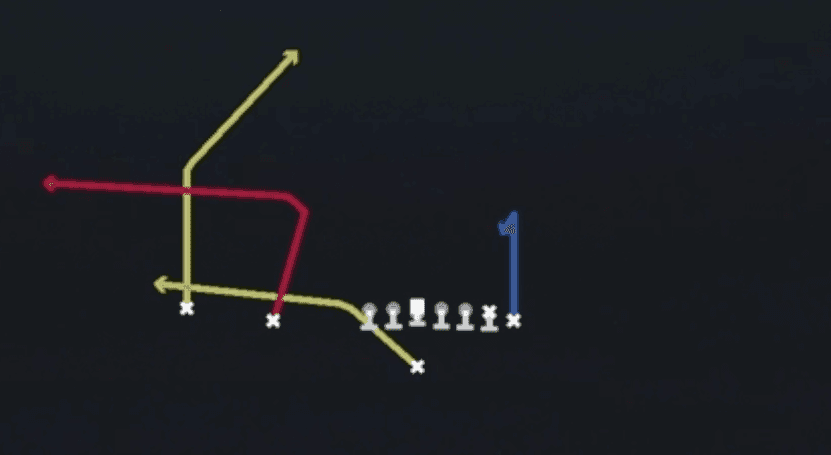 PA ForkPlay Action, Pass Play, Block and Release +3
 PA Fork Y-DigPlay Action, Dig, Pass Play
 PA Jet SweepSweep, Jet Sweep, Play Action +8
 PA Power OPlay Action, Pass Play, Corner +5
 PA RolloutPlay Action, Pass Play, Block and Release +4
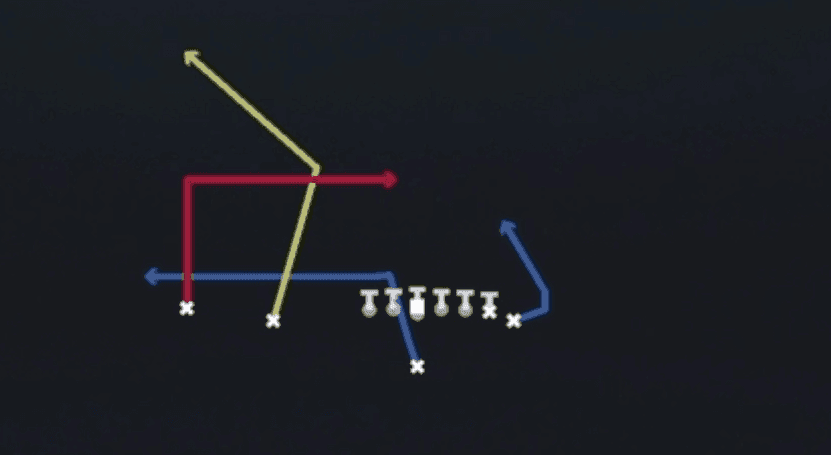 PA Sail DigPlay Action, Dig, Sail +7
 PA Sail X PostPlay Action, Post, Sail +6
 PA Slot N GoPlay Action, Go, Pass Play +4
 PA Sprint HB FlatPlay Action, Flat, Pass Play +4
- PA StretchPlay Action, Pass Play, Post +2
 PA TE ScissorsPlay Action, Scissors, Pass Play +2
- PA TE Scissors (20)Play Action, Scissors, Pass Play +6
 PA Y CornerPlay Action, Corner, Pass Play +3
- PA Y Cross FloodPlay Action, Crosser, Flood +8
 PA Y DragPlay Action, Drag, Pass Play +5
 PA Y-Drag WheelPlay Action, Wheel, Drag +5
- PA Y-pocoPlay Action, Post Corner, Pass Play +6
 Quick SlantQuick Pass, Slant, Pass Play +2
 Slot DeepPass Play, Go, Flat +7
 Slot PostPass Play, Block and Release, Curl +4
 SmashSmash, Pass Play, Cover 2 Beater +6
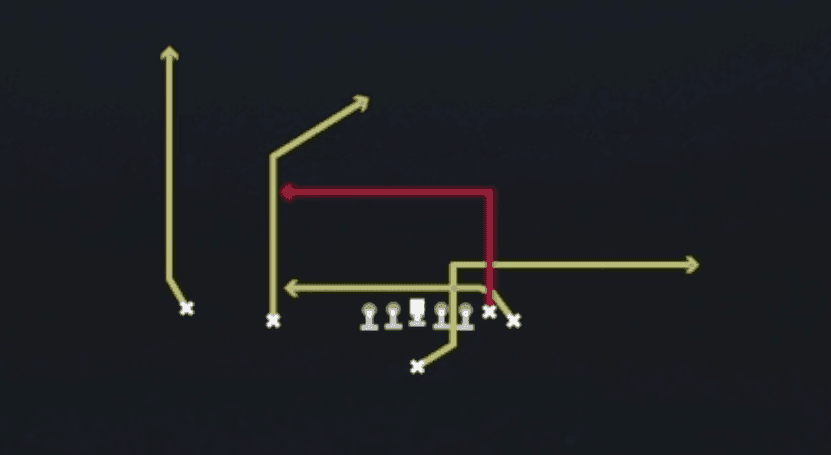 U DriveDrive, Pass Play, Cover 4 Beater +6
 U Drive CheckDrive, Pass Play, Cover 4 Beater +6
 X CurlCurl, Pass Play, Out +1
 X ReturnMotion, Post Sit, Streak +2
- Y-go Slot CrossGo, Crosser, Pass Play +5
 Y StickStick, Stick Concept, Pass Play +2
 Zone Fake JetMotion, Run Play