Playbooks

Quick Reference
In 2 playbooks
Breakdown
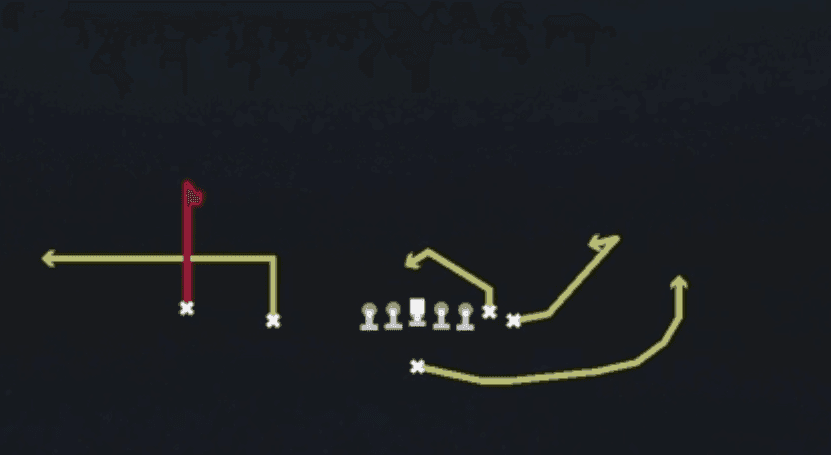
HB Power out of Singleback Wing Slot is a gap scheme run play with a pulling guard leading the HB through the designated hole, using the extra tight end and wing alignment to create a numbers advantage on the point of attack. The diagram shows the two receivers running vertical routes to occupy deep coverage while the offensive line and TEs execute down blocks with a puller kicking out the edge defender, and the HB takes the handoff and follows the puller through the alley. This is strictly a run play with no play-action or RPO element, and the primary read progression for the ball carrier is to press the hole, read the puller's kick block, and cut off the block into whichever crease opens between the tackle and TE.
Defensive Reads
Watch linebacker depth pre-snap; if they are sitting shallow and crashing downhill on run reads, they will beat the puller to the hole and blow this play up. Look for safety rotation into the box, since an eight-man front with both safeties creeping down can outnumber the blocking scheme and force a negative play. Key the defensive end or edge player assigned to the pulling guard's kick block; if the CPU or user defender wrong-arms the block, the ball carrier should cut back inside immediately. This run struggles against interior nano blitz packages where a defensive tackle shoots the A-gap untouched, so avoid calling it into heavy inside blitz looks. It beats light boxes and Cover 3 or Cover 4 shells where the defense commits extra defenders to the deep vertical routes, leaving the box light for the gap scheme to work.
Usage Tips
Run this on early downs (1st and 10 or 2nd and short) when you want to establish tempo and set up play-action off the same look later in the drive.
Check the box count pre-snap: if the defense has six or more in the box with no extra safety help, this play still works because of the numbers advantage created by the pulling lineman, but consider audibling to a bounce-out concept if the edge is crashing hard.
Identify whether the defense is in a run-fit alignment with linebackers stacked tight; if they are shading heavy to one side, flip the play strength to attack the weaker side of the front.
Pair this call with PA Power O and PA FL Dive later in the series since both plays share the same initial blocking action and backfield footwork, making it difficult for defenders keying the mesh point to distinguish run from pass.
User the fullback or lead blocker if available to manually seal the most dangerous run blitzer, since the CPU logic on the puller can miss assignments against odd-front blitz packages.
Other Plays in Wing Slot
 26 DuoDuo, Run Play, Power Run
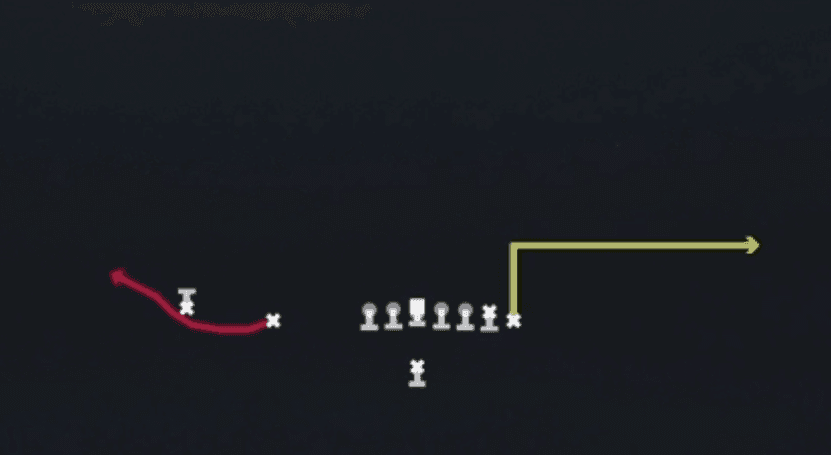 Bubble ScreenScreen Pass, Bubble Screen, Pass Play +1
 Counter UCounter, Run Play, Power Run
 DaggerDagger, Pass Play, Cover 2 Beater +6
 Dragon SpacingSpacing, Pass Play, Cover 3 Beater +5
 Four VerticalsFour Verts, Pass Play, Cover 2 Beater +6
 HB Ace PowerPower, Run Play, Power Run
 HB DiveDive, Run Play
- HB Mid ZoneRun Play
 HB MisdirectionMisdirection, Run Play
 HB Power OPower, Run Play, Power Run
 HB SlamDive, Run Play
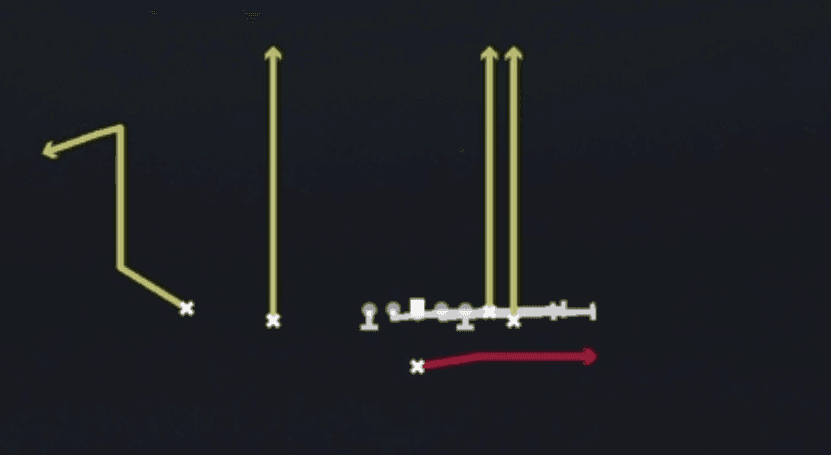 HB Slip ScreenScreen Pass, Hb Screen, Pass Play +2
 HB StretchOutside Zone, Run Play, Zone Run
- HB Toss StrongToss, Run Play
 HB Zone Alert BubbleInside Zone, Run Play, Zone Run +2
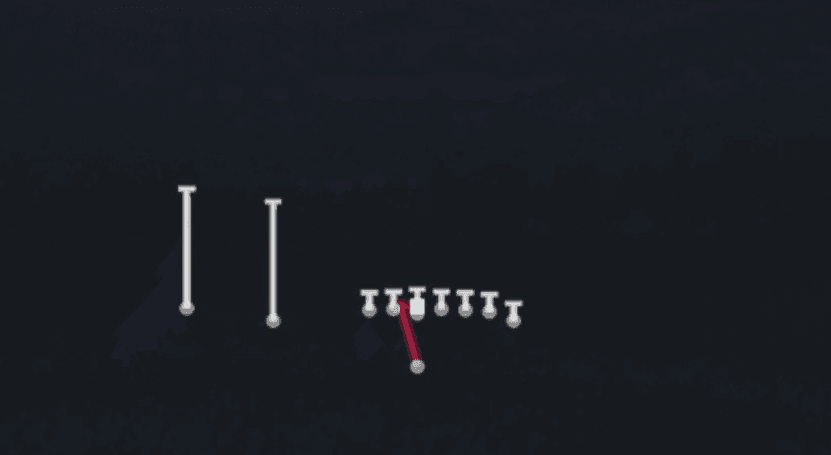 HB Zone WkInside Zone, Run Play, Zone Run
 H Misdirection StrMisdirection, Run Play
 H Zone StrRun Play, Outside Zone, Zone Run +1
 Inside Zone SplitInside Zone, Run Play, Zone Run
 Jet 6 Drive WheelWheel, Drive, Motion +7
 Jet HB PowerPower, Motion, Run Play +1
 Jet HB SlashMotion, Run Play
- Jet PA Boot ScreenScreen Pass, Corner, Streak +5
- Jet PA Boot SlideCorner, Deep Cross, Crosser +6
 Jet PA Boot Y LeakPlay Action, Motion, Pass Play +5
 Jet PA PowerPlay Action, Motion, Pass Play +4
 Jet SweepSweep, Jet Sweep, Motion +1
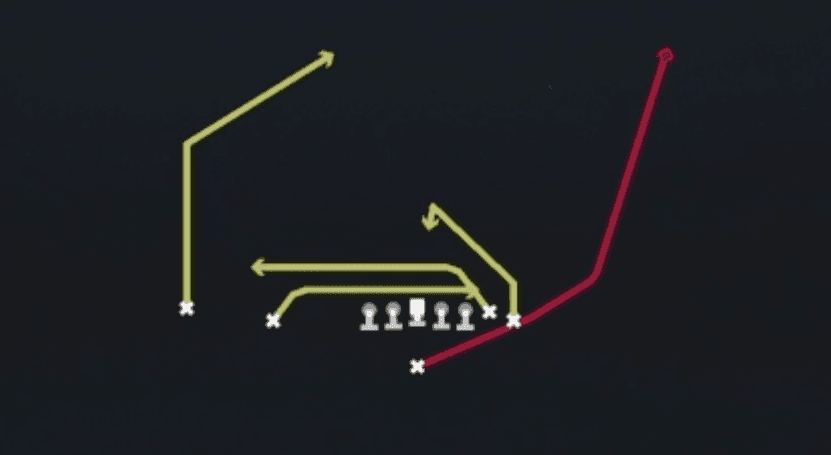 Mesh SpotSpot, Mesh, Pass Play +7
 Mtn Duo WrapDuo, Motion, Run Play +1
- Mtn HB Zone WKInside Zone, Motion, Run Play +1
 Mtn PA Z SlidePlay Action, Slide, Motion +6
 Mtn Wide Zone WkOutside Zone, Motion, Run Play +1
 Off TackleOff Tackle, Run Play
- Out N UpOut, Out And Up, Pass Play +2
 PA Boot SlidePlay Action, Slide, Pass Play +5
 PA Boot TE LeakPlay Action, Pass Play, Deep Cross +4
 PA Boot Y SailPlay Action, Sail, Pass Play +2
- PA Boot Y Sail (m20)Play Action, Sail, Pass Play +7
 PA Counter StrPlay Action, Pass Play, Deep Cross +5
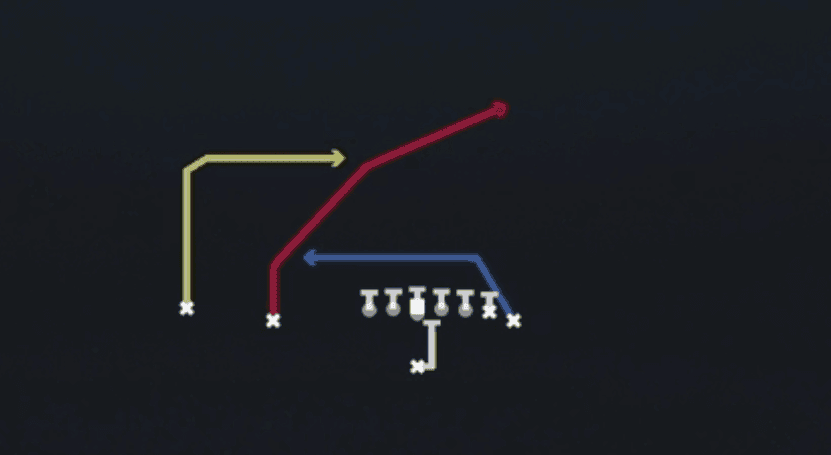 PA Cross Dig ShotPlay Action, Dig, Crosser +3
 PA DaggerPlay Action, Dagger, Pass Play +6
 PA FL DiveDive, Play Action, Pass Play +5
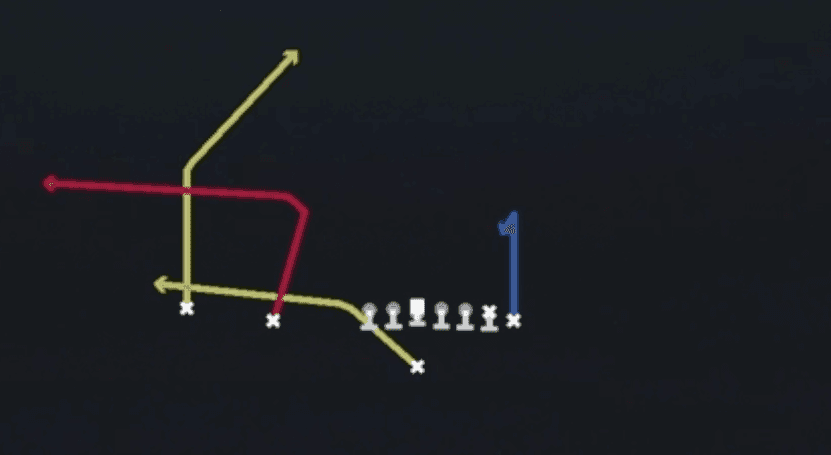 PA ForkPlay Action, Pass Play, Block and Release +3
 PA Fork Y-DigPlay Action, Dig, Pass Play
 PA Jet SweepSweep, Jet Sweep, Play Action +8
 PA Power OPlay Action, Pass Play, Corner +5
 PA RolloutPlay Action, Pass Play, Block and Release +4
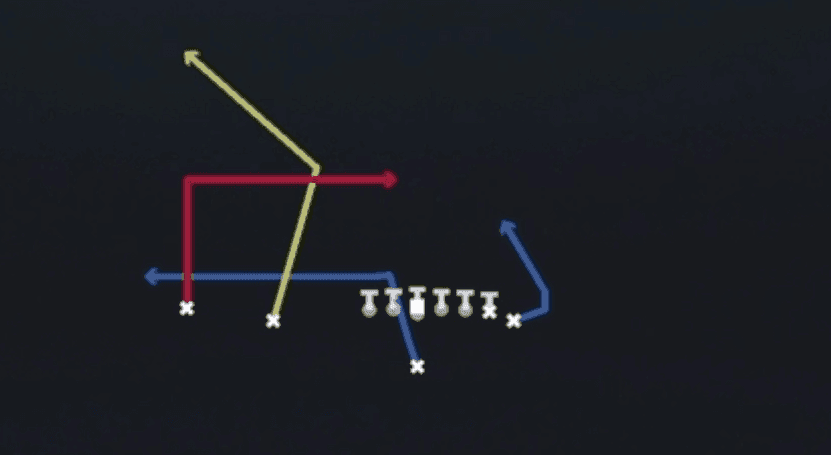 PA Sail DigPlay Action, Dig, Sail +7
 PA Sail X PostPlay Action, Post, Sail +6
 PA Slot N GoPlay Action, Go, Pass Play +4
 PA Sprint HB FlatPlay Action, Flat, Pass Play +4
- PA StretchPlay Action, Pass Play, Post +2
 PA TE ScissorsPlay Action, Scissors, Pass Play +2
- PA TE Scissors (20)Play Action, Scissors, Pass Play +6
 PA Y CornerPlay Action, Corner, Pass Play +3
- PA Y Cross FloodPlay Action, Crosser, Flood +8
 PA Y DragPlay Action, Drag, Pass Play +5
 PA Y-Drag WheelPlay Action, Wheel, Drag +5
- PA Y-pocoPlay Action, Post Corner, Pass Play +6
 PA Y ScreenPlay Action, Screen Pass, Pass Play +5
 Quick SlantQuick Pass, Slant, Pass Play +2
 Slot DeepPass Play, Go, Flat +7
 Slot PostPass Play, Block and Release, Curl +4
 SmashSmash, Pass Play, Cover 2 Beater +6
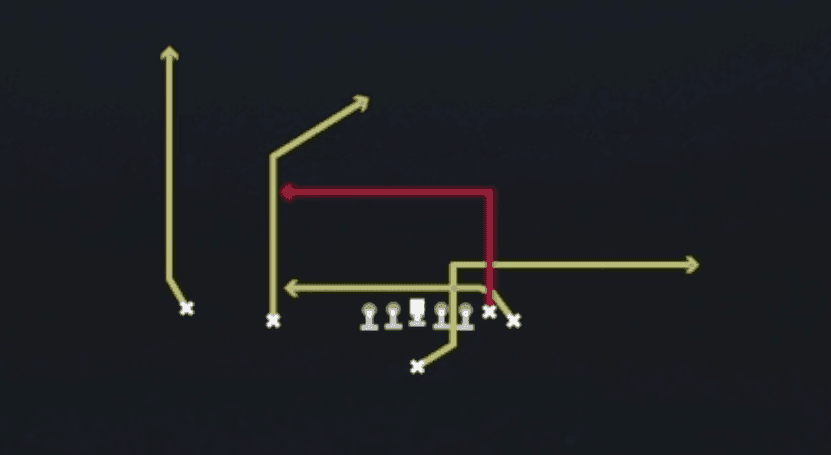 U DriveDrive, Pass Play, Cover 4 Beater +6
 U Drive CheckDrive, Pass Play, Cover 4 Beater +6
 X CurlCurl, Pass Play, Out +1
 X ReturnMotion, Post Sit, Streak +2
- Y-go Slot CrossGo, Crosser, Pass Play +5
 Y StickStick, Stick Concept, Pass Play +2
 Zone Fake JetMotion, Run Play