Playbooks
Likely unavailable in the playbook builder

Quick Reference
Not in any team playbook.
Breakdown
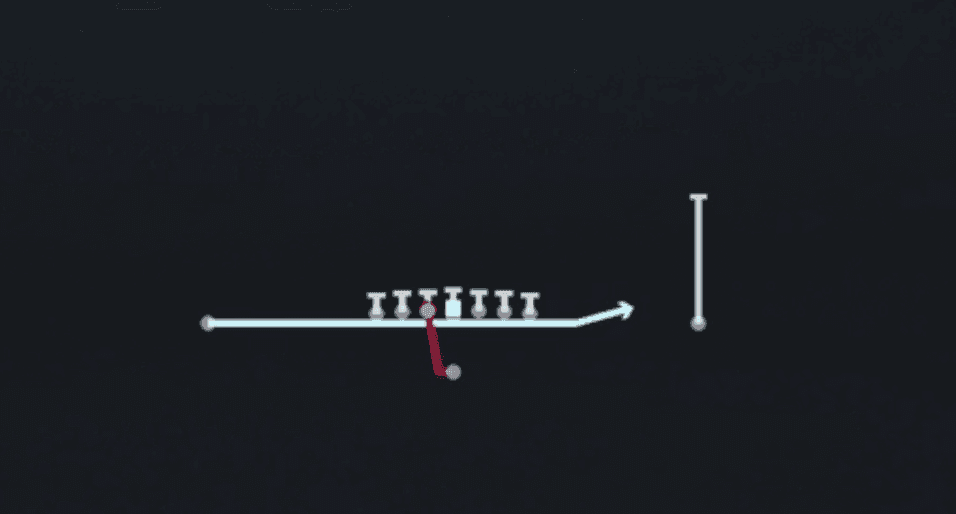
PA Shot Post runs out of Singleback Ace 12 personnel with a play-action fake to hold the linebackers before the QB works his shot play concept. The diagram shows a deep post from the right side breaking hard toward the middle of the field, a corner route out of the backfield or slot bending to the right sideline, and a shallow out route from the left side that sits down for a quick underneath option. This is a man beater at its core, since the post is designed to split zone defenders while creating natural leverage against man coverage, and the primary read progression starts with the deep post, works to the corner route if the safety cheats over the top, and checks down to the shallow out as the last resort against pressure.
Defensive Reads
Identify the safety alignment before the snap, since single high shells leave the post route vulnerable to a wide open window in the middle of the field. Watch for the middle linebacker depth after the play fake, because a shallow drop or run bite confirms the post lane is clear for the throw. Key on the corner playing the deep third or deep half, since a corner sitting in a hard outside shade will struggle to recover on the post breaking inside. Recognize two high safety shells that can rotate down to double the post route, forcing the quarterback to check down to the shallow out or corner route instead. Look for a lurking linebacker or nickel defender sitting in the shallow crossing lane, as this defender can jump the underneath out route and bait a turnover on the checkdown.
Usage Tips
Sell the play action fake fully before checking your first read, since the linebacker bite window is what opens the post route against man coverage.
Look for single high safety shells pre-snap, because the post route has a much smaller window against two high safety looks that can rob the throw over the top.
Use the corner route as a hot route adjustment if you see the corner playing hard inside leverage, since that flips the leverage advantage to your outside route.
Pair this play with PA Post Dig or PA Post Cross Shot on back to back calls so the defense cannot key on the same shot play concept every third down.
Best called on second and medium or third and short situations where the offense has already established the run game and defenders are more likely to respect the play fake.
Other Plays in Ace
 23 Zone OpenRun Play, Outside Zone, Zone Run +1
- 24 Zone OpenRun Play
 26 DuoDuo, Run Play, Power Run
- Ace OverloadDrag, Crosser, Post Corner +3
 Ace TE DragDrag, Pass Play, Post +3
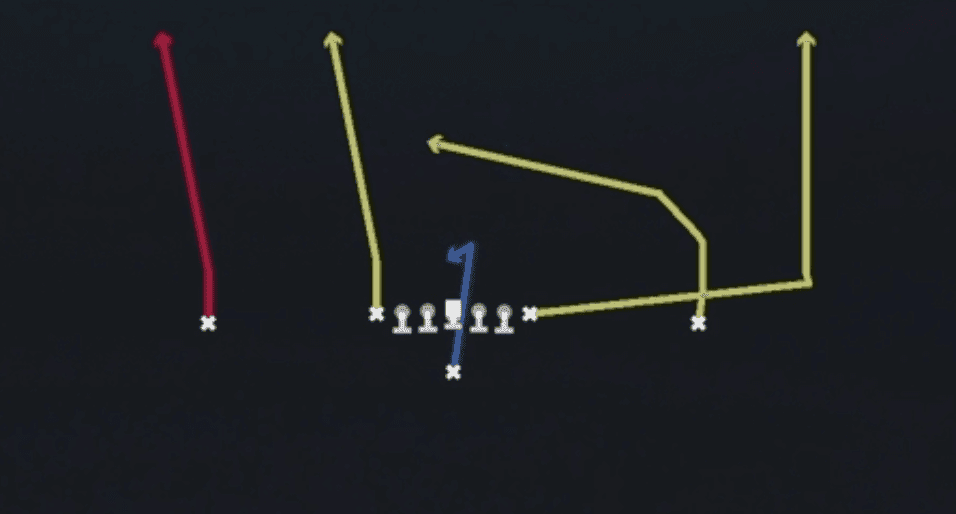 Ace WR StretchBlock and Release, Deep Cross, Crosser +3
 Corner StrikeCorner, Pass Play, Block and Release +1
 Curl FlatsFlat, Curl, Pass Play +1
 Double HitchHitch, Pass Play, Corner +1
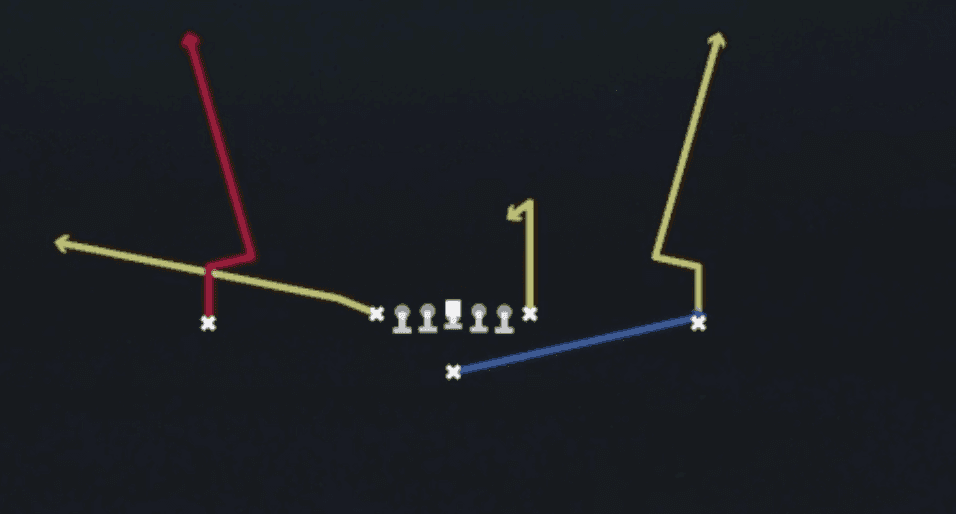 Double SluggoSluggo, Pass Play, Man Beater +3
- Drive U CornerCorner, Block and Release, Post +4
 Dual TE FlatFlat, Pass Play, Block and Release +1
 Flanker CurlCurl, Pass Play, Post +2
 Flanker DriveDrive, Pass Play, Cover 4 Beater +6
- Fl CornerCorner, Pass Play, Flat +2
 FL UnderPass Play, Corner, Out +7
 HB Blunt DiveDive, Run Play
 HB CounterCounter, Run Play, Power Run
- HB Counter StrCounter, Run Play, Power Run
 HB DiveDive, Run Play
 HB DrawDraw, Run Play
- HB MisdirectionMisdirection, Run Play
- HB Misdirection MtnRun Play
 HB Off TackleOff Tackle, Run Play
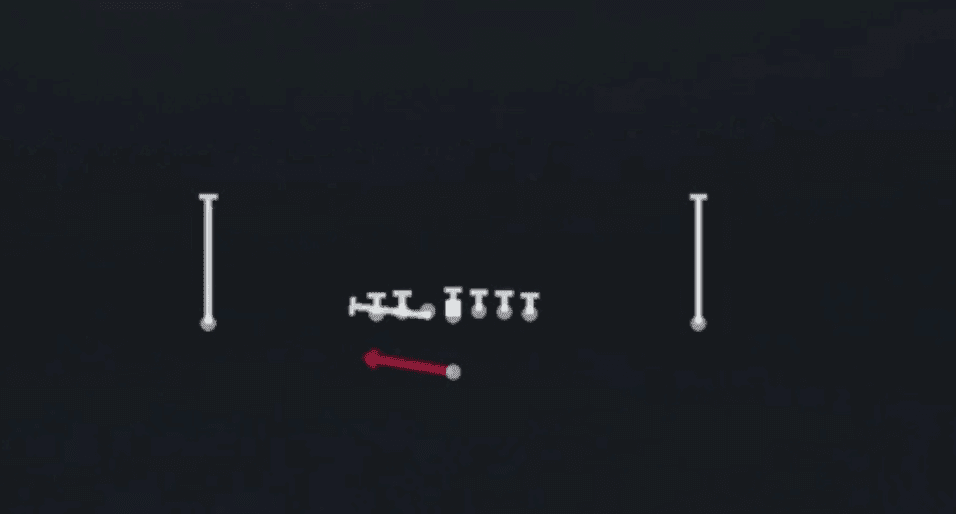 HB PitchToss, Run Play
 HB Pump DrawDraw, Run Play
 HB SlamDive, Run Play
 HB Slam MtnDive, Motion, Run Play
 HB Slip ScreenScreen Pass, Hb Screen, Pass Play +3
 HB StretchOutside Zone, Run Play, Zone Run
 HB Stretch Alert X LookieOutside Zone, Run Play, Zone Run +2
 HB Stretch Alert X SmokeOutside Zone, Run Play, Zone Run +2
 HB Zone WkInside Zone, Run Play, Zone Run
 HB Zone Wk Alert Z SmokeInside Zone, Run Play, Zone Run +2
 Inside CrossCrosser, Pass Play, Block and Release +3
 Inside ZoneInside Zone, Run Play, Zone Run
 Jet SweepSweep, Jet Sweep, Motion +1
- Lions ComebacksComeback, Pass Play, Block and Release
- Mtn HB Lead MisdirectionRun Play
 Mtn Inside ZoneInside Zone, Motion, Run Play +1
- Mtn PA Z SlideBlock and Release, Comeback, Deep Cross +6
- Mtn Wide ZoneRun Play
 PA All GoPlay Action, Go, Pass Play +2
 PA BootPlay Action, Pass Play, Block and Release +3
 PA Boot LeftPlay Action, Pass Play, Block and Release +4
- PA Boot RollPlay Action, Pass Play, Block and Release +3
- PA CounterPlay Action, Pass Play, Comeback +2
 PA Ctr WagglePlay Action, Pass Play, Block and Release +4
 PA DBL GoPlay Action, Go, Pass Play +3
 PA Deep InPlay Action, Pass Play, Comeback +4
- PA FloodPlay Action, Flood, Pass Play +5
 PA Jet SweepSweep, Jet Sweep, Play Action +5
- PA Post Cross ShotPlay Action, Post, Crosser +3
- PA Post DigPlay Action, Dig, Post +4
 PA Roll RtPlay Action, Pass Play, Block and Release +4
- PA Sprint HB FlatPlay Action, Flat, Pass Play +3
 PA StretchPlay Action, Pass Play, Comeback +5
- PA X Burst CrossPlay Action, Crosser, Pass Play +3
 Pin Pull SweepSweep, Pin And Pull, Run Play +1
 Quick SlantsSlant, Pass Play, Flat
 Skinny PostsPost, Skinny Post, Pass Play +2
 TE CrossCrosser, Pass Play, Deep Cross +3
 TE OptionOption Route, Pass Play, Corner +4
 TE Seam OptionSeam, Option Route, Pass Play +3
 TE UnderPass Play, Drag, Shallow Cross +10
 WR OptionOption Route, Pass Play, Block and Release +2
- WR ScreenScreen Pass, Wr Screen, Pass Play +3
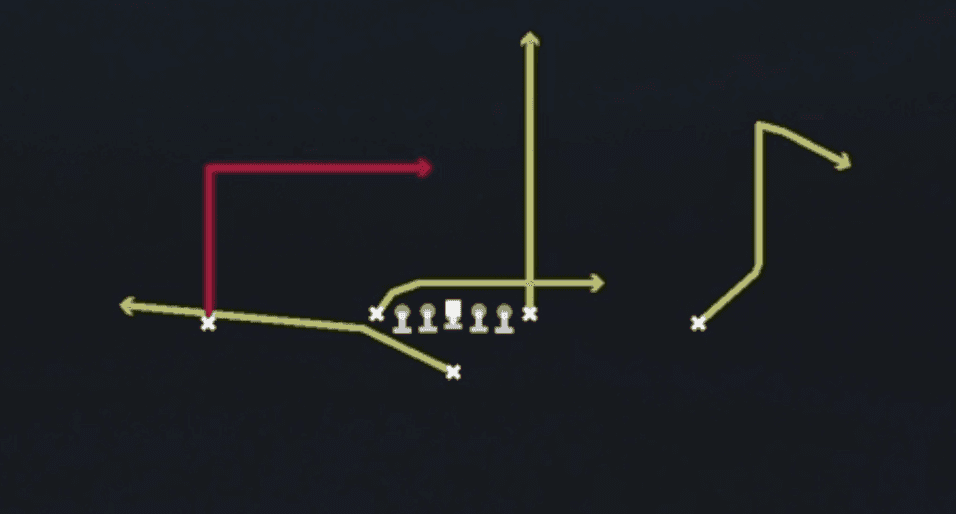 X FollowPass Play, Go, Seam +9
 X PostPost, Pass Play, Flat +1
 Y Shallow CrossShallow Cross, Crosser, Pass Play +3
 Zone Fake JetMotion, Run Play
- Z Post Y OutOut, Post, Pass Play +2
 Z SpotSpot, Pass Play, Cover 3 Beater +4