Playbooks
Likely unavailable in the playbook builder
Quick Reference
In 1 playbook
Receiver routes
Depth-chart slots are shown as they line up in the base package for this set.
| Player | Side | Route |
|---|---|---|
| HB1 | Middle | Pass Block |
| TE2 | Left | Speed Out |
| WR1 | Left | Post Corner |
| WR2 | Right | Drag |
| TE1 | Right | Speed In |
Read progression
- WR1 left, Post Corner
- TE2 left, Speed Out
- TE1 right, Speed In
- WR2 right, Drag
Breakdown
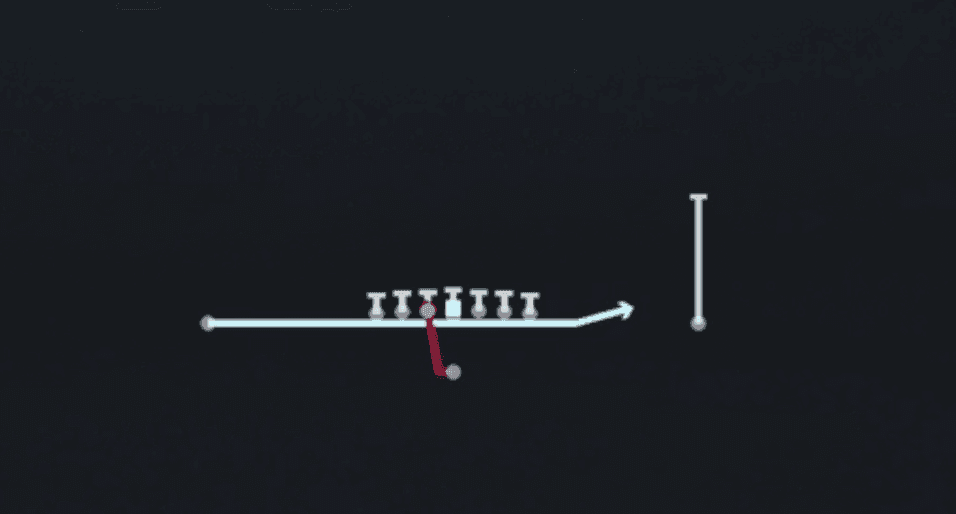
Singleback Ace Overload lines up with 12 personnel and shifts extra strength to one side of the formation, creating a natural overload look against the defense. This is primarily a run play built off inside zone and man blocking concepts, using the extra tight end to seal the edge or double team the defensive end at the point of attack. The primary read progression for the ball carrier starts with the playside double team, then bounces to the alley if the linebacker fills fast, keying the first unblocked defender off the overloaded edge.
Defensive Reads
Pre-snap, check the strength of the defensive front and see if it shifts to match the overload side, which tells you if the defense is run heavy or passing off the numbers. Watch linebacker depth: if they are stacked tight to the line, expect an aggressive fill and be ready to bounce the run outside the overload double team. This run beats base 4-3 and 3-4 fronts that do not shift, along with man coverage looks that leave the box light. It struggles against odd fronts with a heavy nose and Bear fronts that add extra gap defenders, since the overload side gets outnumbered. Post-snap, key the play side linebacker's first step: if he attacks downhill immediately, look for the cutback lane behind the double team rather than forcing it into a stacked box. Be wary of defenses that show blitz off the weak side, since a fast backside linebacker can chase down the run before the double team develops.
Usage Tips
Use pre-snap motion or shifts sparingly here since the formation already declares strength, so watch for defenses adjusting their front to match the overload side before the snap.
Identify the box count immediately: if the defense has six or fewer in the box, this run has a clean path, but against seven or eight in the box you should hot route the backside TE into a stalk block or check to a pass concept from this set like PA Boot Roll or PA Ctr Waggle.
Attack the play early in a game to establish tendencies, then pair it later with HB Counter Str or Pin Pull Sweep out of the same personnel to keep linebackers guessing on flow direction.
On third and short or goal line situations this play shines because the extra gap on the overload side is tough for base fronts to fit cleanly.
If the CPU or opponent shows a bubble or crashing defensive end, hot route the fullback or extra TE to chip and release into the flat as a checkdown outlet.
Other Plays in Ace
 23 Zone OpenRun Play, Outside Zone, Zone Run +1
- 24 Zone OpenRun Play
 26 DuoDuo, Run Play, Power Run
 Ace TE DragDrag, Pass Play, Post +3
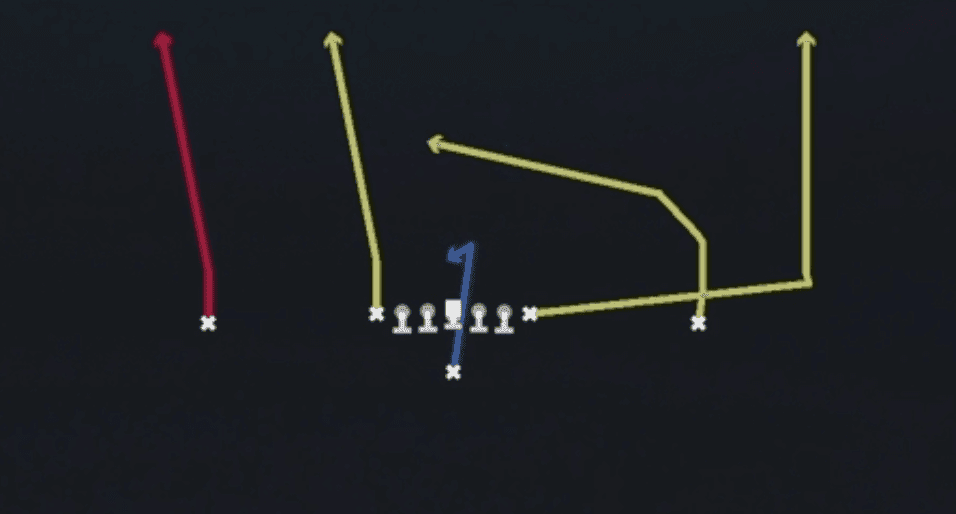 Ace WR StretchBlock and Release, Deep Cross, Crosser +3
 Corner StrikeCorner, Pass Play, Block and Release +1
 Curl FlatsFlat, Curl, Pass Play +1
 Double HitchHitch, Pass Play, Corner +1
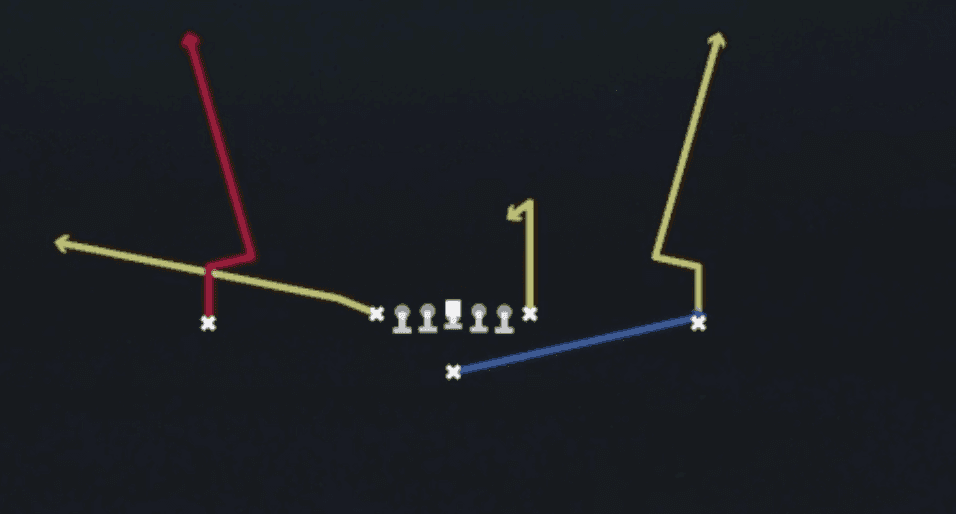 Double SluggoSluggo, Pass Play, Man Beater +3
- Drive U CornerCorner, Block and Release, Post +4
 Dual TE FlatFlat, Pass Play, Block and Release +1
 Flanker CurlCurl, Pass Play, Post +2
 Flanker DriveDrive, Pass Play, Cover 4 Beater +6
- Fl CornerCorner, Pass Play, Flat +2
 FL UnderPass Play, Corner, Out +7
 HB Blunt DiveDive, Run Play
 HB CounterCounter, Run Play, Power Run
- HB Counter StrCounter, Run Play, Power Run
 HB DiveDive, Run Play
 HB DrawDraw, Run Play
- HB MisdirectionMisdirection, Run Play
- HB Misdirection MtnRun Play
 HB Off TackleOff Tackle, Run Play
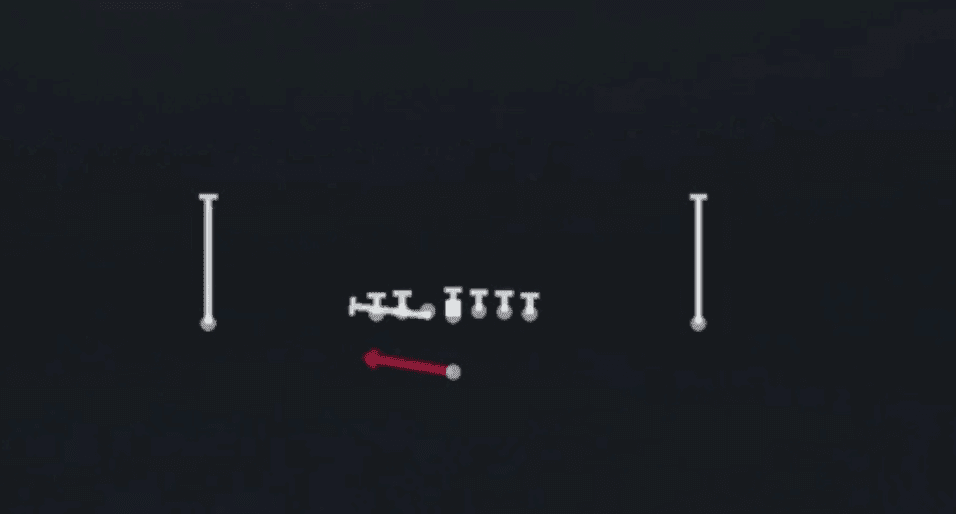 HB PitchToss, Run Play
 HB Pump DrawDraw, Run Play
 HB SlamDive, Run Play
 HB Slam MtnDive, Motion, Run Play
 HB Slip ScreenScreen Pass, Hb Screen, Pass Play +3
 HB StretchOutside Zone, Run Play, Zone Run
 HB Stretch Alert X LookieOutside Zone, Run Play, Zone Run +2
 HB Stretch Alert X SmokeOutside Zone, Run Play, Zone Run +2
 HB Zone WkInside Zone, Run Play, Zone Run
 HB Zone Wk Alert Z SmokeInside Zone, Run Play, Zone Run +2
 Inside CrossCrosser, Pass Play, Block and Release +3
 Inside ZoneInside Zone, Run Play, Zone Run
 Jet SweepSweep, Jet Sweep, Motion +1
- Lions ComebacksComeback, Pass Play, Block and Release
- Mtn HB Lead MisdirectionRun Play
 Mtn Inside ZoneInside Zone, Motion, Run Play +1
- Mtn PA Z SlideBlock and Release, Comeback, Deep Cross +6
- Mtn Wide ZoneRun Play
 PA All GoPlay Action, Go, Pass Play +2
 PA BootPlay Action, Pass Play, Block and Release +3
 PA Boot LeftPlay Action, Pass Play, Block and Release +4
- PA Boot RollPlay Action, Pass Play, Block and Release +3
- PA CounterPlay Action, Pass Play, Comeback +2
 PA Ctr WagglePlay Action, Pass Play, Block and Release +4
 PA DBL GoPlay Action, Go, Pass Play +3
 PA Deep InPlay Action, Pass Play, Comeback +4
- PA FloodPlay Action, Flood, Pass Play +5
 PA Jet SweepSweep, Jet Sweep, Play Action +5
- PA Post Cross ShotPlay Action, Post, Crosser +3
- PA Post DigPlay Action, Dig, Post +4
 PA Roll RtPlay Action, Pass Play, Block and Release +4
 PA Shot PostPlay Action, Post, Pass Play
- PA Sprint HB FlatPlay Action, Flat, Pass Play +3
 PA StretchPlay Action, Pass Play, Comeback +5
- PA X Burst CrossPlay Action, Crosser, Pass Play +3
 Pin Pull SweepSweep, Pin And Pull, Run Play +1
 Quick SlantsSlant, Pass Play, Flat
 Skinny PostsPost, Skinny Post, Pass Play +2
 TE CrossCrosser, Pass Play, Deep Cross +3
 TE OptionOption Route, Pass Play, Corner +4
 TE Seam OptionSeam, Option Route, Pass Play +3
 TE UnderPass Play, Drag, Shallow Cross +10
 WR OptionOption Route, Pass Play, Block and Release +2
- WR ScreenScreen Pass, Wr Screen, Pass Play +3
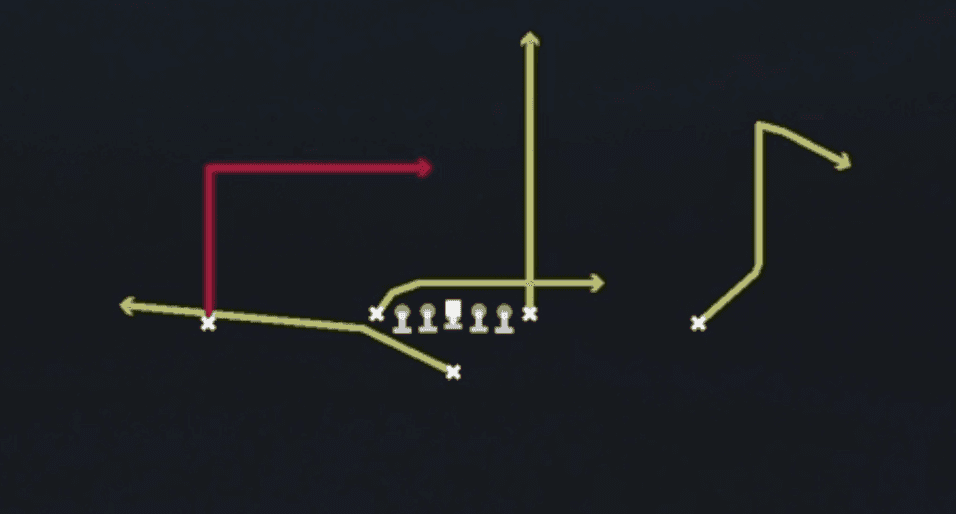 X FollowPass Play, Go, Seam +9
 X PostPost, Pass Play, Flat +1
 Y Shallow CrossShallow Cross, Crosser, Pass Play +3
 Zone Fake JetMotion, Run Play
- Z Post Y OutOut, Post, Pass Play +2
 Z SpotSpot, Pass Play, Cover 3 Beater +4