Playbooks
Playbook
Legends Offense
OtherOffenseOverview
The Legends Offense is an under-center, two-back specialty playbook built around a power run game and play-action shots. It carries 361 plays across 8 formations and 31 sets, which makes it larger than 88% of the game's 26 offensive specialty playbooks. Almost half of the book (166 plays, 46%) lives in Singleback across 12 sets. The other half leans heavily on fullback and split-back looks: Strong I (18%), Near (12%), I Form (8%), Far (7%) and Weak I (4%) combine for roughly 49% of the playbook. Goal Line Offense and Hail Mary round out the situational packages. There is no Shotgun, Pistol or Empty formation, so every snap starts with the quarterback under center.
The real draw is the Near and Far split-back formations. Far appears in only 6 of the game's 236 playbooks and Near in only 9, so most opponents rarely have to defend these alignments. You get the pro-set backfield with two backs offset or split, which gives you balanced run threats to both sides and lets swing and wheel routes out of the backfield develop without tipping your hand. Sample calls like 0 1 Trap, Counter Weak, HB Gut and FB Dive show a downhill, misdirection-heavy ground attack. The listed pass concepts (Flood, Sail, Curl, Post, Corner, Go, Out, Wheel, Swing, plus dedicated Cover 2 and Cover 3 beaters) are built to punish defenses that creep up to stop that run.
Pick the Legends Offense if you want to win time of possession, lean on a fullback and play-action out of heavy personnel, and show defenses looks they have not prepared for. The personnel range runs from 23 and 13 jumbo packages all the way to 10 personnel four-wide. That range lets you stay in a single playbook while subbing heavily by situation. It is a grinder's book, not a spread book.
Scheme Fit
The Legends Offense wants a pocket quarterback with strong play-action and deep accuracy, a physical power back with high trucking and break tackle ratings, and a fullback who can lead block and catch out of the flat. Sturdy run-blocking linemen and at least one tight end who blocks and catches are essential, since so much of the book lives in 12, 13, 21, 22 and 23 personnel. It suits patient, run-first players who want to control the clock and set up vertical play-action shots, not users who rely on Shotgun spread passing.
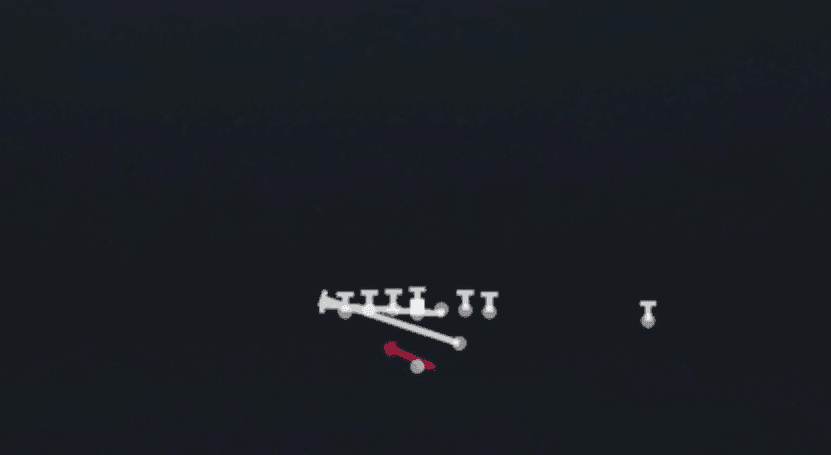
Example Plays from this Playbook




Find plays by concept, not by formation
Search every playbook by tag and personnel grouping, not just Legends Offense.
Strengths
- Rare split-back looks: Near and Far appear in only 6 and 9 of 236 playbooks, so opponents have little film or muscle memory against these backfields and often misread run strength and flow at the snap.
- Roughly 49% of the book comes from two-back formations (Strong I, Near, I Form, Far, Weak I), which gives you a lead blocker on nearly every run and a fullback who can be hot routed to a flat or swing as a checkdown when the defense brings pressure.
- The Singleback depth (166 plays across 12 sets) lets you run the same concepts like Flood, Sail and Curls out of multiple personnel groups, from 13 and 12 down to 11 and 10. That makes formation subs and personnel-based tendencies hard for an opponent to read.
- Play-action lives off a credible run game: counters, traps and dives like Counter Weak, 0 1 Trap and HB Gut force user-controlled linebackers to step down, which opens the Post, Corner and Go shots behind them.
- Specific Cover 2 and Cover 3 beaters plus Flood and Sail concepts give you answers to the zone shells that defenses play most often against heavy personnel.
Weaknesses
- There is not a single Shotgun, Pistol or Empty snap in the book, so in true obvious passing downs like 3rd and 10 or two-minute drills you are dropping back from under center with slower reads and less time than spread playbooks allow.
- With about half the plays in fullback and split-back sets, heavy personnel is a strong tell. Opponents can match with base or goal line defense, stack the box and use a nano blitz off the edge knowing a run or play-action is likely.
- The listed concepts lean toward outside-breaking and vertical routes (Out, Corner, Curl, Post, Go, Sail). That leaves fewer quick-rhythm man beaters, so press man with a user-controlled safety can stall drives if your receivers cannot win the release.
- Goal Line Offense has only 12 plays in one set and Hail Mary only 3. Your short-yardage and desperation menus are thin, and a defense that has seen your few goal line calls can key on them.
- The 10 and 11 personnel options are a small slice of a book built around backs and tight ends. Players with a deep receiver room get less value from their wideouts than they would in a spread-oriented playbook.
Usage Tips
Build your base audible package around Singleback: keep a run like Ace Overload, a Flood or Sail concept and a Cover 3 beater on the audible wheel. That lets you check between run and pass on 1st and 10 without changing personnel.
On 2nd and short or 3rd and 1 to 3, reach for Strong I or I Form and call downhill runs like FB Dive or HB Gut. If you see a loaded box pre-snap, flip to play-action and hot route the fullback to a flat or wheel.
Save Near and Far for 1st down and 2nd and medium. The split backfield disguises run direction, so alternate 0 1 Trap and Counter Weak style misdirection with swing and wheel routes to the backs until the defense overcommits.
On 3rd and 7 or longer, stay in Singleback with 11 or 10 personnel and target the Cover 2 and Cover 3 beaters. Motion a receiver pre-snap to diagnose man versus zone, since you have no Shotgun to fall back on.
Inside the 5, use Goal Line Offense sparingly because of its single set. Mix in Strong I and Weak I play-action so the defense cannot sit on your limited goal line menu.
Formations in this playbook
- Bunch Base212 RB · 1 TE · 2 WR15 in book
- F Wing Slot212 RB · 1 TE · 2 WR15 in book
- East Tight131 RB · 3 TE · 1 WR9 in book
 Ace121 RB · 2 TE · 2 WR15 in book
 Ace Slot121 RB · 2 TE · 2 WR15 in book
 Deuce121 RB · 2 TE · 2 WR12 in book
 East121 RB · 2 TE · 2 WR12 in book
 Wing121 RB · 2 TE · 2 WR18 in book
 Doubles Y Off111 RB · 1 TE · 3 WR13 in book
- Y Off Trips111 RB · 1 TE · 3 WR15 in book
 Spread101 RB · 0 TE · 4 WR15 in book
 Trips Open101 RB · 0 TE · 4 WR12 in book
Upgrade to Playbooks Rookie
- Filter every play by tag and concept
- Personnel groupings
- Premium play analysis