Playbooks

Quick Reference
Breakdown
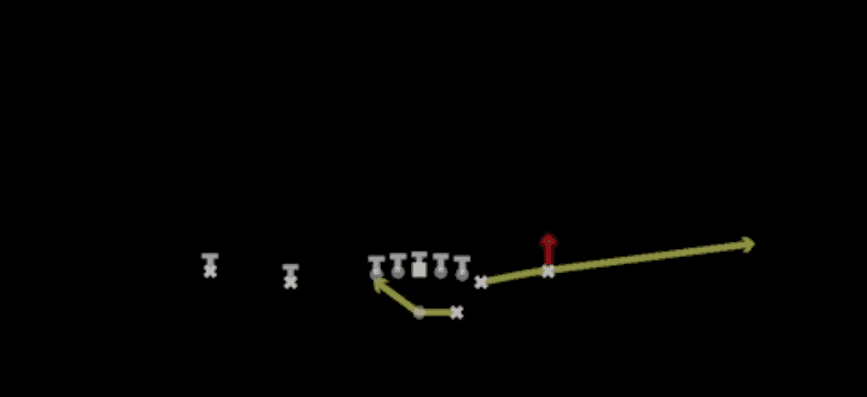
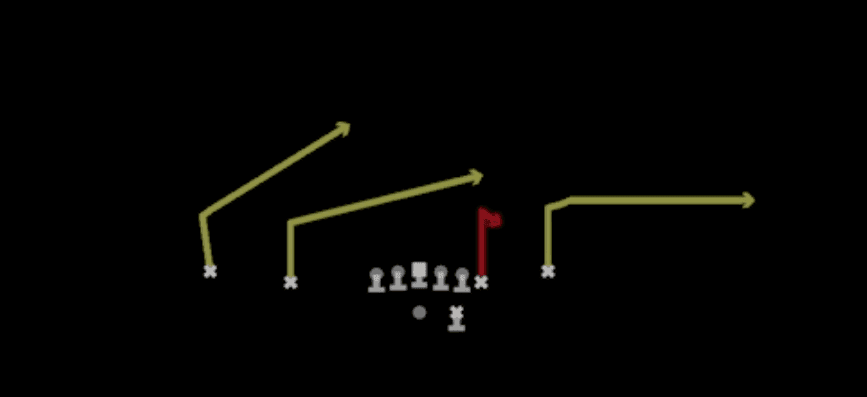
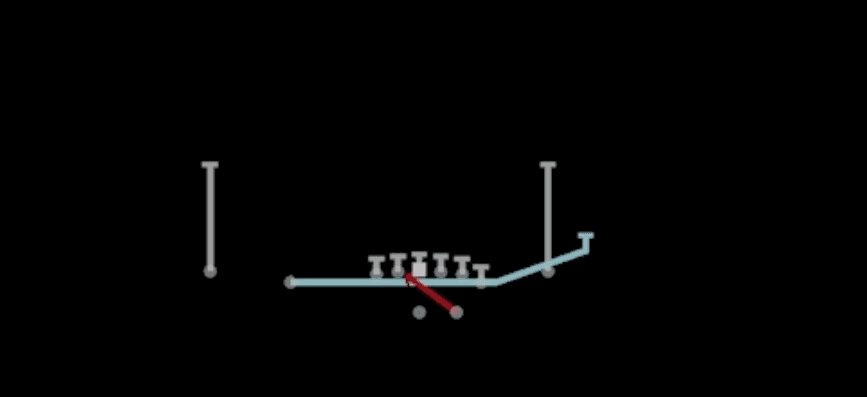
Power Read is a shotgun run play out of Normal Y Off Close with 11 personnel that reads off the play side edge defender. The diagram shows the offensive line pulling to establish power blocking to the left while the QB reads the unblocked end man on the line, giving or pulling based on how that defender crashes down or stays wide. This is a pure run play designed to attack gap integrity, not a man or zone beater since there are no route concepts shown, and the primary read progression is the QB keying the read defender first before deciding between the give to the RB or keeping it himself.
Defensive Reads
Watch the play side defensive end or outside linebacker before the snap since Power Read lives or dies on how that read defender reacts to the mesh point. Stacked fronts with a 4-3 under alignment tend to struggle against the power blocking since the pulling linemen create a clean lane if the read defender crashes hard. User controlled defenders spying the QB or sitting in the backfield can shut this down quickly, so if you see a user flash to the mesh point be ready to pull it before contact. Overload blitzes from the play side edge take away the natural conflict since the read defender is replaced by extra numbers, forcing a quick keep read. Watch linebacker depth pre-snap, if the second level defenders are sitting shallow expecting run they can fill the alley fast once the ball is pulled or handed off.
Usage Tips
Use pre-snap motion or a formation flip to identify if the defense is bringing extra run support before the snap so you know whether the read defender is a true conflict player or already accounted for by a blitzer.
Look for base fronts and light boxes since Power Read excels when the defense is in a 6 man box or lighter, giving the QB a clean numbers advantage on the edge.
Pair this play with RPO Zone Snag or RPO Alert Out from the same set so the defense has to respect both the QB run threat and quick passing game off similar formation looks.
If the defense shows heavy edge pressure or a crashing DE every snap, hot route the read into a designed keep by pulling the ball more aggressively rather than relying purely on the read mechanic.
Save this play for early down situations, first and ten or second and short, where defenses are less likely to sim blitz or bring extra defenders to the play side edge.
Other Plays in Normal Y Off Close
 Cheat Flat X PostFlat, Post, Motion +3
 Cheat Inside ZoneInside Zone, Motion, Run Play +1
 Cheat Slash Wheel InWheel, Motion, Pass Play +3
 Cheat Slot FadeFade, Motion, Pass Play +4
 Cheat TE AngleAngle, Motion, Pass Play +5
 Cheat TE ScreenScreen Pass, Te Screen, Motion +3
 Double SlantSlant, Pass Play, Post +2
 Empty Mtn HB SwingSwing, Motion, Pass Play +1
 Empty Mtn Jailbreak ScreenScreen Pass, Wr Screen, Motion +5
 Empty Mtn Spot ReplaceSpot, Motion, Pass Play +5
 EscapePass Play, Flood, Corner +10
- Exit HB Cross ScreenScreen Pass, Crosser, Corner +3
- Exit PA SmashCorner, Deep Cross, Crosser +6
- Exit RPO Zone HitchesHitch, Fade, Pass Play +1
- Fake Jet Y WheelPlay Action, Wheel, Motion +3
 Fk Jet Y WheelPlay Action, Wheel, Motion +1
- Flood H PostPost, Corner, Curl +2
 Inside ZoneInside Zone, Run Play, Zone Run
 Jet Pass Fk ZoneMotion, Run Play
 Jet Touch PassMotion, Run Play
 Mesh SpotSpot, Mesh, Pass Play +7
 Mtn Angle Y WheelWheel, Angle, Motion +5
- Mtn Dash FloodCorner, Deep Cross, Crosser +3
 Mtn HB AngleAngle, Motion, Pass Play +4
 Mtn HB SwingSwing, Motion, Pass Play +1
- Mtn Inside ZoneRun Play
- Mtn PA BootBlock and Release, Corner, Deep Cross +5
- Mtn Slot Shallow CrossShallow Cross, Crosser, Curl +5
 Mtn Snag CurlsSnag, Snag Concept, Motion +5
 Mtn Switch CornerCorner, Motion, Pass Play +4
 Mtn TE Middle ScreenScreen Pass, Te Screen, Motion +7
 PA Jet SweepSweep, Jet Sweep, Play Action +7
 PA SnagPlay Action, Snag, Snag Concept +5
 Read Counter BashCounter, Run Play, Power Run
 Read OptionRead Option, Run Play
 Redzone ScissorsScissors, Pass Play, Cover 2 Beater +6
 Reload HB SweepSweep, Motion, Run Play
 Reload Mesh SpotSpot, Mesh, Motion +8
 Reload PA CrossPlay Action, Motion, Pass Play +6
- Reload PA Deep SailCorner, Post, Flat +7
- Reload PA Shake BubblePlay Action, Motion, Pass Play +5
- Reload Quick HB TrailAngle, Corner, Deep Cross +4
- Reload RPO Zone SnagSnag, Bubble Screen, Flat +2
 RPO Alert Cheat BubbleRPO, Motion, Pass Play +3
 RPO Alert OutRPO, Out, Pass Play +1
 RPO Alert OutRPO, Out, Pass Play +1
 RPO Glance PostRPO, Post, Pass Play +1
 RPO Peek SpotRPO, Spot, Pass Play +2
 RPO Peek StickRPO, Stick, Stick Concept +2
- RPO Zone Alert OmahaRPO, Pass Play, Run Play +2
- RPO Zone Omaha HitchRPO, Hitch, Pass Play +3
- RPO Zone Peek GlanceRPO, Pass Play, Run Play +2
- RPO Zone SnagRPO, Snag, Snag Concept +6
- RPO Zone StickRPO, Stick, Stick Concept +3
- RZ Cross HB ChoiceCrosser, Option Route, Corner +3
- Same Side ZoneRun Play
 Wheel SwitchWheel, Pass Play, Post Corner +2
 Y-SailSail, Pass Play, Cover 2 Beater +6
 Y StickStick, Stick Concept, Pass Play +3
 Y-Stick DigDig, Stick, Stick Concept +5
 Zone Fake JetMotion, Run Play