Playbooks
Likely unavailable in the playbook builder
Quick Reference
In 1 playbook
Breakdown
94 Will is a power run play out of the I Form Tight set with 22 personnel, designed to hit off the weak side edge behind lead blocking from the fullback and pulling guard. The blocking scheme brings the FB through the hole first to seal off the will linebacker while the offensive line down blocks to create a natural crease, and the TE and WR handle edge or perimeter blocks depending on the front. Your primary read progression starts with the FB lead block, then the HB reads the first wave of double teams up front before deciding to bend it outside or stick it up inside the tackle box.
Defensive Reads
Watch the will linebacker depth and alignment pre-snap, if he is crashing hard downhill this play can get stuffed unless you bounce it outside Check for a stacked front or 4-3 under look, this play struggles against gap-sound fronts with extra defenders in the box Identify if the defense is in man coverage with the corners pressed, since that often signals fewer defenders available to fill run gaps Look for the strong safety creeping down into the box on the snap, that is a sign of run blitz and you should key your cutback lane User linebackers who spy the FB lead block and shed quickly will blow this play up, so have a plan to bounce outside if you see that user behavior post-snap
Usage Tips
Run this play on early downs in run-heavy sets to keep defenses honest against your I Form Tight passing plays like PA Boot and PA TE Corner
Check the box count pre-snap, if the defense has 7 or 8 in the box, consider audibling to Flea Flicker or PA Sprint HB Flat to punish overcommitment
Use manual control on the FB to adjust his lead block angle in real time if the will linebacker is stacked outside or blitzing off the edge
Pair this play with HB Power O and HB Counter in the same personnel to keep linebackers guessing on the mesh point and hole location
This play performs best on 2nd and short or 3rd and short since the lead blocking scheme is designed to win physical, downhill matchups rather than break big chunk plays
Other Plays in Tight
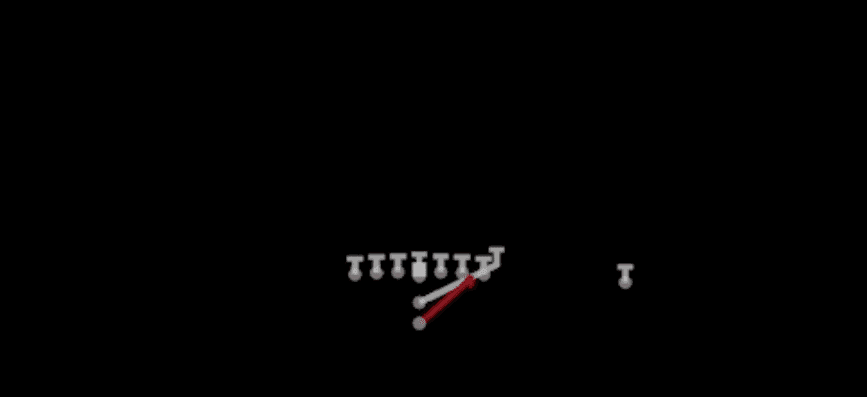 26 DuoDuo, Run Play, Power Run
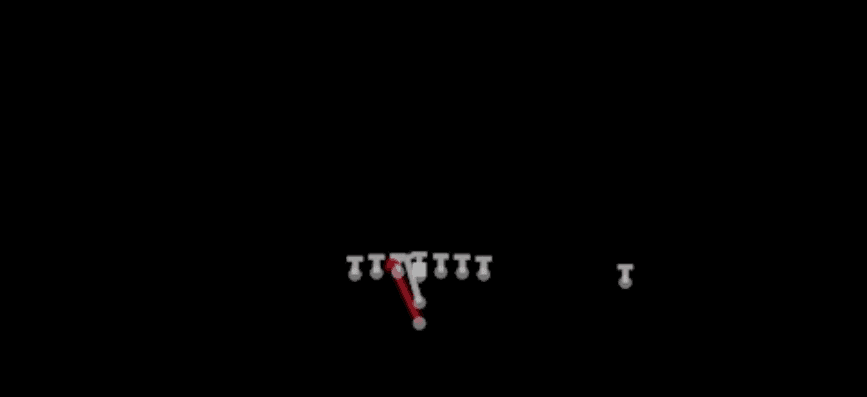 95 MikeRun Play, Power Run, Power +2
 FB DiveDive, Run Play
 FB Fake HB TossToss, Run Play
- Flea FlickerDeep Cross, Crosser, Streak +1
 Goal Line FadeFade, Pass Play, Swing
 HB BlastIso, Run Play, Power Run
 HB CounterCounter, Run Play, Power Run
 HB IsoIso, Run Play, Power Run
 HB LeadIso, Run Play, Power Run
- HB Lead TossRun Play
 HB Off TackleOff Tackle, Run Play
 HB Power OPower, Run Play, Power Run
 HB StretchOutside Zone, Run Play, Zone Run
 HB Stretch Alert U PopOutside Zone, Run Play, Zone Run +2
- HB TossToss, Run Play
- HB Toss CrackToss, Run Play
 MeshMesh, Pass Play, Man Beater +4
- Mtn MeshMesh, Motion, Pass Play +5
 PA BootPlay Action, Pass Play, Block and Release +3
- PA Ctr ShotPlay Action, Pass Play, Deep Cross +2
 PA FB FlatPlay Action, Flat, Pass Play +4
 PA Power OPlay Action, Pass Play, Corner +4
 PA Sprint HB FlatPlay Action, Flat, Pass Play +4
 PA TE CornerPlay Action, Corner, Pass Play +4
 Z SlantSlant, Pass Play, Flat +1
 Z SpotSpot, Pass Play, Cover 3 Beater +3