Playbooks

Quick Reference
Receiver routes
Depth-chart slots are shown as they line up in the base package for this set.
| Player | Side | Route |
|---|---|---|
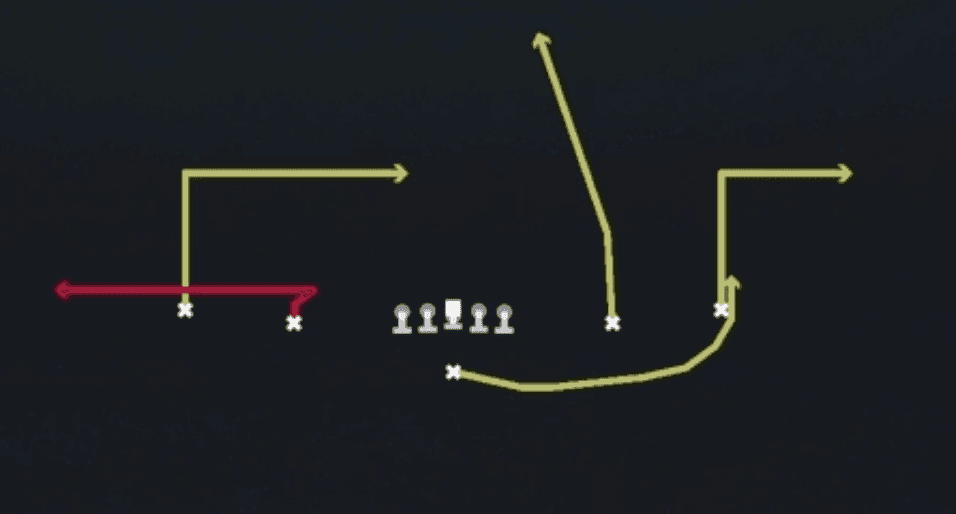
| HB1 | Middle | Slip Screen |
| SLWR | Left | Wheel |
| WR1 | Left | Post |
| WR2 | Right | Speed In |
| SLWR2 | Right | Speed In |
Read progression
- HB1, Slip Screen
- SLWR left, Wheel or WR1 left, Post or WR2 right, Speed In or SLWR2 right, Speed In
Breakdown
HB Slip Screen out of Singleback Spread 10 personnel shows the HB slipping out to the flat behind a delayed release wall of blockers while the two outside receivers run crossing routes underneath to clear out flat defenders and the slot receiver on the opposite side runs a deep corner to occupy the safety. The offensive line sells pass protection for a beat before releasing to get out in front of the HB in space. This is a screen play designed to beat aggressive man pressure and overloaded blitz packages, with the primary read being the HB out of the backfield once the blockers get set up in space.
Defensive Reads
Key the defensive line for wide upfield rush angles, since aggressive edge rushers and stunts are the biggest indicator this screen will hit for a big gain. Watch linebacker depth at the snap, if they are creeping toward the line for a blitz the screen has a clear lane once the HB releases. User a defensive tackle or spy linebacker and have them sit and read the quarterback rather than rushing upfield, since disciplined interior defenders can blow this play up before blockers get set. Zone coverage with linebackers sitting in short hook or curl zones is the biggest counter, since they can read the HB release and jump the screen for a loss. Watch for the crossing receivers on the backside, if a defender stays home instead of chasing the crossers he can string the screen out to the sideline for a minimal gain.
Usage Tips
Call this against defenses showing overload blitzes or five plus man pressure since the extra rushers create natural running lanes once they fly past the line of scrimmage.
Watch pre-snap for corners pressed on the outside receivers, since the crossing routes are designed to rub off man coverage and slow down flat defenders chasing the HB.
Use the hot route to adjust the crossing receivers into quicker in-breaking routes if you see zone drops sitting underneath, which helps clear traffic faster for the screen blockers.
Pair this with Curl Flats or Slant Flats earlier in a drive to bait linebackers into sprinting upfield on subsequent snaps, making them slower to read screen action.
Best used on early downs or obvious passing situations where the defense is selling out with speed rushers, since delayed blocking needs time to develop against slower fronts.
Other Plays in Spread
 0 1 TrapTrap, Run Play, Power Run
 60 GoGo, Pass Play, Flat +3
 61 X ChoiceOption Route, Pass Play, Out +1
 949 YaraPass Play, Go, Flood +7
 Bubble ScreenScreen Pass, Bubble Screen, Pass Play
 ComebacksComeback, Pass Play, Curl
 Curl FlatsFlat, Curl, Pass Play +1
 Flanker DigDig, Pass Play, Flat +3
 Four VerticalsFour Verts, Pass Play, Cover 2 Beater +5
 HB CutbackRun Play, Inside Zone, Zone Run
 HB DiveDive, Run Play
 HB DrawDraw, Run Play
 HB Draw BubbleDraw, Run Play
 HB Slash Alert BubblePass Play, Quick Pass, Bubble Screen +3
 Hitch CornersHitch, Corner, Pass Play
 Inside CrossCrosser, Pass Play, Curl +4
 Mtn HB DrawDraw, Motion, Run Play
 PA HB OutPlay Action, Out, Pass Play +4
 PA Slot CrossesPlay Action, Crosser, Pass Play +3
- Pivot SlantsSlant, Pivot, Pass Play +1
 Seam OptionSeam, Option Route, Pass Play +4
 Slant FlatsFlat, Slant, Pass Play
 Slants MiddleSlant, Pass Play
 Slot OptionsPass Play, Option Route, Quick Pass +6
 Slot PivotPivot, Pass Play, In +4
 Smash CornersCorner, Smash, Pass Play +3
 Smash PostsPost, Smash, Pass Play +2
 Switch SmashSmash, Pass Play, Cover 2 Beater +4
 Wide ZoneOutside Zone, Run Play, Zone Run
 Wide Zone WkOutside Zone, Run Play, Zone Run
 WR Deep OutsOut, Pass Play, Deep Cross +3
- WR Short PostsPost, Pass Play, Hitch