Playbooks

Quick Reference
Breakdown
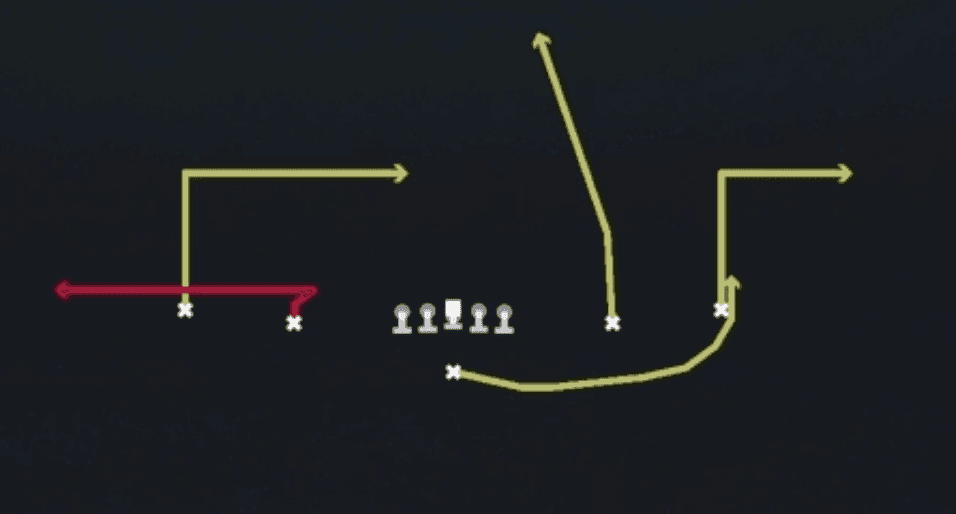
HB Draw Bubble lines up in Singleback Spread 10 personnel with two bubble screens stacked outside on each side and the HB running a delayed draw through the middle of the line. The offensive line sells pass protection for a beat before opening a lane for the HB, while both slot receivers settle into bubble routes behind their outside WRs who release upfield as blockers or clear-out threats. This is a run play at heart with built-in screen options, making it a solid check against overaggressive pass rush or blitz-heavy zone looks. The primary read starts with the HB draw, but if linebackers crash hard pre-snap or defenders sit deep, the bubble screens on either side become quick outlets.
Defensive Reads
Watch linebacker depth and blitz indicators pre-snap since crashing linebackers or a delayed blitz open natural draw lanes right through the A or B gap. Check safety alignment: a light box with two safeties deep signals the draw should hit, while a stacked box with safeties creeping down means bail to a bubble screen. Identify user-controlled defenders spying the middle of the field, since a user linebacker sitting still can blow up the draw if he reads it early. Against zone coverage, look for cornerbacks playing off the line since that soft cushion is exactly what the bubble screens are designed to exploit. Man coverage with press corners on the outside WRs can struggle to get off blocks, giving the bubble receiver room to work after the catch.
Usage Tips
Use pre-snap motion or a quick look at linebacker depth to decide between the draw and bubble screens before the snap. If both safeties sit deep in a two-high shell, trust the draw since the box should be light on defenders. Against Cover 3 or man coverage with blitz indicators, hot route to the bubble screen on the side with the fewest defenders showing outside. Pair this play with HB Slip Screen and Wide Zone in the same drive to condition the defense to respect outside run and screen action before hitting HB Draw Bubble as a change of pace. Best called on early downs, especially first and ten or second and short, to keep defenses honest and avoid predictable pass-heavy calls.
Other Plays in Spread
 0 1 TrapTrap, Run Play, Power Run
 60 GoGo, Pass Play, Flat +3
 61 X ChoiceOption Route, Pass Play, Out +1
 949 YaraPass Play, Go, Flood +7
 Bubble ScreenScreen Pass, Bubble Screen, Pass Play
 ComebacksComeback, Pass Play, Curl
 Curl FlatsFlat, Curl, Pass Play +1
 Flanker DigDig, Pass Play, Flat +3
 Four VerticalsFour Verts, Pass Play, Cover 2 Beater +5
 HB CutbackRun Play, Inside Zone, Zone Run
 HB DiveDive, Run Play
 HB DrawDraw, Run Play
 HB Slash Alert BubblePass Play, Quick Pass, Bubble Screen +3
 HB Slip ScreenScreen Pass, Hb Screen, Pass Play +3
 Hitch CornersHitch, Corner, Pass Play
 Inside CrossCrosser, Pass Play, Curl +4
 Mtn HB DrawDraw, Motion, Run Play
 PA HB OutPlay Action, Out, Pass Play +4
 PA Slot CrossesPlay Action, Crosser, Pass Play +3
- Pivot SlantsSlant, Pivot, Pass Play +1
 Seam OptionSeam, Option Route, Pass Play +4
 Slant FlatsFlat, Slant, Pass Play
 Slants MiddleSlant, Pass Play
 Slot OptionsPass Play, Option Route, Quick Pass +6
 Slot PivotPivot, Pass Play, In +4
 Smash CornersCorner, Smash, Pass Play +3
 Smash PostsPost, Smash, Pass Play +2
 Switch SmashSmash, Pass Play, Cover 2 Beater +4
 Wide ZoneOutside Zone, Run Play, Zone Run
 Wide Zone WkOutside Zone, Run Play, Zone Run
 WR Deep OutsOut, Pass Play, Deep Cross +3
- WR Short PostsPost, Pass Play, Hitch