Playbooks
Franchise Playsheet
Backer Attacker
PlaysheetOffenseOverview
The Backer Attacker is a situational offensive playsheet built around one idea: put linebackers in conflict and punish them for guessing. Its concept list reads like a linebacker stress test, with Drag, Crosser, Deep Cross, Curl Flat, Speed Out, Flat, and both a Screen Pass and HB Screen package. Those are the routes that live in the underneath zones linebackers are asked to cover, or that punish them for flowing too fast. At 40 plays across 3 formations and 4 sets, it is larger than 83% of the game's 42 offensive franchise playsheets, so it holds up as a full situational call sheet rather than a handful of emergency calls.
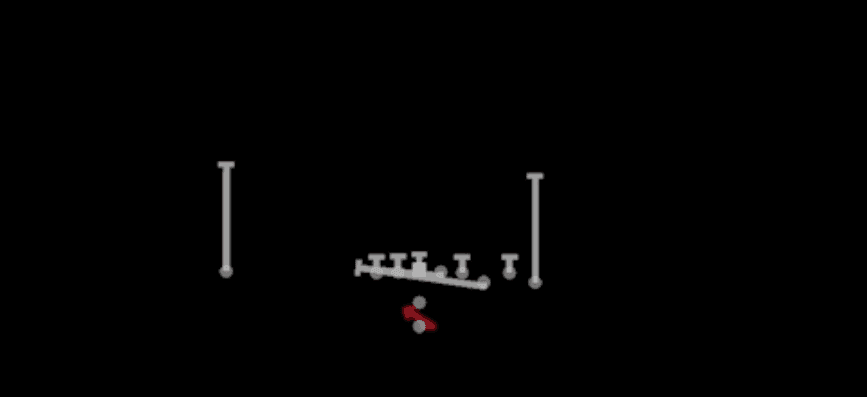
The weight sits firmly in Shotgun, which carries 20 plays (50%) across 2 sets. That gives you two distinct looks to spread the defense and isolate backers in space. Pistol adds 10 plays (25%) from a single set, keeping a back in the backfield to hold linebackers with the threat of a handoff. Singleback rounds it out with 10 plays (25%) from one set, where 12 personnel lets you drag an extra tight end into the middle of the field. Sample calls like Flanker Drive, Angle Smash and HB Dive show the mix: a drive concept built on shallow and dig traffic, a smash variant with angle routes that attack interior defenders, and a downhill run to keep the second level honest.
Choose this playsheet if your game plan is a rhythm passing attack that wins between the numbers and in the flats. It suits players who read the second level before the snap and want Cover 2 Beater and Cover 3 Beater answers ready. It trades vertical shot plays and heavy run formations for a dense catalog of quick, linebacker-targeting concepts that move the chains and bait opponents out of user-controlled middle hook defenders.
Scheme Fit
The Backer Attacker wants a quick, accurate quarterback with strong short and medium accuracy, slot receivers and tight ends with high route running and change of direction to separate from linebackers on drags and crossers, and a receiving back who can win on screens and flats. It suits a player who reads coverage pre snap, lives on rhythm throws and yards after catch, and prefers moving the chains underneath to hunting vertical shots or grinding a power run game.
Playsheet bonuses
- IUnlocks the playsheet
- II+3Short Route RunningRB & TE
- III+3CatchingRB & TE
- IV+5Pass Block, Pass Block Power, Pass Block FinesseOL
Every play in this playsheet (40 plays)
Singleback Trio10 plays


Pistol Bunch10 plays



Shotgun Wing Flex Offset10 plays


Find plays by concept, not by formation
Search every playbook by tag and personnel grouping, not just Backer Attacker.
Strengths
- Shotgun's 20 plays across 2 sets give you two different spread looks that carry the same drag, crosser and curl flat concepts, so you can attack the same linebacker from different alignments without the opponent picking up a formation tell.
- The concept list is stacked with linebacker conflict routes (Drag, Crosser, Deep Cross, Curl Flat), so a user who parks in the middle hook can be beaten by hot routing the opposite crosser or by throwing the flat he vacates.
- Dedicated Cover 2 Beater and Cover 3 Beater calls let you check to the right answer after a pre-snap read, instead of relying on a generic pass play against two-high or single-high shells.
- Both Screen Pass and HB Screen concepts punish nano blitz and linebacker pressure heavy defenses, giving you a built-in release valve when opponents send the second level after the quarterback.
- With 11 and 12 personnel across Pistol and Singleback, you can sub a second tight end into the Singleback set to force base defense matchups, then target a slower linebacker on crossers and drags.
Weaknesses
- The run game is thin: concepts covered are almost entirely pass based, and with runs like HB Dive in the mix but no dedicated run concepts listed, a defense can sell out on pass coverage without paying for it on the ground.
- There is no under center power formation beyond one Singleback set and no heavy or goal line personnel, so short yardage and red zone situations inside the 3 lack a true downhill answer.
- Pistol and Singleback each carry only one set, so opponents quickly learn those alignments and can key the formation to predict whether the call is a run or a linebacker attacking pass.
- Vertical shots are limited to Deep Cross and Speed Out type throws, so a defense can squat underneath in match coverage, crowd the drag and crosser windows, and dare you to beat it over the top.
- Half the playbook lives in Shotgun, which makes the formation spread predictable on passing downs and lets defenders cheat their pass rush and coverage calls when the gun shows up.
Usage Tips
Build your base passing audibles from the two Shotgun sets on 1st and 10 and 2nd and medium, pairing a Curl Flat call with a Drag or Crosser call so you can flip between zone and man beaters with one audible.
On 3rd and 3 to 6, stay in Shotgun and look for Speed Out or Flat concepts to the boundary, and hot route the interior receiver to a drag if the linebacker widens with the flat.
Use the Pistol set on early downs to show a run threat, calling HB Dive enough to freeze linebackers, then hit the Angle Smash style concepts once backers start triggering downhill.
When you spot a nano blitz or linebacker pressure look on 2nd or 3rd and long, audible to the Screen Pass or HB Screen and leave the blitzers behind the play.
Sub into 12 personnel in the Singleback set on 2nd and short or in the high red zone to pull base defense onto the field, then target the slowest linebacker with Crosser and Deep Cross concepts.
Formations in this playbook

Upgrade to Playbooks Rookie
- Filter every play by tag and concept
- Personnel groupings
- Premium play analysis