Playbooks
3-4
DefenseExample Plays from 3-4


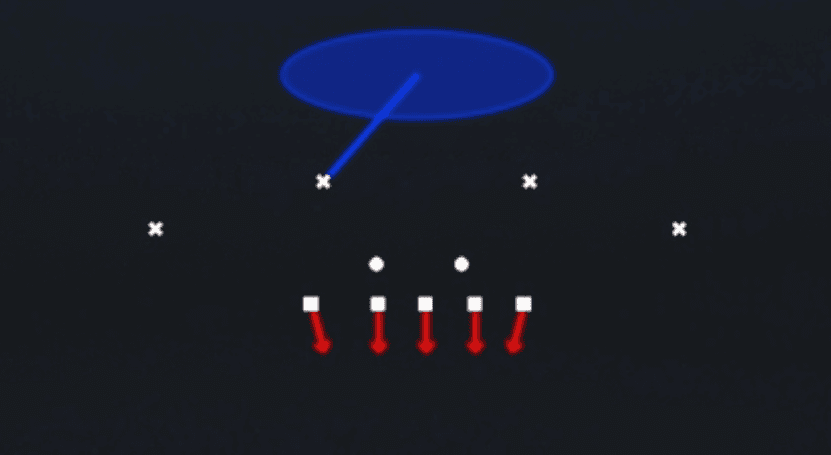


Overview
The 3-4 is a base defensive front built around three down linemen (a nose tackle and two defensive ends) with four linebackers stacked behind them, two cornerbacks, and two safeties. The two outside linebackers typically align as stand-up edge rushers on or outside the tackles, while the two inside linebackers sit in the box to fill interior gaps and drop into hook and curl zones. This 190-play formation spans Base 3-4 and Base 5-2 personnel across 15 sets. Odd, Over, Under, and Even adjust how the front shades the center and guards. Tite and Tite 5t collapse the ends into 4i and 5 technique alignments to wall off inside zone. Bear, Bear 46, Grizzly, and Tite Grizzly cover the center and both guards to choke A and B gaps in heavy run situations. Predator, Over Ed, Over Solid, Cub, and Under 4t provide specialty looks for disguised pressure and gap-specific run fits.
The core philosophy of the 3-4 is ambiguity. With four linebackers standing up, the offense cannot easily identify the fourth or fifth rusher pre-snap. That ambiguity makes the formation a premier home for zone blitzes, fire zones, and simulated pressures, where an OLB drops into the flat while an ILB or safety replaces him in the rush. Pass protection gets overloaded to one side, slide protection rules get manipulated, and quarterbacks are forced into hot reads that land in the hands of a dropping edge defender.
Against the run, the 3-4 excels at two-gapping with a stout nose tackle and funneling ball carriers back inside toward unblocked ILBs. The Bear and Grizzly families eliminate interior double teams entirely, making them nightmares for power run and inside zone offenses in 12, 21, and 22 personnel. The tradeoff is that the formation relies on linebackers in coverage, so it is at its best against base personnel rather than spread three and four receiver sets.
At a Glance
The 3-4 is the natural home for the 3-4 Odd and 3-4 Under defensive schemes, and it fits Multiple schemes that want a pressure-heavy identity with fire zones and sim blitzes as the base. It is the ideal counter to power run, inside zone, and play-action heavy West Coast offenses operating out of 12 and 21 personnel, but it struggles as an every-down call against spread, air raid, and RPO systems. Rosters with a massive nose tackle, two speed rushing OLBs, and at least one rangey coverage ILB get the most out of this formation, and it rewards aggressive play-callers who like to bring pressure while keeping a disciplined user in the middle of the field.
Strengths
- Elite pressure disguise: four stand-up linebackers let you rush any combination of OLBs and ILBs out of identical pre-snap looks, making fire zones and sim pressures extremely difficult for opponents to read or slide protect against.
- Dominant interior run defense: Bear, Bear 46, Grizzly, and Tite Grizzly cover the center and both guards, killing inside zone, duo, and power by removing double teams and freeing ILBs to flow downhill unblocked.
- Edge rush versatility: OLBs aligned wide create natural speed rush angles, and pairing edge rushers with Power Moves or Speed Rush abilities creates free pressure without sending extra defenders.
- Deep play library: 190 plays across 15 sets give you Cover 3 Match, Cover 4 Quarters, Cover 2 Sink, Cover 1 Robber, and a huge fire zone package, so you can stay in the same front while rotating coverage shells to beat pre-snap reads.
- Tite front answers modern RPO and zone runs: Tite and Tite 5t spill inside zone laterally where your athletic OLBs and ILBs can scrape and tackle, while keeping edge contain intact.
Weaknesses
- Only two cornerbacks on the field: against 11 personnel or empty, opponents can motion a slot receiver or tight end to isolate a linebacker in man coverage, and mesh, drags, and option routes feast on ILB matchups.
- Heavy sets are vulnerable on the perimeter: Bear and Grizzly compress the front so tightly that outside zone, tosses, and quick outs to the boundary can outflank the defense before the OLB sets the edge.
- RPOs put OLBs and ILBs in conflict: a read on the edge or hook defender forces a choice between the run fit and the slant or bubble behind them, especially in Tite looks where linebackers are cheating downhill.
- Fire zone tendencies are exploitable: skilled opponents who see a dropping DE or OLB pre-snap will hot route to quick slants or a TE seam behind the vacated hook zone, and a hot route to a corner route beats the three-under shell.
- Limited sub-package flexibility: when offenses spread you out, staying in the 3-4 invites mismatches, while subbing to Nickel or Dime tips your hand and lets them audible back into a power run.
Usage Tips
Match personnel before the snap: stay in 3-4 against 12, 21, and 22 personnel, but check to Nickel or Dime against 11 and 10 personnel when the offense has a dangerous slot receiver you cannot cover with an ILB.
Use Bear, Grizzly, or Bear 46 on 3rd and 1, 4th and short, and goal line situations, then pinch the defensive line and set OLBs to contain if the opponent loves QB sneaks or mobile quarterback keepers.
User an ILB in the hook zone over the middle on passing downs to take away mesh, drags, and dig concepts, and set the other ILB to a buzz or hook curl assignment to double the crossers.
Disguise fire zones by showing blitz with the Show Blitz adjustment on one side while actually dropping that OLB into the flat, and send the opposite ILB instead to create free rushers against slide protection.
In Tite or Tite 5t against inside zone RPOs, spread the line pre-snap and assign your best tackling OLB to QB contain, forcing the offense to hand off into the spill where your ILBs are waiting.
Sets (15)
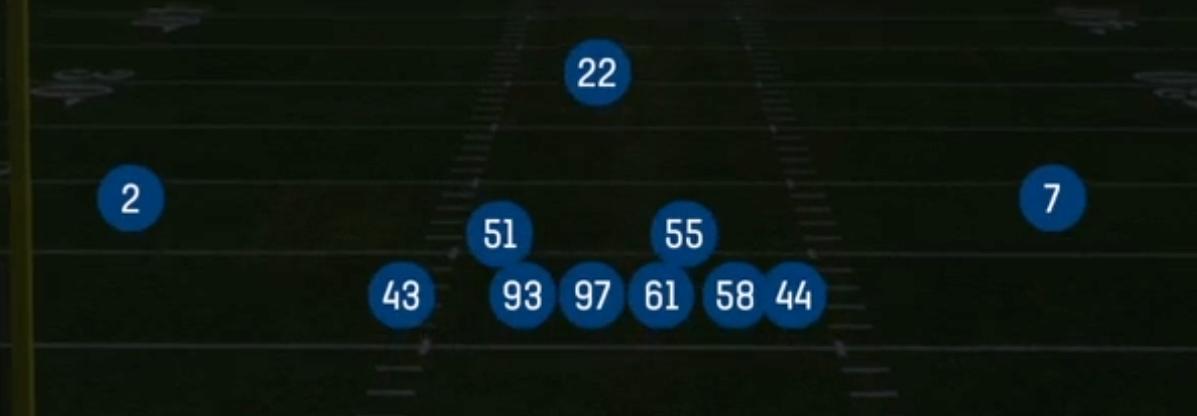 BearBase 3-42 EDGE3 DTMIKEWILL2 CBFSSS9 playsSpecialistsRLERRENT
- Bear 46Base 3-42 EDGE3 DTMIKEWILL2 CBFSSS9 playsSpecialistsRLERRENT
 CubBase 3-42 EDGE3 DTMIKEWILL2 CBFSSS8 playsSpecialistsRLERRENT
 EvenBase 3-42 EDGE3 DTMIKEWILL2 CBFSSS10 playsSpecialistsRLERRENT
- GrizzlyBase 3-42 EDGE3 DTMIKEWILL2 CBFSSS9 playsSpecialistsRLERRENT
 OddBase 3-42 EDGE3 DTMIKEWILL2 CBFSSS17 playsSpecialistsRLERRENT
 OverBase 3-42 EDGE3 DTMIKEWILL2 CBFSSS15 playsSpecialistsRLERRENT
 Over SolidBase 3-42 EDGE3 DTMIKEWILL2 CBFSSS9 playsSpecialistsRLERRENT
 TiteBase 3-42 EDGE3 DTMIKEWILL2 CBFSSS17 playsSpecialistsRLERRENT
 Tite 5tBase 3-42 EDGE3 DTMIKEWILL2 CBFSSS18 playsSpecialistsRLERRENT
- Tite GrizzlyBase 3-42 EDGE3 DTMIKEWILL2 CBFSSS9 playsSpecialistsRLERRENT
 UnderBase 3-42 EDGE3 DTMIKEWILL2 CBFSSS21 playsSpecialistsRLERRENT
 Under 4tBase 3-42 EDGE3 DTMIKEWILL2 CBFSSS18 playsSpecialistsRLERRENT
- PredatorBase 3-42 EDGEDTSAMMIKE2 WILL2 CBFSSS3 plays
 Over Ed18 plays