Playbooks

Receiver routes
Depth-chart slots are shown as they line up in the base package for this set.
| Player | Side | Route |
|---|---|---|
| HB1 | Middle | Pass Block |
| WR3 | Left | Pass Block |
| WR2 | Left | Bubble Screen |
| TE1 | Right | Pass Block |
| WR1 | Left | Pass Block |
Read progression
- WR2 left, Bubble Screen
Breakdown
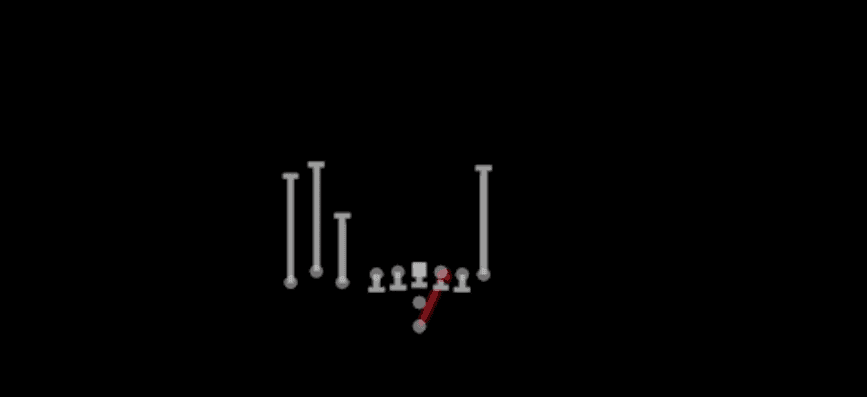
This WR Screen out of Pistol Bunch TE sets the two outside bunch receivers to wall off and lead block while the nearest slot receiver runs a quick screen route behind the line of scrimmage, with the outside blocker peeling to seal the cornerback. It is a classic screen play designed to bait aggressive man coverage and blitzes, using numbers and blockers in space instead of a traditional route concept. The primary read is immediate: throw to the bunch receiver on the screen as soon as the blockers get set, with no progression beyond that single target.
Defensive Reads
Watch for defensive ends and linebackers with screen recognition traits who will sit and read the quarterback instead of rushing upfield. Check pre-snap alignment of the nearest cornerback and slot defender, since tight man coverage on the bunch receivers signals vulnerability to the screen. Key on zone shells like Cover 3 or Cover 4 where underneath defenders stay home and can jump the screen route before blockers get set. User-controlled defenders spying the backfield or sitting in the throwing lane are the biggest threat, since a lurking linebacker can blow this play up for a loss. Blitz packages that send extra rushers off the edge often overcommit past the blockers, giving the screen room to develop if the offense reads it correctly.
Usage Tips
Call this play when you see man coverage or a heavy blitz look pre-snap since the blockers can immediately climb to the second level against aggressive defenders. Throw with anticipation the instant the ball is snapped rather than waiting, because the blocking wall develops fast and defenders in zone can close the throwing window. Pair this with Fk Screen or Jet Touch Pass from the same Bunch TE set to keep defenses guessing on tempo and eye discipline. Use this on early downs or after establishing HB Dive and HB Zone to slow down linebacker flow, making the screen blockers more effective in space. Avoid calling this against disciplined zone defenses that sit on screens, since the lack of a deep route concept means there is no second read if the screen is diagnosed.
Other Plays in Bunch TE
 Cross DragDrag, Pass Play, Crosser +3
 Fk Jet Inside ZoneInside Zone, Motion, Zone Run +1
 Fk ScreenPlay Action, Screen Pass, Pass Play +5
 FloodFlood, Pass Play, Cover 3 Beater +5
 HB CounterCounter, Run Play, Power Run
 HB DiveDive, Run Play
 HB DrawDraw, Run Play
 HB Slip ScreenScreen Pass, Hb Screen, Pass Play +4
 HB ZoneInside Zone, Run Play, Zone Run
 Jet Touch PassMotion, Run Play
 Jet Touch Pass Fk HBMotion, Run Play
 PA CurlsPlay Action, Pass Play, Curl +2
 Speed OptionSpeed Option, Run Play
 Spot OptionOption Route, Spot, Pass Play +4
 StickStick, Stick Concept, Pass Play +3
 Strong PowerPower, Run Play, Power Run
 VerticalsFour Verts, Pass Play, Cover 2 Beater +7