Playbooks
Scheme Playbook
Power Run Offense
SchemeOffenseOverview
The Power Run Offense playbook is a downhill, under center book built to lean on a defense with multiple backs and extra blockers. Of its 355 plays across 9 formations and 28 sets, 37% come from Singleback (130 plays over 9 sets) and another 40% come from true backfield sets: Strong I (66), I Form (30), Full House (12), Power I (12), Weak I (12) and Goal Line Offense (9). Shotgun is present but secondary at 81 plays (23%), which tells you exactly where this book wants to live: under center, with a fullback or second tight end on the field, running Power, trap and dive looks and throwing off them with Play Action.
The real selling point is backfield variety. Power I shows up in only 4 of the game's 236 playbooks and Full House in only 9, so the Power Run Offense gives you 31 personnel and triple back looks most opponents rarely face. Personnel ranges from 23 and 13 heavy groupings to 21, 22 and 12, so you can stay in big packages and still shift between strength calls. Sample calls like FB Dive, 0 1 Trap and Counter Weak show the grinding core, while Angle Swing, Bubble Screen and Ace WR Stretch give you perimeter answers when the box gets loaded.
Choose this book over a spread or balanced playbook if your game plan is to control the clock, win the line of scrimmage and set up shot plays with Play Action against safeties crashing the run. It is a mid sized book (larger than only about a third of the game's 13 offensive scheme playbooks), so it trades breadth in passing formations for depth in heavy run sets.
Scheme Fit
The Power Run Offense playbook wants a physical run game: a high run block offensive line, a true fullback with strong lead blocking, blocking capable tight ends for 12, 13 and 23 personnel, and a power back with high trucking and break tackle ratings. The quarterback needs good play action and short to intermediate accuracy more than scrambling ability, since most throws come off under center fakes. Pick it if you like to control the clock, win in short yardage and set up shots with Play Action rather than spread the field from Shotgun.
Example Plays from this Playbook
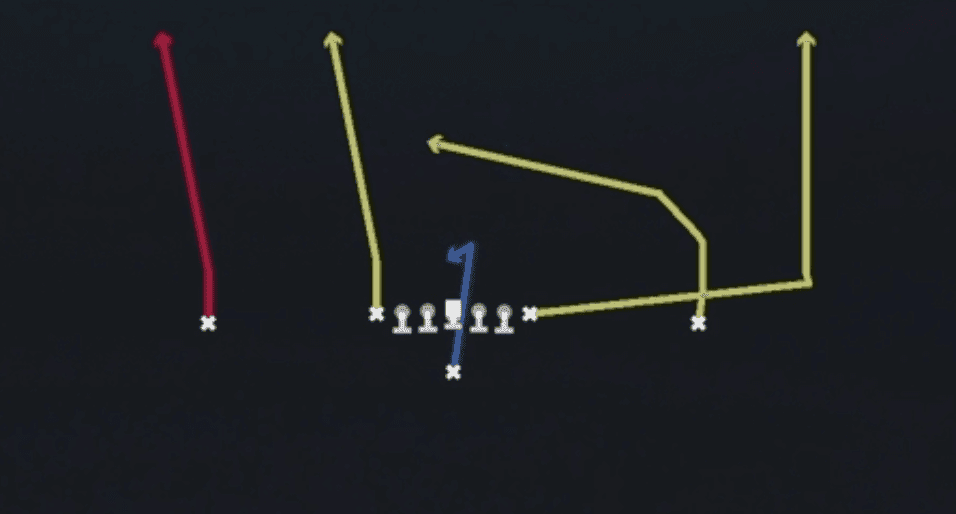

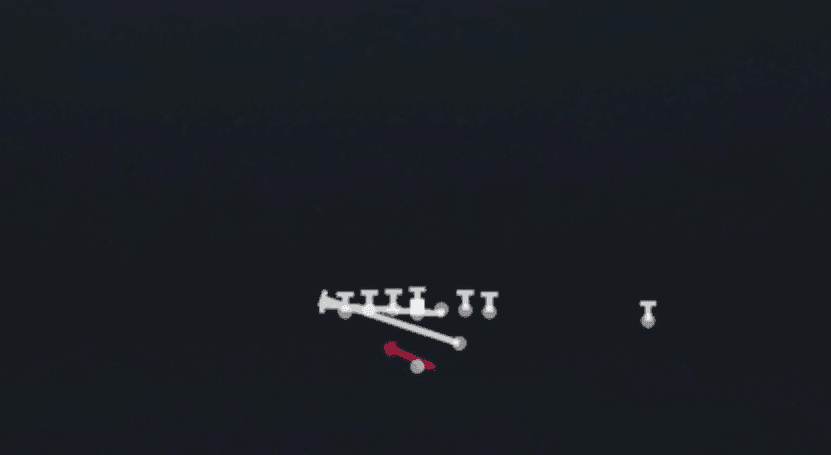
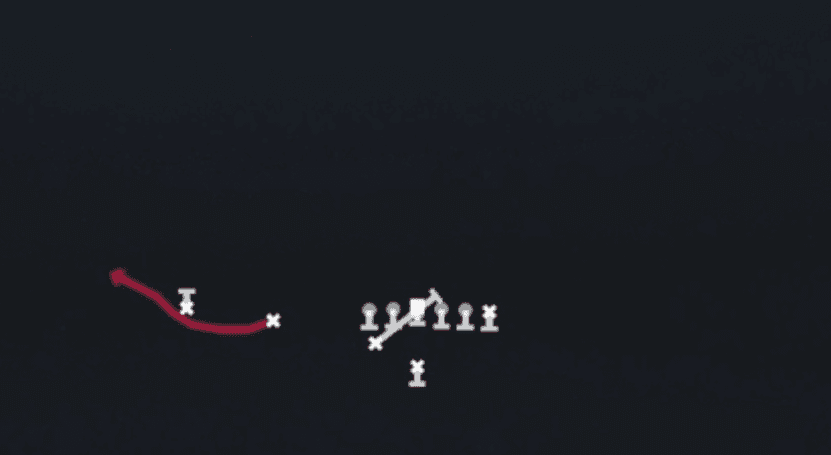


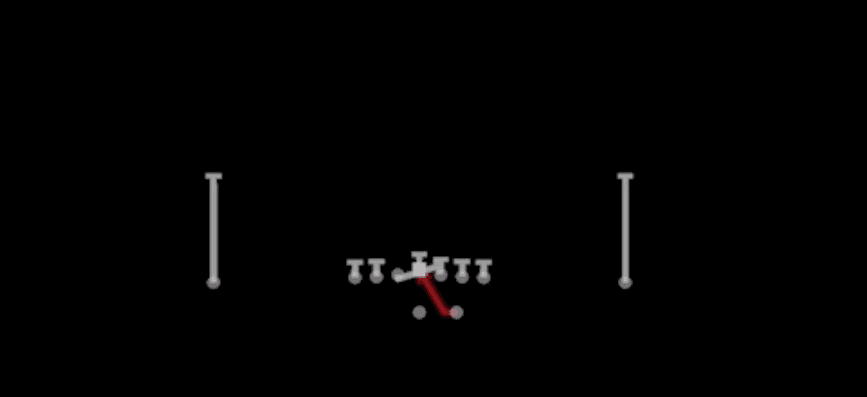

Find plays by concept, not by formation
Search every playbook by tag and personnel grouping, not just Power Run Offense.
Strengths
- Deep I formation family: Strong I, I Form, Weak I, Power I and Full House combine for 132 plays, letting you run Power, dive and trap from five different backfield alignments so a defense cannot key on one fullback offset.
- Rare heavy looks: Power I appears in only 4 of 236 playbooks and Full House in only 9, so opponents rarely have practiced fits against 31 personnel and three back surfaces, which creates free gaps before they adjust their nano blitz or box count.
- Play Action off the same shells: because Strong I and Singleback carry both Power Run and Play Action concepts (Deep Cross, Post Corner, Block and Release), you can pair identical looking run and pass calls in your audible package and punish users cheating downhill.
- Singleback volume with multiple personnel: 130 Singleback plays over 9 sets let you stay under center in 11, 12 or 13 personnel, flip strength with motion or a formation flip, and keep the defense in base while still running stretch and counter.
- Short yardage and red zone muscle: Goal Line Offense, Power I and Full House give you dedicated 23 and 31 personnel packages for 3rd and 1 and goal to go, where most books force you to use a single goal line set.
Weaknesses
- Thin spread passing: Shotgun is only 81 plays (23%) and there is no 4 WR personnel grouping, so in 2 minute or 3rd and long situations the menu is shallow and defenses can sit in dime with confidence.
- Single set heavy formations: Full House, Power I and Weak I are each one set with 12 plays, so a sharp opponent can learn your handful of calls from those looks after a few snaps and pre snap check into a run commit.
- Personnel tells: with most of the book in 21, 22, 23 and 31 groupings, opponents can sub in heavy defensive personnel and load the box, forcing you to win with Play Action against a defense already expecting it.
- Limited vertical concepts: the pass concepts lean on Slant, Flat, Swing, Crosser and Block and Release, with Post Corner and Deep Cross as the main shots, so beating deep Cover 2 or Cover 4 shells relies on a small number of calls.
- Minimal comeback package: only 3 Hail Mary plays and a modest Shotgun section mean falling behind by two scores takes you out of this book's identity fast.
Usage Tips
Build your base audible package around Strong I and Singleback: a Power or dive, a counter such as Counter Weak, a Play Action Deep Cross and a quick Slant or Flat call covers 1st and 10 and 2nd and medium without leaving your core personnel.
On 3rd and 1 or 4th and short, go to Power I or Full House and call FB Dive or a trap like 0 1 Trap; flip the formation or motion a back to the strength side if the defense overshifts.
Inside the 5, open in Goal Line Offense to force heavy defensive personnel, then audible to a Play Action Block and Release or Flat concept when the linebackers bite on the run fake.
Save Shotgun for 3rd and 6 plus and 2 minute drives, leaning on Bubble Screen and Crosser concepts with quick hot routes rather than expecting a deep spread menu.
After two or three successful Power runs from I Form or Weak I, dial up Play Action Post Corner from the same look on 2nd and short, when safeties are most likely to trigger downhill.
Formations in this playbook
 Wing Tight131 RB · 3 TE · 1 WR15 in book
 Ace121 RB · 2 TE · 2 WR20 in book
 Ace Slot121 RB · 2 TE · 2 WR15 in book
 Bunch Ace121 RB · 2 TE · 2 WR12 in book
 East121 RB · 2 TE · 2 WR12 in book
 Wing Slot121 RB · 2 TE · 2 WR14 in book
 Y Trips TE Slot121 RB · 2 TE · 2 WR15 in book
 Bunch111 RB · 1 TE · 3 WR12 in book
 Trio111 RB · 1 TE · 3 WR15 in book
Upgrade to Playbooks Rookie
- Filter every play by tag and concept
- Personnel groupings
- Premium play analysis