Playbooks
Dagger

Quick Reference
In 16 playbooks
Receiver routes
Depth-chart slots are shown as they line up in the base package for this set.
| Player | Side | Route |
|---|---|---|
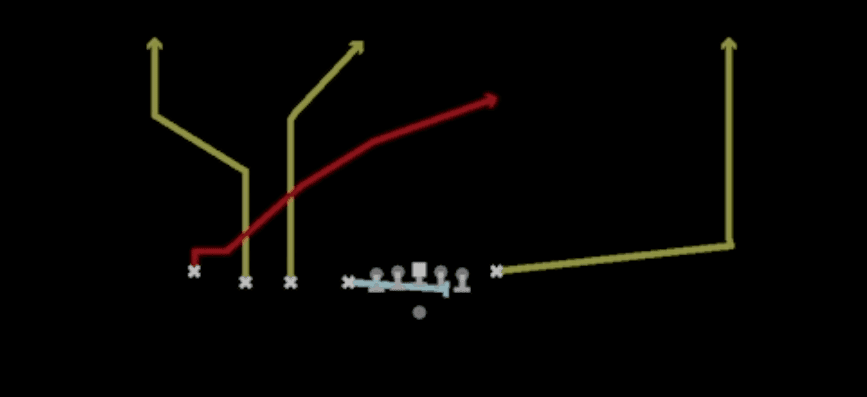
| HB1 | Left | Block and Release Flat |
| SLWR | Left | Streak |
| WR1 | Left | Deep In |
| TE1 | Right | Drag |
| WR2 | Left | Deep Cross |
Read progression
- WR1 left, Deep In
- WR2 left, Deep Cross
- SLWR left, Streak
- HB1 left, Block and Release Flat or TE1 right, Drag
Breakdown
Dagger out of Shotgun Empty Chips Quads lines up four receivers to one side with an empty backfield, stressing the defense horizontally before the vertical concept takes over. The diagram shows the outside receiver running a deep vertical clear-out while the inside slot receiver runs the signature dagger route, a deep in-cut settling behind linebackers and in front of safeties, with the two remaining inside receivers running a shallow drag and a flat route underneath to hold linebackers and clear space. This is a man and zone beater built to attack Cover 2 and Cover 3 shells, with the primary read progression going from the deep vertical clear-out to the dagger dig sitting down in the middle void, then checking down to the underneath flat or drag if the read is covered.
Defensive Reads
Against Cover 3, the dagger dig route settles in the hole between the flat defender and the deep third defender, so key the middle linebacker's drop depth to see if that window stays open. Against Cover 2, the vertical clear-out route occupies the safety, opening the dig route behind the underneath zone defenders, so watch if the safety bites on the deep route. User-controlled defenders sitting in a lurk technique in the middle of the field can jump the dagger dig route, so check for a defender hovering in that throwing lane before committing to that read. Man coverage with a single high safety is vulnerable to the vertical clear-out winning deep, so key the cornerback's hips and whether the safety rotates to help over the top. Disguised blitzes with six or seven defenders can collapse the pocket fast in this empty formation, so identify blitz timing from linebacker depth and edge defender alignment before the snap to get the ball out quickly.
Usage Tips
Identify pre-snap whether the defense is playing two deep safeties or one, since the dagger dig route is designed to settle in the soft spot behind linebackers and in front of Cover 2 safeties.
If you see man coverage with no safety help over the top, hot route the outside vertical to a slant or take advantage of the natural rub created by the drag route crossing underneath.
Use this play on second and long or third and medium situations where the defense is likely to sit in zone shells expecting a checkdown.
Pair this with Slot Sail or Post Corner Up in your play-calling sequence since both attack similar zone landmarks and force the defense to defend the same area of the field differently.
Watch the underneath flat and drag routes as built-in checkdowns against blitz looks, since the empty backfield means there is no running back to help identify pressure before the snap.
Other Plays in Empty Chips Quads
 Cheat Fk Screen CrossPlay Action, Screen Pass, Motion +6
 Cheat Jailbreak WR ScreenScreen Pass, Wr Screen, Motion +2
 Cheat Texas X SluggoSluggo, Texas, Texas Concept +8
 CrossersCrosser, Pass Play, Block and Release +3
 HB ScreenScreen Pass, Hb Screen, Pass Play +4
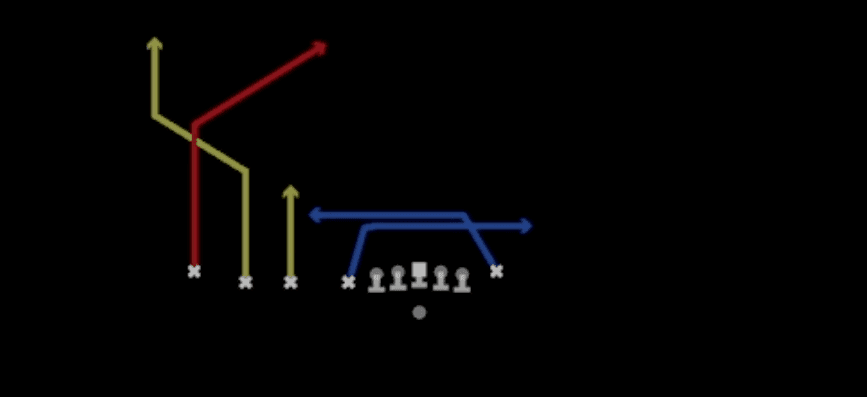 Post Corner UpCorner, Post, Post Corner +8
 Slot SailSail, Pass Play, Cover 2 Beater +7
 TE ScreenScreen Pass, Te Screen, Pass Play +6