Playbooks

Overview
The NFL Live Chiefs Offense is functionally the same playbook as Chiefs Offense. The two cuts share all 583 plays and do not differ by a single set, so every formation, audible, and concept you learn in one carries over directly to the other. Choose whichever label your league settings or menu flow puts in front of you. Nothing in the play list gives either version a competitive edge.
This is a Shotgun offense first and everything else second. Shotgun accounts for 442 of the 583 plays (76%) spread across 27 sets, which gives you a deep menu of spread looks for attacking coverage with drags, crossers, flats, spots, hitches, and slants. Singleback is the clear secondary home at 87 plays (15%) across 7 sets. The rest of the book is a thin layer of specialty packages: Pistol (18 plays), Goal Line Offense (12), Strong I (12), I Form (9), and Hail Mary (3). Overall the playbook is on the smaller side, larger than only 13% of the game's 64 offensive team playbooks, so its depth sits almost entirely in the gun.
The game plan it supports is a quick-game and intermediate passing attack. You work Cover 3 beaters and man beaters out of spread sets, mix in motion to diagnose coverage pre-snap, and lean on play action and block and release concepts to punish over-aggressive linebackers. The under-center and heavy personnel packages (23, 22, 13, and 21 groupings through Strong I, I Form, and Goal Line) exist mainly for short yardage, the red zone, and clock control. Plays like FB Dive, Counter Y-Lead, and 0 1 Trap keep a defense honest without making the run game the centerpiece.
Scheme Fit
The NFL Live Chiefs Offense wants an accurate, quick-reading quarterback who can process motion reads out of Shotgun, ideally with enough mobility to extend on play action, plus a receiving tight end and fast slot or outside receivers who separate on drags, crossers, and slants. A pass-catching back helps with the flat and block and release concepts, while a serviceable fullback and a couple of big-bodied tight ends only need to handle the small short-yardage package. Pick this book if you are a pass-first player who wants deep spread variety and treats the run game as a changeup rather than an identity.
Example Plays from this Playbook

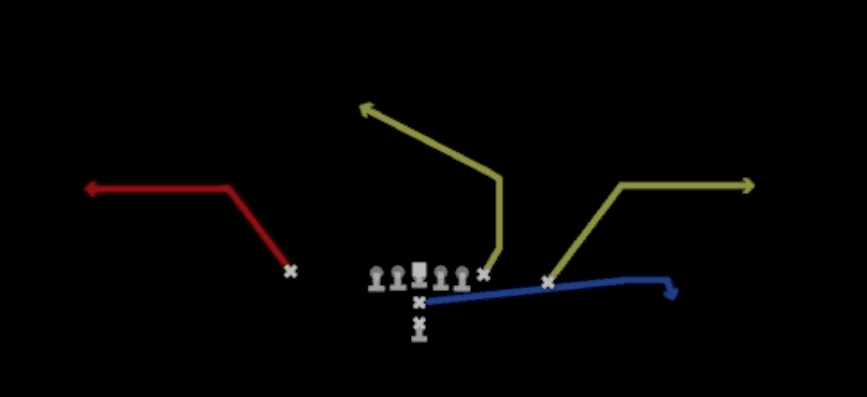
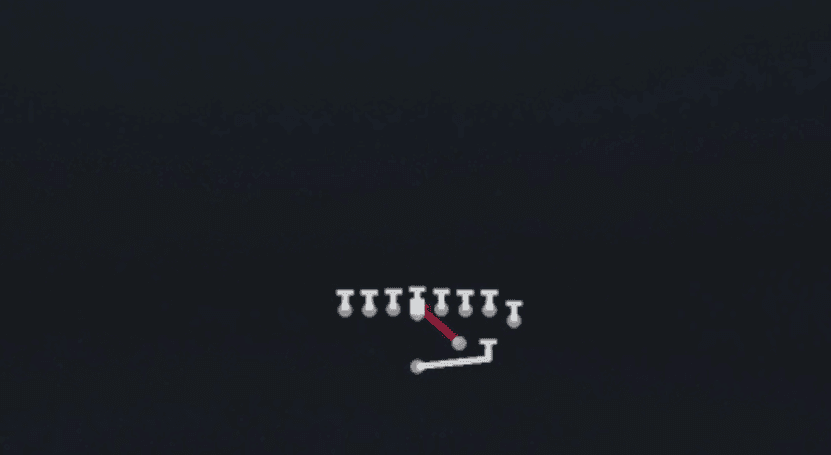


Find plays by concept, not by formation
Search every playbook by tag and personnel grouping, not just NFL Live Chiefs Offense.
Strengths
- Shotgun depth is elite for this book's size: 442 plays across 27 sets means you can rotate formation looks constantly while calling the same drag, crosser, and spot concepts, which makes it hard for an opponent to key alignments or bait you with a single coverage shell.
- The concept list covers both coverage families, with Cover 3 beaters, post, spot, and flat combos for zone and slants, hitches, and drags for man, so a four-play Shotgun audible package can answer almost any pre-snap read.
- Motion and play action are built into the passing menu, letting you use pre-snap motion to confirm man versus zone and then punish user-controlled linebackers who jump the flat or trigger downhill on the fake.
- Singleback's 87 plays across 7 sets give you a legitimate second base look with play action and block and release concepts, so the offense does not collapse into Shotgun only when you need to slow down a pass rush or change the defense's personnel.
- Six personnel groupings, from 11 up to 23, let you force substitutions and mismatches, subbing a receiving tight end or back into heavier sets to pull base defense onto the field before snapping into a pass concept.
Weaknesses
- With 76% of the book in Shotgun, an opponent who sees gun will sell out for the pass, sitting in nickel or dime, spamming zone drops, and using a nano blitz off the edge, because the under-center counter punch is thin.
- The power run game is barely there: Strong I (12 plays), I Form (9 plays), and Goal Line Offense (12 plays) give you only a handful of calls each, so a defense can memorize your short-yardage tendencies after a couple of series.
- Pistol offers only 18 plays across 2 sets, which limits it as a true run and play action changeup and means it cannot carry a drive the way a Pistol-heavy book can.
- The overall size is small for a team playbook (larger than only 13% of offensive team books), so outside of Shotgun you will run out of fresh looks quickly in long head-to-head games and franchise weeks against the same opponent.
- Hail Mary has just 3 plays across 2 sets, so end-of-half desperation situations give you very little route variety to beat a prevent shell.
Usage Tips
Build your primary audible package in Shotgun: carry a Cover 3 beater, a drag or crosser man beater, a flat and spot quick-game call, and a play action shot, then flip between them after reading your motion on first and second down.
On 1st and 10 against a defense sitting in light boxes, check into Singleback play action or block and release concepts to hold linebackers and hit the seam or post behind them, since Singleback is your only deep non-gun base package.
On 3rd and short or 4th and 1, go to Strong I or Goal Line Offense for FB Dive or Counter Y-Lead, but rotate them sparingly because the thin set count makes these calls easy to scout.
Use Pistol as a situational changeup on 2nd and medium when the defense has been teeing off on Shotgun pass rush, pairing a 0 1 Trap style run look with play action to slow the edge.
In the red zone, stay in Shotgun for slants, hitches, and flat combos that beat condensed zone, and only drop into I Form or Goal Line when inside the 3, where the heavy personnel sets carry their weight.
Formations in this playbook


Upgrade to Playbooks Rookie
- Filter every play by tag and concept
- Personnel groupings
- Premium play analysis