Playbooks
Franchise Playsheet
The Florist
PlaysheetDefenseOverview
The Florist is a compact 30 play franchise situational playsheet that lives almost entirely out of a base 3-4 front. With 24 of its 30 plays (80%) coming from the 3-4 across three sets and only 6 plays (20%) from a single 4-3 set, it is built for a coach who wants to line up in base 5-2 personnel and stay there. It sits on the smaller end of the game's 30 defensive franchise playsheets, larger than only 21% of them. That makes it a focused sheet, not a sprawling library: fewer calls to sift through in the play art and a tighter, more repeatable menu.
The coverage menu is broad for its size. It spans the three deep family (Cover 3, Cover 3 Sky, Cover 3 Cloud), two deep shells (Cover 2 and Tampa 2) and a pressure man package (Cover 0, Cover 1, Cover 1 Robber, Press Man), plus Pinch calls for run fits. The listed samples, Cover 1 Hole and Cov 1 Robber Press, show where the sheet's identity sits: single high man with a lurking hole or robber defender, and press technique to disrupt timing. The 4-3 set gives you a four down look with its own robber press call when you want a different front on similar coverage.
Choosing The Florist over a deeper book means trading formation variety for a disguise-friendly base package. You can rotate from Cover 3 Sky to Cover 1 Robber to Tampa 2 without changing personnel, so the offense reads the same 3-4 shell before the snap on almost every down. It supports a physical, run first game plan: stop the ground game with base bodies and Pinch fronts, then win on early downs with single high looks before mixing in Cover 0 pressure.
Scheme Fit
The Florist wants a roster built around the 3-4: a stout nose tackle and two-gap ends to eat blocks, rangy edge linebackers who can rush or drop into flats, and a smart, fast inside linebacker you can user in Cover 1 Hole and Tampa 2 middle drops. Press corners with strong man coverage and a physical robber safety make the Cover 1 Robber and Press Man calls work. Pick it if you are a run-first defensive coach who prefers to stay in base personnel and win with disguise and user play rather than constant sub packages.
Playsheet bonuses
- IUnlocks the playsheet
- II+3Man Coverage, Zone Coverageall LB
- III+3Play Recall Defenders
- IV+5Agilityall Defenders
Every play in this playsheet (30 plays)
4-3 Even 6-16 plays


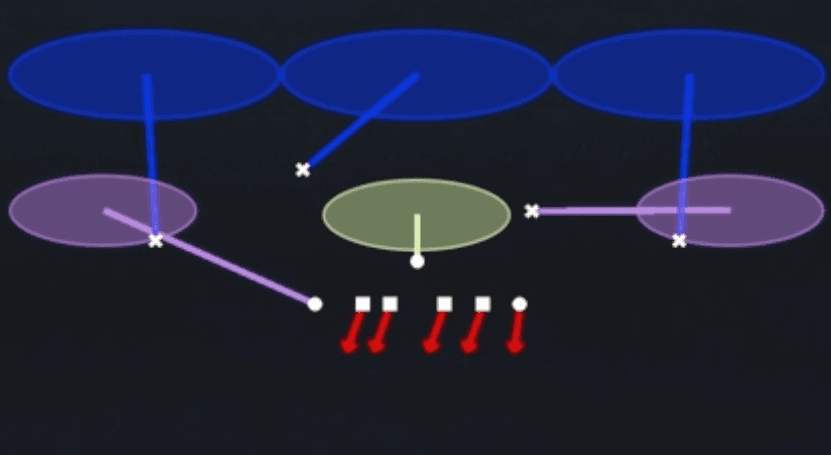
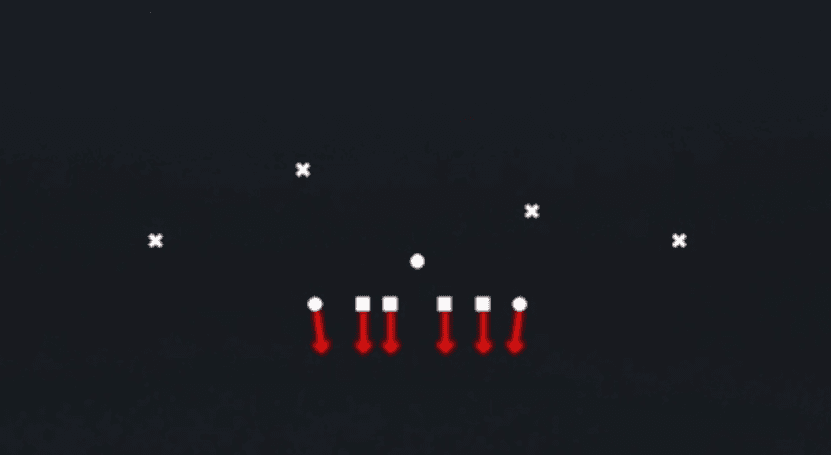
3-4 Even7 plays


3-4 Odd9 plays


Find plays by concept, not by formation
Search every playbook by tag and personnel grouping, not just The Florist.
Strengths
- The 80% concentration in the 3-4 means nearly every call comes from the same base 5-2 personnel, so offenses cannot use personnel substitutions or formation reads to predict whether Cover 1 Robber, Cover 3 Sky or Tampa 2 is coming.
- Three 3-4 sets give you enough alignment variety within one front to build a full audible package without leaving base personnel, which keeps your heavy run defenders on the field against 21 and 12 personnel.
- Pinch calls from a base 5-2 front give you a dedicated run stuffing option, letting you slant and squeeze the interior on short yardage without subbing in a goal line group.
- The man package (Cover 0, Cover 1, Cover 1 Robber, Press Man) pairs with the cover 3 and cover 2 zones so you can show single high and rotate late, pairing a user-controlled robber or hole defender with press on the outside.
- The single 4-3 set offers a four down change-up with its own robber press call, giving you a second front to swap to with a formation audible when the offense has keyed on your 3-4 alignment.
Weaknesses
- There is no nickel or dime formation in the spread, so against 11 personnel, trips and empty sets you are stuck matching slot receivers with linebackers or safeties, and smart opponents will hunt those mismatches with option routes and mesh concepts.
- With only two formations and four sets total, the sheet is thin on pre-snap variety; once an opponent sees the 3-4 on most snaps they can narrow your likely calls and set up hot routes accordingly.
- The 4-3 portion is just 6 plays from one set, so it works as a surprise look rather than a full package, and relying on it too often makes those few calls easy to identify.
- At 30 plays, smaller than most defensive franchise playsheets, the sheet has limited depth within each coverage family, making it harder to disguise the same shell repeatedly on long third downs against quick game or spread passing attacks.
- Base personnel on every snap means slower overall team speed in coverage, leaving the defense exposed to crossers, wheel routes and RPOs designed to stress second level defenders.
Usage Tips
Build your base audible package around the 3-4 sets: slot a Cover 3 Sky call, a Cover 1 Robber call, a Tampa 2 call and a Pinch call so you can adjust from one front on first and second down without tipping the coverage.
On 1st and 10 and 2nd and medium against heavy personnel, stay in the 3-4 with Pinch or Cover 3 Cloud to fit the run with base bodies, then press the flat defender if the offense is living in quick outs.
On 3rd and short, reach for Cover 0 or Press Man from the 3-4 and user the hole or robber defender to take away the quick slant or drag; the base front already gives you extra bodies at the line of scrimmage.
On 3rd and long, lean on Tampa 2 or Cover 2 from the 3-4 and user the middle linebacker to carry the seam, since the sheet has no dime package to drop extra defensive backs into coverage.
Save the lone 4-3 set, including Cov 1 Robber Press, as a change-up after an opponent has adjusted to your 3-4 alignment, switching into it with a formation audible on a middle distance down to show a new front with familiar coverage.
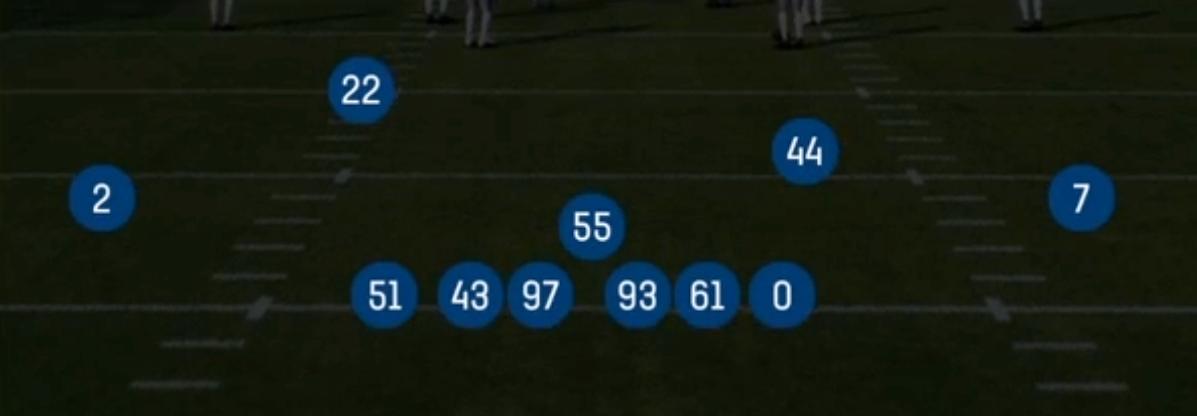
Formations in this playbook
Upgrade to Playbooks Rookie
- Filter every play by tag and concept
- Personnel groupings
- Premium play analysis