Playbooks
Franchise Playsheet
Run Stop
PlaysheetDefenseOverview
Run Stop is a compact defensive situational playsheet with one goal: stuffing the run. Its 30 plays are split across four base fronts, with one set each. The 3-4 and 4-4 carry 9 plays apiece (30% each), and the 4-3 and 5-2 contribute 6 plays apiece (20% each). There is no nickel or dime package anywhere in the sheet. Every snap puts at least a base front on the field, so this is a sheet you call when the offense shows heavy personnel, not one you live in against spread looks.
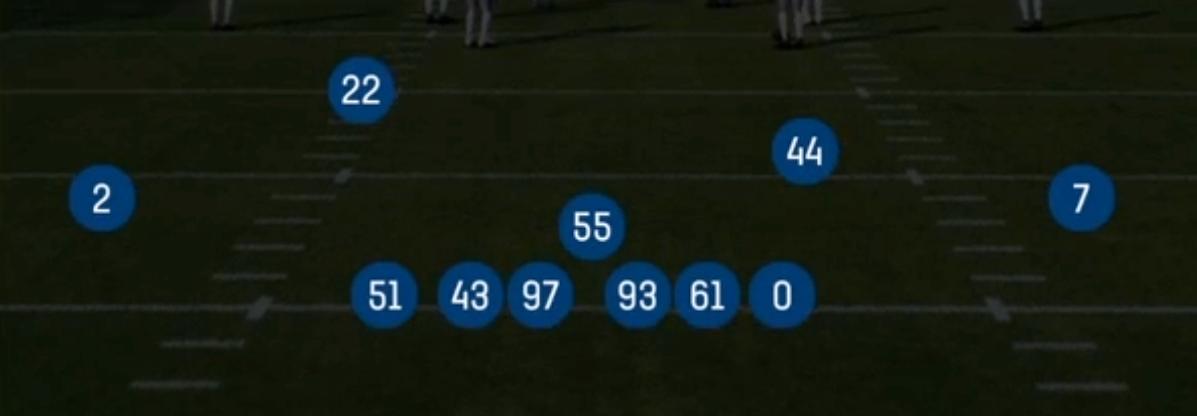
The standout feature is the 5-2, a front that appears in only 15 of the game's 236 playbooks. It stacks the line of scrimmage with five down linemen to close interior gaps against inside zone, power and dive looks. The 4-4 gives you eight defenders in the box, and the 3-4 and 4-3 let you control gaps without fully committing numbers. The coverage menu is broader than the run stop label suggests: Cover 0, Cover 1, Cover 2, Cover 3, Cover 4 Quarters and Inverted Coverage all appear, along with Pinch and Blitz calls. Plays like Cover 1 Hole and Buck SS 3 let you rotate a safety down while keeping a coverage shell behind the extra box defender.
Choosing Run Stop over a general franchise sheet gives you four distinct box structures in one short list. You can match 21, 22 and 13 personnel front for front without scrolling through sub packages you will never call on third and 1. The sheet supports a game plan built on winning early downs, forcing second and long, and making opponents who lean on the ground game abandon it.
Scheme Fit
Run Stop wants a big, stout defensive line with high block shedding and strength, especially nose tackles and defensive ends who can two-gap in the 5-2 and 3-4. It also wants downhill linebackers with strong pursuit and tackling, plus a strong safety who can play in the box on Buck SS 3 style rotations. It fits franchise players in divisions full of heavy-personnel, run-first opponents who like to user a linebacker and control early downs, and who will switch to a separate sheet on passing downs.
Playsheet bonuses
- IUnlocks the playsheet
- II+3Tackleall Linebackers
- III+3Block Shedall EDGE, DT & LB
- IV+7Pursuit, Hit Powerall defenders
Every play in this playsheet (30 plays)
4-3 Even 6-16 plays


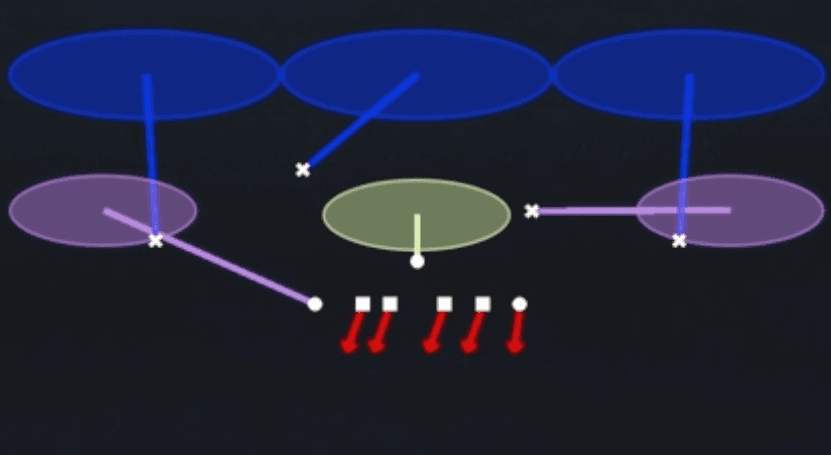
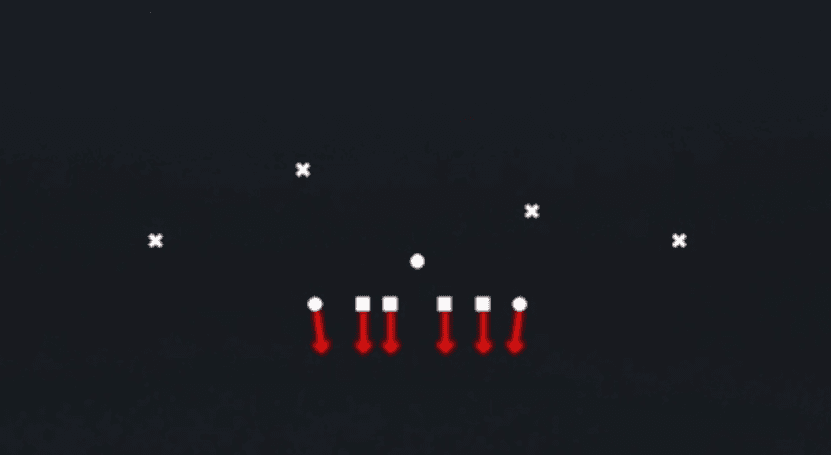
4-4 Split9 plays


3-4 Bear 469 plays


Find plays by concept, not by formation
Search every playbook by tag and personnel grouping, not just Run Stop.
Strengths
- The rare 5-2 front puts five linemen across the gaps, so interior runs like inside zone and dive have no clean lane. Most opponents rarely see this look and will have no pre-snap read for it.
- The 3-4 and 4-4 hold 18 of the 30 plays between them, which gives you two deep eight-man box menus to rotate. You can show the same heavy look with different Cover 1, Cover 3 and Pinch answers behind it.
- The coverage spread runs from Cover 0 and Blitz to Cover 4 Quarters, so play-action off heavy sets does not automatically burn you. You can call a Quarters or Inverted shell from a run front and take away the shot play.
- With only four sets, your audible package covers every front in the sheet. Pre-snap you can flip between the 3-4, 4-3, 4-4 and 5-2 to match heavy personnel without menu diving.
- Pinch calls from base fronts slant the line into run lanes at the snap. Pair them with a user-controlled linebacker filling the backside A gap for a reliable stop on outside zone and stretch.
Weaknesses
- There is no nickel or dime formation anywhere in the sheet, so 11 personnel, empty and 4 wide looks force base defenders to cover slot receivers and running backs in space.
- Every front keeps at least three linebackers on the field, so quick game man beaters like slants, mesh and drags against Cover 1 and Cover 0 will pick on linebacker coverage ratings.
- With 30 plays and one set per formation, experienced opponents will recognize your alignments quickly. After a few drives they can key on which front means blitz and which means a zone shell.
- The 5-2 and 4-4 commit so many defenders near the line that any play-action rollout or boot that gets outside the edge contain can find a single safety alone deep.
- The sheet is weighted toward stopping the run, so an opponent who stays in heavy personnel but throws on early downs can exploit your heavy fronts' pass coverage.
Usage Tips
Build your short yardage audible around the 5-2 set: call it on 3rd and 1, 4th and 1 and goal line situations against 22 or 13 personnel, and user the middle linebacker downhill into the A gap.
On 1st and 10 against 21 personnel, open in the 3-4 set with a Cover 3 or Cover 1 Hole call. That keeps a safety rotated down for the run while still defending a play-action post.
Save the 4-4 set for 2nd and short and red zone downs where the offense is likely to run. Its eight-man box pairs well with the Pinch and Cover 0 calls when you want penetration in the backfield.
Use the 4-3 set as your early down balance call against teams that mix run and pass from 12 personnel. Reach for Cover 4 Quarters or Cover 2 there when you expect play-action over the top.
When the offense subs into 11 personnel or spreads out on 3rd and medium or longer, exit Run Stop and switch to a sheet with nickel and dime coverage, since this one has no answer in the secondary.
Formations in this playbook
Upgrade to Playbooks Rookie
- Filter every play by tag and concept
- Personnel groupings
- Premium play analysis