Playbooks

Quick Reference
Breakdown
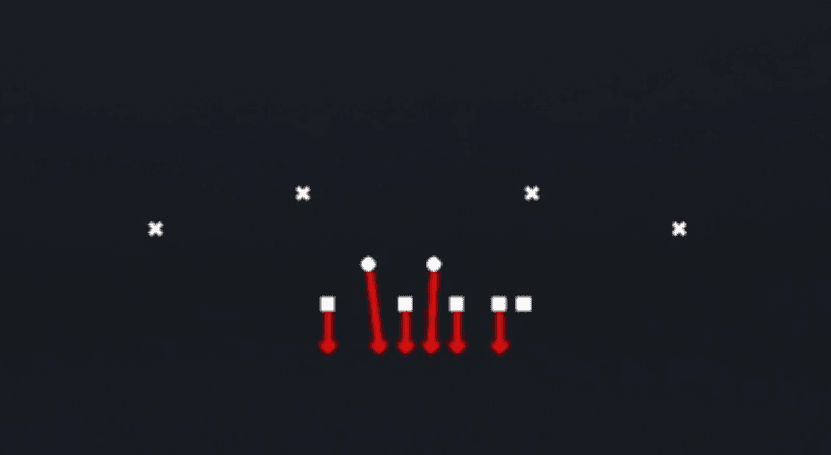
FS Blitz out of the Over Solid 3-4 Base 5-2 personnel sends the free safety down as an extra rusher, showing five defenders crashing the line while a deep-middle defender holds a single high shell over the top. Underneath, three defenders drop into shallow zone spots with a flat defender peeling to the boundary, creating a five-man pressure look with man-match principles behind it. This is a blitz play designed to disrupt the quarterback's timing, so the primary read is getting the free safety home off the edge or through an interior gap before the protection can adjust, with the deep defender as the last line against any explosive shot play.
Defensive Reads
Pre-snap, check the offensive line count and running back alignment, if the back stays in to block on the free safety's side the blitz will likely be picked up and you should consider a hot route bail out. Look at the receiver splits and motion, if the offense shifts a receiver into the blitzing safety's lane it is often a run beater or quick screen designed to attack the vacated area. Post-snap, key the quarterback's eyes immediately, since this blitz is built to disrupt timing throws, if he holds the ball more than two seconds the coverage behind the rush becomes vulnerable to double moves. This play beats teams that rely on quick game or three-step drops but gets exposed by max protect schemes and quick screens to the flat away from the blitz side. Watch for user-controlled quarterbacks who scramble immediately, since the single high safety help is limited once the pocket collapses laterally, and the flat defender must react fast to contain outside runs.
Usage Tips
Call this on early downs or third and medium when you expect a quick game passing concept, since the free safety blitz is built to beat rhythm throws before they develop.
Check the offensive formation pre-snap for extra protectors like a sixth blocker or tight end staying in, and if you see max protect, consider audibling to a coverage play like Cover 3 Match instead.
Use manual control on the blitzing free safety to time the snap count and disguise the pressure, delaying his break until just after the snap to avoid tipping the blitz.
Pair this with Cover 1 Sting or Cover 4 Quarters in your play-calling sequence so quarterbacks cannot key on the single high shell and diagnose the blitz before the ball is snapped.
Avoid calling this on obvious passing downs against mobile quarterbacks who can escape the pocket, since the underneath zone drops leave scramble lanes if the rush does not get home quickly.
Other Plays in Over Solid
 Cover 1 StingCover 1, Line Stunt, Man Coverage
 Cover 2 InvertCover 2, Inverted Coverage, Zone Coverage
 Cover 3 MatchCover 3, Cover 3 Match, Zone Coverage
 Cover 3 Sky WKCover 3, Cover 3 Sky, Zone Coverage
 Cover 4 QuartersCover 4, Quarters, Zone Coverage
 Hammer 0 BlastCover 0, Blitz, Safety Blitz +2
 Saw O BlastBlitz
 Tampa 2Cover 2, Tampa 2, Zone Coverage