Playbooks

Overview
Cowboys Defense and NFL Live Cowboys Defense are functionally the same playbook. They share all 374 of this cut's plays and differ by zero sets, so any audible package, scheme adjustment or practice rep you build in one carries over to the other without changes. Pick whichever label your mode offers and do not expect a hidden difference.
Cowboys Defense is a Nickel-first sub-package book. Nickel accounts for 181 of its 374 plays (48%) across 10 sets, which gives you a deep menu of 4-2-5, 2-4-5 and Big Nickel 5-1-5 looks off one base personnel group. The 3-4 adds 63 plays (17%) across 5 sets for early-down odd fronts. Dime adds 57 plays (15%) across 2 sets for passing downs. Behind that core sit a 3-3-5 set (21 plays), the rare 2-5 (15 plays, found in only 12 of the game's 236 playbooks), Goal Line Defense (13 plays across 3 sets), Dollar (12), and thin 4-3 and Prevent packages at 6 plays each. At 374 plays it is larger than 67% of the 64 defensive team playbooks.
The game plan it supports is matchup driven. You live in Nickel against 11 personnel, use the 3-4 to show odd fronts on early downs, and flood the field with Dime and Dollar on third and long. The concept tags lean on Cover 1, Cover 3, Cover 3 Match, Cover 4 and Quarters, plus Corner Blitz, LB Blitz and Double Wr1 and Double Wr2 brackets. That combination rewards players who disguise single high and match coverage and pressure from the slot or second level rather than relying on four-man rush fronts.
Scheme Fit
Cowboys Defense wants a secondary loaded with man-capable slot corners and rangy safeties who can play robber and match roles, because nearly two-thirds of its snaps come from Nickel and Dime. Hybrid linebackers who can rush the passer from the 2-5 and 3-4, plus a couple of penetrating interior linemen, make its pressure packages work. It suits players who like to disguise coverage, bracket the opponent's best receiver and live in sub packages, not those who want a traditional four-down base front.
Example Plays from this Playbook

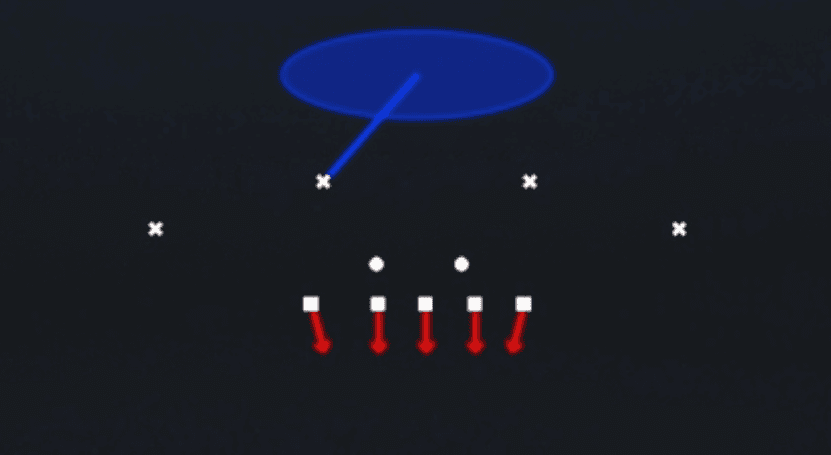


Find plays by concept, not by formation
Search every playbook by tag and personnel grouping, not just Cowboys Defense.
Strengths
- Nickel depth across 10 sets lets you stay in one sub package against 11 personnel and still show multiple fronts, from 2-4-5 to Big Nickel 5-1-5, so an opponent reading your formation pre-snap cannot key on a single alignment or blitz tell.
- The 2-5 front is in only 12 of 236 playbooks, so most opponents have never built a read against it. Its two-down-lineman, five-linebacker look muddies protection calls and makes simulated pressure and LB Blitz looks hard to identify pre-snap.
- Dime (57 plays across 2 sets) plus Dollar (12 plays) gives you a real third-and-long package with Double Wr1 and Double Wr2 bracket tags, letting you take away a user's favorite target instead of hoping a base call covers it.
- The 3-4 carries 63 plays across 5 sets, enough to run a legitimate odd-front early-down package with Cover 3 Match and Quarters behind it. You can shift between it and Nickel without the offense seeing the same shell twice in a drive.
- Coverage variety inside single high is strong: Cover 1 Robber, Cover 1 Hole and Cov 1 QB Contain Spy style calls give you man-beater protection and a spy answer to scrambling quarterbacks, all while presenting a similar pre-snap picture.
Weaknesses
- The 4-3 is nearly vestigial at 6 plays in 1 set, so if you want a traditional four-down base front against 21 or 12 personnel you are forced into the 3-4 or a heavier Nickel look instead.
- With 48% of the book in Nickel, a patient run-heavy opponent can keep 12 and 21 personnel on the field and test your light boxes. Unless you sub to the 3-4 or Big Nickel 5-1-5, you will be exposed to downhill runs and play-action off them.
- Goal Line Defense has only 13 plays, so red zone and short-yardage calls get repetitive fast. A smart opponent inside the 5 can learn your handful of looks within a game.
- Cover 2 is not among the tagged concepts, so if your scheme relies on two-high Tampa or Cover 2 sink looks against quick outs and flat routes, this book pushes you toward Cover 4 and Quarters instead.
- Prevent is limited to 6 plays in 1 set, which leaves few end-of-half options. Opponents running hurry-up sideline concepts can predict your two-minute shell.
Usage Tips
Build your base audible package in Nickel, pairing a Nickel 4-2-5 Cover 3 Match call, a Cover 1 Hole or Robber man call and a Corner Blitz. Use it on first and second down against 11 personnel, where you can hot route defenders into flats or hook zones without leaving the formation.
Sub into the 3-4 on first and 10 or second and short when the offense shows 12 or 21 personnel. Its 5 sets let you pair a Quarters or Cover 3 call with an LB Blitz so you stay sound against both run and play-action.
On third and 7 or longer, go to Dime and call Double Wr1 or Double Wr2 brackets against the opponent's go-to receiver. Move to Dollar on third and 12 or more to get a seventh defensive back on the field.
Save the 2-5 for key passing downs in the middle of drives, such as second and 8 or third and medium. Show pressure with its five linebackers, then drop into zone or send an LB Blitz so the offense's protection reads fail. Its rarity means most opponents will not have a pre-snap answer.
Against scrambling quarterbacks, keep a Cov 1 QB Contain Spy style call in your audibles and user the spy or rat defender. Reach for it on third down in the 3-3-5 or Nickel when the opponent has been escaping the pocket.
Formations in this playbook
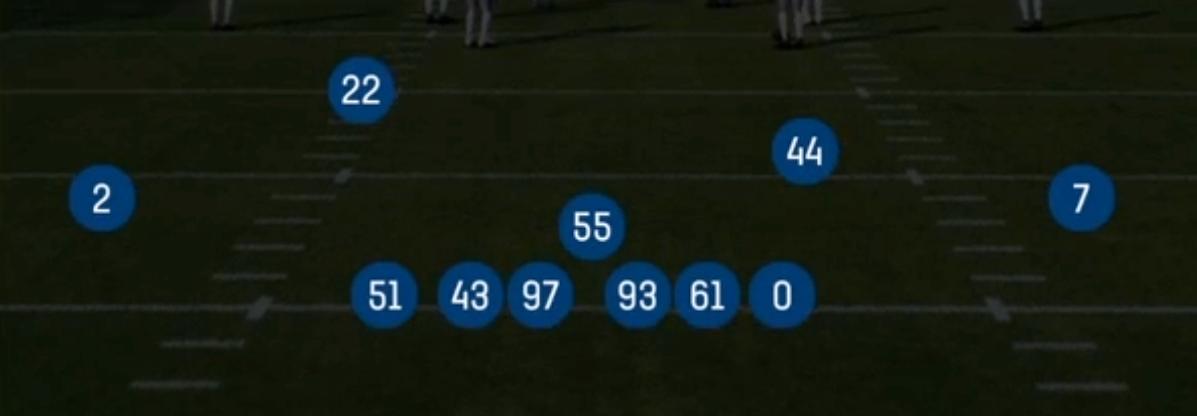
Upgrade to Playbooks Rookie
- Filter every play by tag and concept
- Personnel groupings
- Premium play analysis