Playbooks

Overview
Panthers Defense and NFL Live Panthers Defense are effectively the same playbook. They share all 395 plays and differ by 0 sets, so which one you pick changes nothing on the field. Everything below applies equally to both cuts.
At 395 plays across 7 formations and 25 sets, the Panthers Defense is larger than 89% of the game's 64 defensive team playbooks, and its weight sits in sub packages. Nickel alone carries 166 plays (42%) across 8 sets. Dime adds 75 plays (19%) and 3-3-5 adds 36 (9%), so roughly 70% of the book puts five or more defensive backs on the field. The 3-4 is the main base look at 75 plays (19%) across 6 sets. The 4-3 is thin at 24 plays (6%), with Goal Line Defense (13) and Prevent (6) rounding it out. Personnel range from Base 5-2 and 6-2-3 up to Big Quarter 3-1-7, which lets you match almost any offensive grouping without leaving the book.
The concept list tells you how it wants to play: Cover 1 and man-to-man paired with LB, safety and corner blitzes, backed by a Cover 3 family (Cover 3, Cover 3 Match, Cover 3 Sky) and Cover 4 as the zone answers. This is a pressure-and-match book for players who want to live in Nickel against spread sets, send disguised five-man pressure from sub fronts, and fall back into single-high or quarters structures when the offense adjusts. Plays like CB Bench Blitz, 3 Deep Blitz and 1 Edge Pinch show the aggressive intent behind the depth.
Scheme Fit
The Panthers Defense wants a secondary of man-cover corners and rangy, blitz-capable safeties, plus versatile slot defenders who can hold up in Nickel and Dime for most of the game. Up front, it rewards stand-up edge rushers who fit the 3-4 and interior linemen who win quickly with four-man rushes, while a heavy 4-3 roster built around big run stoppers is a poor fit. Pick it if you like dictating with disguised pressure and sub packages against spread offenses and you are comfortable user-controlling a deep safety.
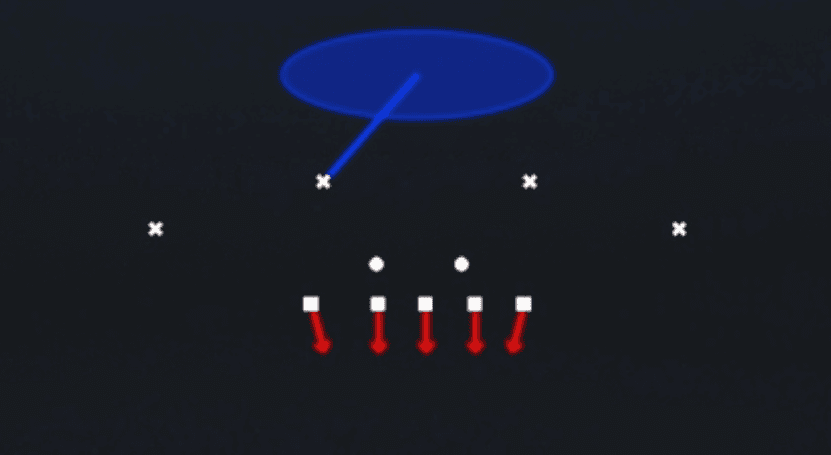
Example Plays from this Playbook



Find plays by concept, not by formation
Search every playbook by tag and personnel grouping, not just Panthers Defense.
Strengths
- Nickel depth is elite: 166 plays across 8 sets, split among Nickel 2-4-5, Nickel 4-2-5, Big Nickel 4-2-5 and Nickel 3-3-5 personnel, gives you enough variety to run the same coverage from multiple fronts and keep pre-snap reads muddy against 11 personnel.
- The blitz menu is layered across LB, safety and corner pressure, so you can build an audible package that brings heat from different spots on consecutive downs without changing formation. That makes it easy to disguise and then fire off a nano blitz or a CB Bench Blitz style edge rush.
- The Cover 3 family (base, Match and Sky) plus Cover 4 give you real zone answers behind the man blitzes. You can show Cover 1 shells and rotate to Cover 3 Sky or Match post snap to punish quarterbacks throwing hot routes into vacated areas.
- Personnel coverage is unusually wide, from Base 5-2 and 6-2-3 to Dime 4-1-6, Big Dime 1-4-6 and Big Quarter 3-1-7. You can match heavy, spread and empty groupings with formation subs instead of being stuck in a mismatch.
- The 3-4 carries 75 plays over 6 sets, so you still have a credible base front with edge rushers standing up when offenses go 12 or 21 personnel. That is more base depth than most sub-heavy books offer.
Weaknesses
- The 4-3 is a token package at 24 plays across 2 sets. If your roster is built around four down linemen and a middle linebacker, you will run out of fresh 4-3 calls fast and opponents will recognize repeats.
- With about 70% of plays in Nickel, Dime and 3-3-5, the book leans light on the field. Power run teams in heavy personnel can pound the edges and force you into the 3-4 or Goal Line menus, which are far shallower.
- Goal Line Defense has only 13 plays over 3 sets and Prevent only 6 plays in 1 set. Short-yardage and end-of-half situations give you few looks, so a patient opponent can script those moments and read your call.
- The listed concepts center on Cover 1, the Cover 3 family and Cover 4, with no Cover 2 style two-high shells listed. Offenses that attack seams and deep middle against single-high, or flood the flats against Cover 3, can key on that tendency.
- The heavy man and blitz lean means one missed assignment gives up explosives. Mesh, crossers and pick concepts against Cover 1 punish this book if your corners and user defender cannot hold up.
Usage Tips
Build your primary audible package in Nickel: pair a Cover 1 blitz, a Cover 3 Match and a Cover 4 from the same Nickel set so you can check between man pressure and zone on 1st and 10 and 2nd and medium without the offense seeing a formation change.
On 3rd and long, move to Dime or Big Quarter 3-1-7 and lean on Cover 3 Sky or Cover 4. Rush four, drop the rest, and user the deep middle to take away the seam that single-high shells leave open.
On 3rd and short to medium against spread sets, stay in Nickel 3-3-5 or Nickel 2-4-5 and call the safety or corner blitzes. The extra bodies at the second level let you pinch the line and still cover quick hot routes.
When the offense shows 12, 21 or 22 personnel on early downs, sub to the 3-4 (Base 3-4 or Base 5-2 personnel) rather than the thin 4-3. The 6 sets there give you enough run fits and blitz looks to avoid repeating calls.
Keep Goal Line Defense and Prevent calls rotated deliberately. With only 13 and 6 plays, pick two or three favorites in each and vary shades and user assignments pre snap so your inside-the-5 and final-drive calls do not become predictable.
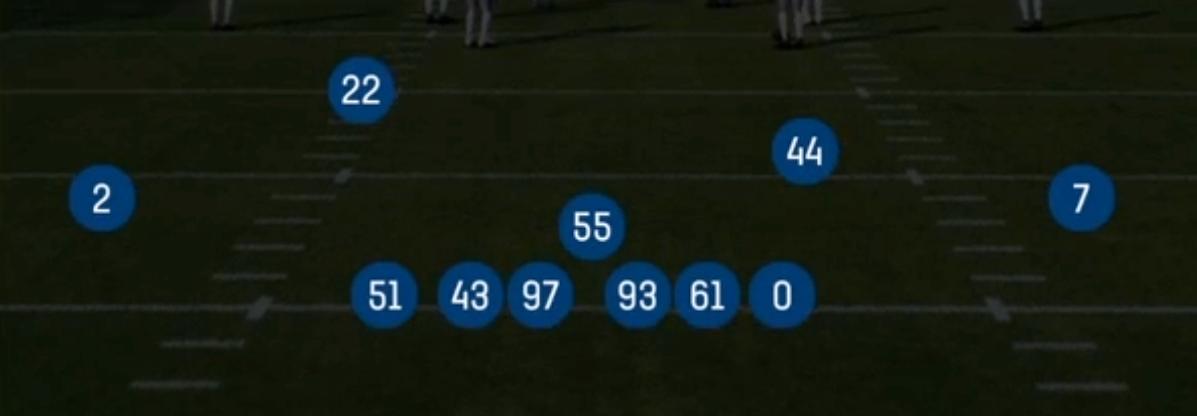
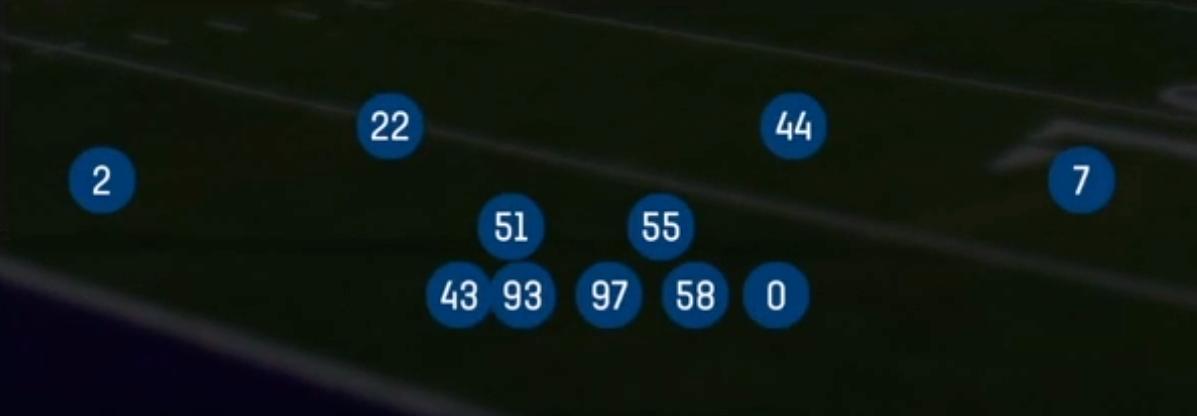
Formations in this playbook
Upgrade to Playbooks Rookie
- Filter every play by tag and concept
- Personnel groupings
- Premium play analysis