Playbooks

Overview
Redskins Defense and NFL Live Redskins Defense are, for practical purposes, the same playbook. The sibling cut shares all 436 of this book's plays and differs by zero sets, so anything you lab or build an audible package around here carries over directly. Pick whichever label shows up in your mode; the scheme is identical. What matters is the content, and at 436 plays across 9 formations and 28 sets, Redskins Defense is larger than 95% of the game's 64 defensive team playbooks. That depth is the selling point: more sets means more ways to disguise the same coverage shell. It also means more fronts to match opposing personnel without subbing out of your call sheet.
The book is built around sub packages. Nickel carries 165 plays (38%) across 8 sets, and Dime adds another 108 plays (25%) across 5 sets. That puts nearly two thirds of the playbook in five and six DB looks. Personnel options like Big Nickel 4-2-5, Nickel 5-1-5, Big Dime 1-4-6, Big Dime 3-2-6 and Big Dime 4-1-6 let you hold extra speed on the field without giving up gap integrity. The 3-4 is a real secondary base at 81 plays (19%) across 6 sets. The 4-3 is thin by comparison at 21 plays (5%) across 2 sets. Niche packages round it out: 2-4-5 (18), Goal Line Defense (13 across 3 sets), 3-3-5 (12), 4-2-5 (12) and Prevent (6).
The game plan this supports is a pass first, disguise heavy defense. It lives in Nickel and Dime against spread and 11 personnel. It leans on the 3-4 for early downs and uses odd packages like the 3-3-5 and 2-4-5 as change ups. Coverage variety is broad: Cover 3, Cover 3 Buzz, Cover 4, Cover 2, Tampa 2, Cover 0 and Zero Blitz, plus edge and LB pressure. You can rotate shells and pressure looks from the same alignment, then punish opponents who read the pre-snap picture and trust it.
Scheme Fit
Redskins Defense wants a secondary deep enough to play five and six DBs most of the game. That means a man capable slot corner, a rangy safety who can play single high, and at least one hybrid defender who can handle the Big Nickel and Big Dime roles. Up front it rewards speed rushing edge players and a stout nose for the 3-4 packages more than a traditional 4-3 interior. It fits a player who likes to disguise coverage, user a safety or linebacker, and match offensive personnel snap to snap, not one who wants to sit in a single base front.
Example Plays from this Playbook


Find plays by concept, not by formation
Search every playbook by tag and personnel grouping, not just Redskins Defense.
Strengths
- Nearly two thirds of the book (273 plays) sits in Nickel and Dime across 13 sets. You can match 11 and 10 personnel all game and still show a new alignment each snap, which makes pre-snap reads unreliable for the offense.
- The Big Nickel 4-2-5 and Big Dime variants (1-4-6, 3-2-6, 4-1-6) let you keep extra DBs on the field while swapping in heavier bodies. You can hold up against a quick switch to run heavy personnel without a full formation sub.
- The 3-4 carries 81 plays across 6 sets, a deep odd front base. Opponents who spam base personnel get a true two gap front with OLB edge pressure and Cover 3 Buzz or Cover 4 behind it.
- The coverage menu (Cover 2, Tampa 2, Cover 3, Cover 3 Buzz, Cover 4, Cover 0, Zero Blitz) spans enough shells from the same Nickel sets to disguise. You can show two high and rotate to Buzz or bring Cover 0 from the same look, which breaks zone beater and man beater audibles.
- Change up packages like the 3-3-5 (with calls such as 1 Pirate Spy) and the 2-4-5 give you spy and hybrid looks that most books lack. They are useful for containing mobile quarterbacks on scramble downs.
Weaknesses
- The 4-3 is only 21 plays across 2 sets. Players who want a traditional four man base front have a shallow menu, and opponents will quickly recognize the few 4-3 calls you rotate.
- With 63% of the book in Nickel and Dime, opponents who live in 12, 21 or 22 personnel can force you into lighter boxes. They can pound inside zone and power until you commit to the smaller 3-4 or Goal Line menus.
- Goal Line Defense is spread across 3 sets but only 13 plays. Short yardage and red zone defense relies on a narrow call sheet that a patient offense can scout and attack with play action.
- Prevent has just 6 plays in 1 set. End of half and end of game situations lean on Dime drop coverages instead of a deep bench of dedicated prevent calls.
- The sheer size (436 plays) can work against less disciplined players. It is easy to scatter calls across 28 sets without mastering the blitz paths and zone drops of any one of them, which leads to busted assignments.
Usage Tips
Build your core audible package around Nickel, since its 8 sets give you the most disguise options. Use it as your default on 1st and 10 and 2nd and medium against 11 personnel, rotating Cover 3 Buzz and Cover 4 from the same alignment.
On 3rd and 7 or longer, move to the Dime sets and the Big Dime personnel groupings. Mix Cover 2 and Tampa 2 with Zero Blitz pressure so the offense cannot hot route to a single man or zone beater.
When the opponent shows 12 or 21 personnel on early downs, audible into the 3-4 sets instead of staying light. The 3-4 has 81 plays to draw from, so you can keep variety while adding run fit bodies.
Keep one 3-3-5 call such as 1 Pirate Spy and one 2-4-5 call in your audibles for 3rd and medium against mobile quarterbacks. Spy the QB and let the rest of the shell hold.
Save Goal Line Defense for inside the 3 yard line and 4th and short only, since its 13 plays are easy to scout. Mix in a Cover 0 look from Nickel near the goal line so your short yardage tendency is not purely heavy front.
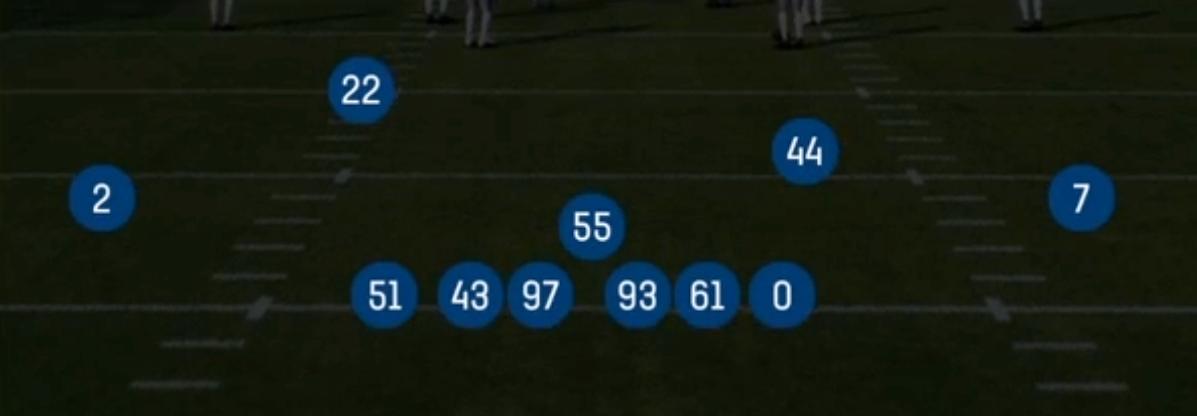
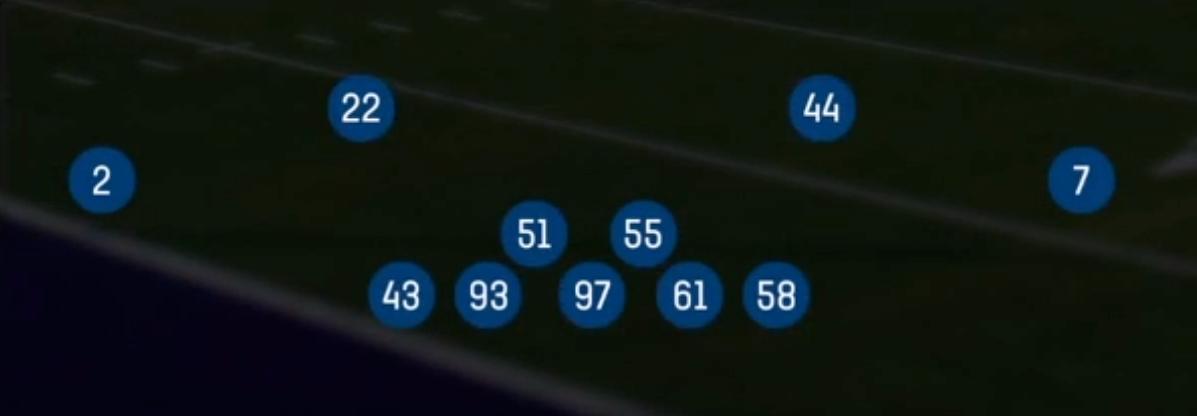
Formations in this playbook
Upgrade to Playbooks Rookie
- Filter every play by tag and concept
- Personnel groupings
- Premium play analysis