Team Hub
AFC South
Tennessee Titans
Team Snapshot
Entering 2026-2027, the Tennessee Titans are a rebuilding team trying to climb out of the AFC South basement after consecutive 3-14 seasons, betting their future on second-year quarterback Cam Ward and a new leadership tandem of defensive head coach Robert Saleh and offensive coordinator Brian Daboll. It is a franchise in transition on and off the field, new coaching staff, a heavily reshaped roster, a fresh logo and uniforms, and a farewell season in the current Nissan Stadium.
Franchise Difficulty
How hard this franchise is to run well: where the team stands, what the roster gives you, what the cap allows, and what you hold in the draft.
A 74 overall starting quarterback, five high-severity roster holes along the offensive line and at tight end, a next-year cap room that tightens to $14.7M (rank 20 of 32) despite a currently favorable $51.1M (rank 2 of 32), 21 expiring contracts creating roster instability, and a development corps built around young players who have not yet reached their ceilings combine to make this one of the most demanding franchises to run well.
Star Players
Scheme Fit
The schemes this team is set to run in-game, and how its roster grades in them.
- West Coast Power RunoffensivePassable
- Base 4-3defensivePassable
Salary Cap
Tennessee holds a league-high-adjacent $51.1M (rank 2 of 32) in current cap room, but committed spending spikes to $314.3M next season and forward room shrinks to $14.7M (rank 20 of 32), so this window to spend must be used surgically.
21 contracts expiring
Depth Chart
Madden Tools Analysis
Eight starting spots have weak depth behind the starter.
Draft Capital
Tennessee holds seven picks in the current cycle, all in the first round, and projects 21 picks over the next three years including three first-rounders, giving this rebuild more draft ammunition than almost any team in the league.
Team Ratings
The roster's clear strength is its defensive interior headlined by Simmons at 96 overall, while the offensive line, and particularly the left tackle and center positions, is the weakest spot on the depth chart.
Strengths
- DT
- LG
Weak spots
- C
- FS
- LT
- QB
- RG
Offense
Defense
Special teams
Roster Needs
- Chigh
Austin Schlottmann starts at center but ranks 31st among starters, making an upgrade at the position one of the most urgent tasks on the roster.
- FShigh
Kevin Winston Jr. holds the starting free safety job at just 22 years old and 75 overall, leaving the position well below league average.
- LThigh
Dan Moore is the starter at left tackle but ranks 30th at the position, and the backup options behind him offer little if any upgrade.
- QBhigh
Cam Ward is the starter at 74 overall, ranking 27th among starting quarterbacks, and lifting the position is the single most important long-term investment this franchise can make.
- RGhigh
Jackson Slater starts at right guard but ranks 30th at the position, and the depth behind him is equally thin.
- TEhigh
Gunnar Helm holds the top tight end spot at just 71 overall, placing the Titans 31st at the position and leaving Cam Ward without a reliable seam threat.
- LEDGEmedium
Keldric Faulk starts at left defensive end and ranks 24th, a manageable gap now but one that needs closing as Jacob Martin enters the later stage of his career.
- MIKEmedium
Cody Barton starts in the middle but ranks 25th, and while Anthony Hill Jr. is developing behind him, the position needs attention in the near term.
- WRmedium
Carnell Tate is listed as the top wideout at 78 overall, but the unit ranks 24th and Calvin Ridley is in the final chapter of his career.
- CBlow
Cor'Dale Flott is a legitimate starter at 80, but the group ranks 23rd overall and depth behind Alontae Taylor thins out quickly.
- HBlow
Tony Pollard leads a serviceable backfield at 83, though the position ranks 21st and Pollard is entering the back half of his career.
- REDGElow
Oluwafemi Oladejo starts at right edge at 73 overall and ranks 23rd, a workable situation but one where adding a higher-upside rusher would pay dividends.
Cut Candidates
5-Year Outlook
Tennessee is in a transitional moment, built around Jeffery Simmons as a defensive centerpiece and now staking its offensive future on Cam Ward at quarterback. The offensive line is the most pressing obstacle: Dan Moore ranks near the bottom of left tackles league-wide, the center and right guard spots are similarly weak, and there is no proven solution waiting in the depth chart. The tight end group is equally thin, ranking 31st, which further limits what the passing game can accomplish in the short term. Wan'Dale Robinson and Carnell Tate give Ward two young Star receivers to grow with, and Peter Skoronski anchors the interior, but the supporting cast around Ward needs significant investment before this offense can be competitive. Defensively, Simmons is elite, Cor'Dale Flott and Cedric Gray represent real youth at corner and linebacker, and Keldric Faulk at 21 is an exciting developmental edge piece. The bigger concern on that side is the secondary depth and the middle linebacker room, where Cody Barton holds the starting job but is entering the later stage of his career with Anthony Hill Jr. still developing behind him. Calvin Ridley, also in his final productive window, adds a veteran receiver presence but cannot be counted on as a long-term contributor. The current cap picture looks favorable at $51.1M (rank 2 of 32) this season, but committed spending rises to $314.3M next year and the forward room compresses to $14.7M (rank 20 of 32), so every free-agent dollar spent now must be weighed against that tightening window.
5-Year Plan
Year 1Clear the deck, build the line
- Release Jermaine Johnson II, Milo Eifler, David Martin-Robinson, and Tanoh Kpassagnon to recover the maximum available cap space and free roster spots for upgrades.
- Invest the $51.1M (rank 2 of 32) in cap room aggressively at left tackle, center, and tight end, targeting free agents who can immediately lift the three lowest-ranked starting positions on the roster.
- Let Cam Ward operate behind an improved offensive line in year one and evaluate his development trajectory before committing further resources at quarterback.
Year 2Young core takes the wheel
- Lean on JC Latham, Keldric Faulk, Cedric Gray, and Cor'Dale Flott as the primary building blocks on both sides of the ball as their Star development traits begin to manifest.
- Find a succession plan at MIKE as Cody Barton's window narrows, accelerating Anthony Hill Jr.'s reps and evaluating whether he can become the long-term starter.
- Use the seven picks this draft cycle to target offensive line and tight end prospects, addressing depth at the two positions most likely to still be weak after Season 1 free agency.
Year 3Establish the offensive identity
- Commit to the Run and Shoot framework with Cam Ward, Wan'Dale Robinson, and Carnell Tate as the core trio, adding a pass-catching tight end if the position remains a weakness.
- Transition Calvin Ridley out of a primary role as he moves deeper into the final chapter of his career, elevating younger receivers like Chimere Dike and Elic Ayomanor into expanded usage.
- Manage the $233.8M committed two seasons out by avoiding long back-loaded extensions for players approaching the end of their competitive windows.
Year 4Make the defense a weapon
- Build the pass rush around a mature Keldric Faulk alongside the Jeffery Simmons-anchored interior, and find a complementary edge rusher to replace the production lost by moving on from older contributors.
- Kevin Winston Jr. at free safety should be entering his prime window as a Star-trait player, and pairing him with Amani Hooker or a successor at strong safety can make the back end elite.
- With $106.6M committed three seasons out, pursue team-friendly extensions for core young contributors before their market value peaks.
Year 5Contend or reload
- If Cam Ward has developed into a franchise-caliber starter, structure the offense to maximize his prime years alongside the young receiver and line core built in seasons one through three.
- Jeffery Simmons will be deep into the later stage of his career by this point, so ensure the defensive interior has been replenished with a younger anchor who can carry the unit forward.
- With three first-round picks across the three-year draft window providing roster capital, the team should have the depth and talent density to make a legitimate playoff push.
Young core
Full Roster
| Player | Pos | OVR | Age | Dev |
|---|---|---|---|---|
| Age 29 | DT | 96 | 29 |  |
| Age 25 | LG | 84 | 25 |  |
| Age 29 | HB | 83 | 29 |  |
| Age 25 | WR | 83 | 25 | |
| Age 25 | CB | 80 | 25 | |
| Age 29 | DT | 80 | 29 | |
| Age 28 | SS | 80 | 28 | |
| Age 23 | RT | 80 | 23 | |
| Age 29 | MIKE | 78 | 29 | |
| Age 21 | LEDGE | 78 | 21 | |
| Age 23 | WILL | 78 | 23 | |
| Age 31 | WR | 78 | 31 | |
Franchise History
The franchise was founded in 1959-60 by oilman K.S. "Bud" Adams as the Houston Oilers, one of eight charter members of the upstart American Football League (AFL), beginning play in 1960 at Houston's Jeppesen Stadium. Behind quarterback George Blanda and Heisman winner Billy Cannon, the Oilers were the AFL's first dynasty, winning the league's first two championships in 1960 and 1961 and reaching a third straight title game in 1962. After the 1970 AFL-NFL merger, Houston endured lean years before the beloved "Luv Ya Blue" era of the late 1970s, powered by Hall of Fame running back Earl Campbell and coach Bum Phillips, reaching consecutive AFC Championship Games (1978, 1979). The Warren Moon era (1984-1993) produced a high-flying run-and-shoot offense and seven straight playoff berths (1987-1993) but no conference title, and included the infamous 1993 playoff collapse, when the Oilers blew a 35-3 lead to Buffalo. Amid stadium disputes, Adams relocated the team to Tennessee in 1997, playing as the Tennessee Oilers in Memphis (1997) and at Vanderbilt Stadium in Nashville (1998) before renaming to the Tennessee Titans in 1999. The 1999 Titans, led by QB Steve McNair, RB Eddie George, and coach Jeff Fisher, went 13-3 and made a magical playoff run featuring the "Music City Miracle," reaching Super Bowl XXXIV, where they fell 23-16 to the St. Louis Rams, stopped one yard short on the final play ("The Tackle"). The Titans have since had strong stretches, including six straight winning seasons 2016-2021 under Mike Vrabel with Derrick Henry, but slid into a rebuild in the mid-2020s, bottoming out with consecutive 3-14 finishes in 2024 and 2025.
Notable figures
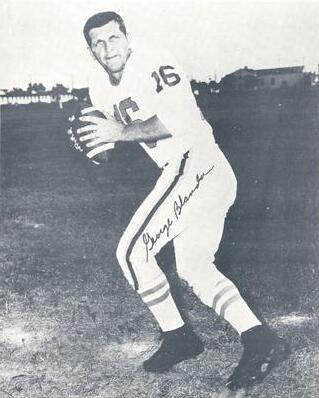 George Blanda · Quarterback/kicker (1960-1966)
Led the Oilers to the first two AFL titles; first Oilers/Titans player elected to the Pro Football Hall of Fame (1981).
Photo: Jay Publishing, public domain (Wikimedia Commons)
 Warren Moon · Quarterback (1984-1993)
Franchise's all-time passing leader (33,685 yards); Hall of Famer and first modern-era African American QB enshrined in Canton.
Photo: Brad Crooks, CC BY 2.0 (Wikimedia Commons)
 Earl Campbell · Running back (1978-1984)
"The Tyler Rose," 1978 Offensive Rookie of the Year and NFL MVP; Hall of Famer and face of the "Luv Ya Blue" era.
Photo: TankedBevo of ShaggyBevo.com, CC BY 2.5 (Wikimedia Commons)
 Elvin Bethea · Defensive end (1968-1983)
Franchise's all-time sack leader (105, unofficial); eight-time Pro Bowler and Hall of Famer who played 210 games.
Photo: Jeno's, public domain (Wikimedia Commons)
 Bruce Matthews · Offensive lineman (1983-2001)
Nine-time All-Pro, 14-time Pro Bowler, Hall of Famer; the franchise's iron-man of the offensive line.
Photo: Jerry Sherk, CC BY-SA 3.0 (Wikimedia Commons)
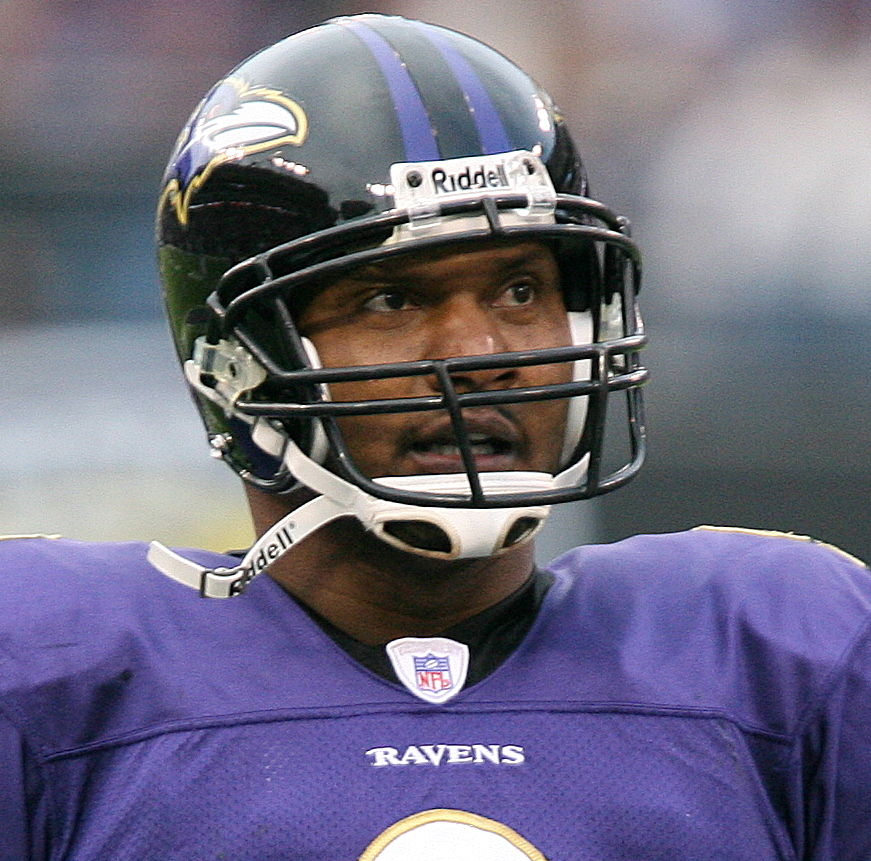 Steve McNair · Quarterback (1995-2005)
"Air McNair," 2003 co-MVP, led the 1999 Super Bowl run; franchise's winningest starting QB (76 wins).
Photo: Keith Allison, CC BY-SA 2.0 (Wikimedia Commons)
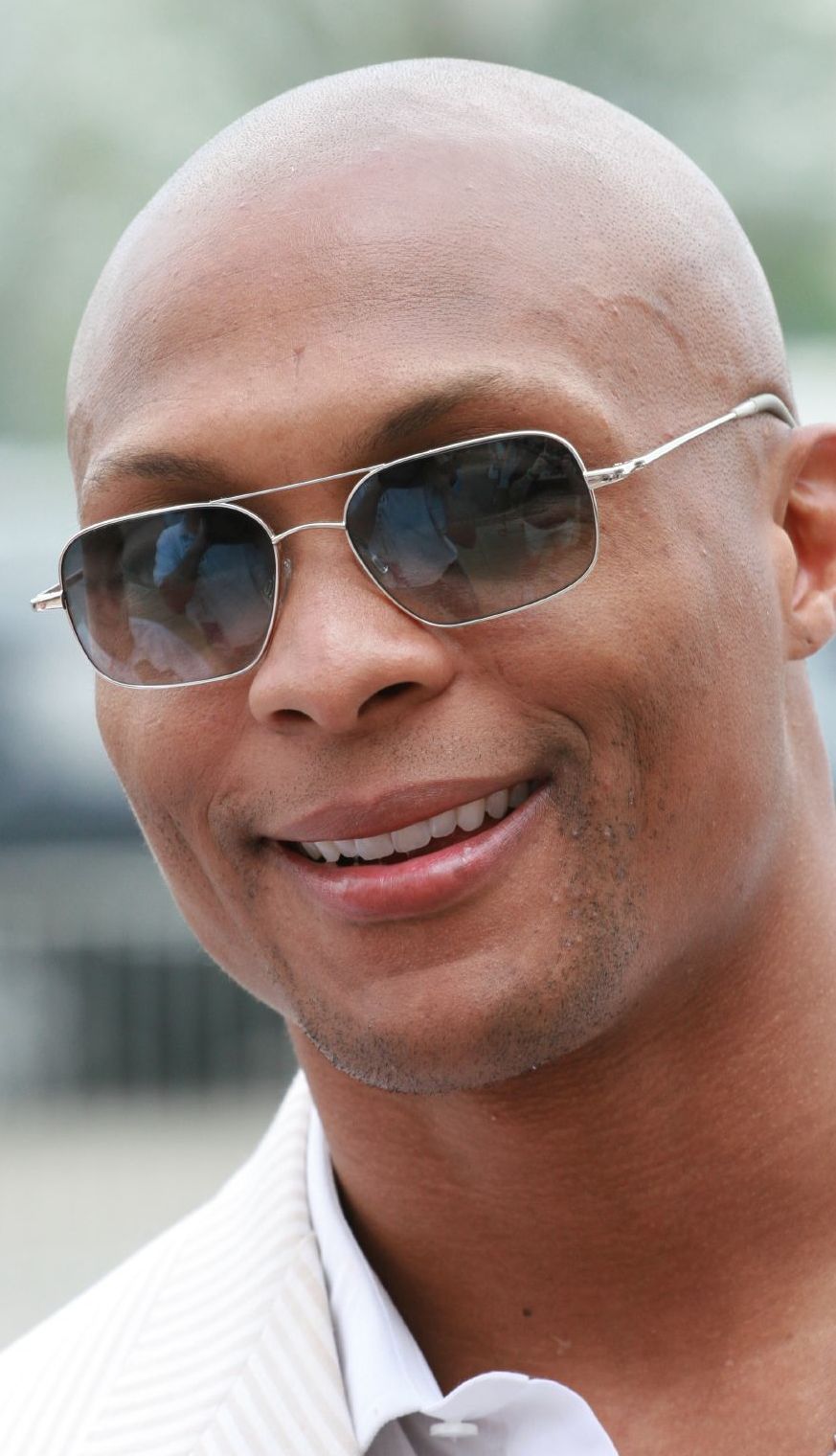 Eddie George · Running back (1996-2003)
Franchise's all-time leading rusher (10,009 yards); 1996 Offensive Rookie of the Year and centerpiece of the Super Bowl team.
Photo: Erica Thomas, CC BY 2.0 (Wikimedia Commons)
 Jeff Fisher · Head coach (1994-2010)
The franchise's longest-tenured and winningest coach (142-120 regular season); led the team to Super Bowl XXXIV.
Photo: Erik Daniel Drost, CC BY 2.0 (Wikimedia Commons)
 Bud Adams · Founder/owner (1959-2013)
AFL founding father who created the Oilers and moved the franchise to Tennessee.
Photo: Unknown author, public domain (Wikimedia Commons)
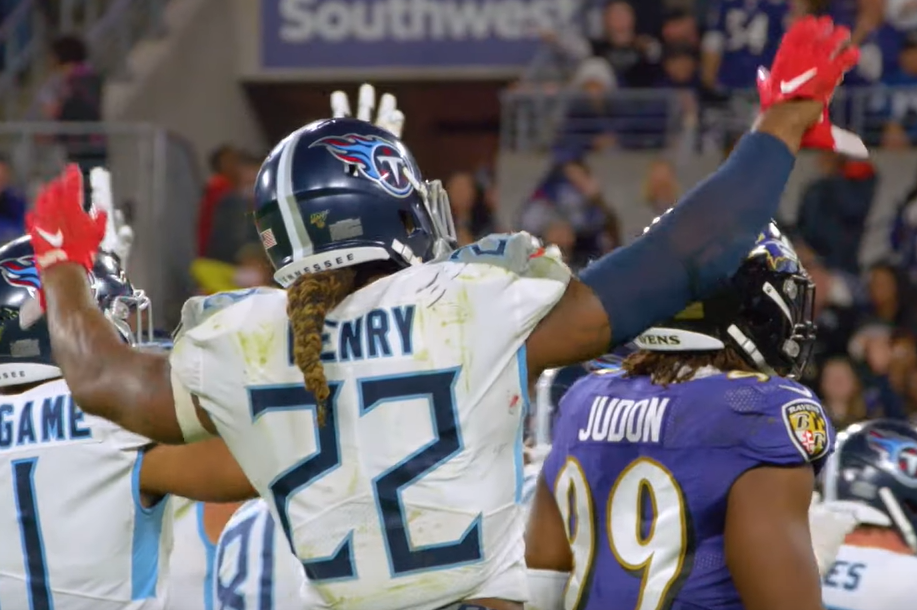 Derrick Henry · Running back (2016-2023)
2020 Offensive Player of the Year; rushed for a franchise-record 2,027 yards in 2020, making the Titans the only franchise with two 2,000-yard rushers.
Photo: Tennessee Titans, CC BY 3.0 (Wikimedia Commons)
Record book
- Passing yardsWarren Moon (33,685)
- Passing TDsWarren Moon (196)
- Rushing yardsEddie George (10,009)
- Receiving yardsErnest Givins (7,935)
- ReceptionsErnest Givins (542)
- SacksElvin Bethea (105 (unofficial; Ray Childress leads official-era count at 75.5))
- InterceptionsJim Norton (45)
- PointsAl Del Greco (1,060)
Team Tips
Playing As
The Titans are being rebuilt as a defense-first team under Robert Saleh, a defensive specialist known for a fast, four-man-front attacking scheme. Generate interior and edge pressure with All-Pro DT Jeffery Simmons, Jermaine Johnson II, John Franklin-Myers, and rookie Keldric Faulk, control games defensively, and ask QB Cam Ward, developing under coordinator Brian Daboll, to make efficient, quick throws to weapons like Wan'Dale Robinson and Carnell Tate rather than carry the team.
Playing Against
The Titans remain a young, rebuilding roster. In 2025 they averaged just 16.7 points per game and ranked near the bottom in scoring defense, with a franchise-worst -194 point differential. The offensive line was a major weakness, Ward was sacked 55 times behind a unit that allowed a league-high 13 unblocked sacks, and he posted a league-low 5.9 yards per attempt. Pressure Ward, crowd the box against a thin skill group, and exploit a secondary that surrendered explosive plays.
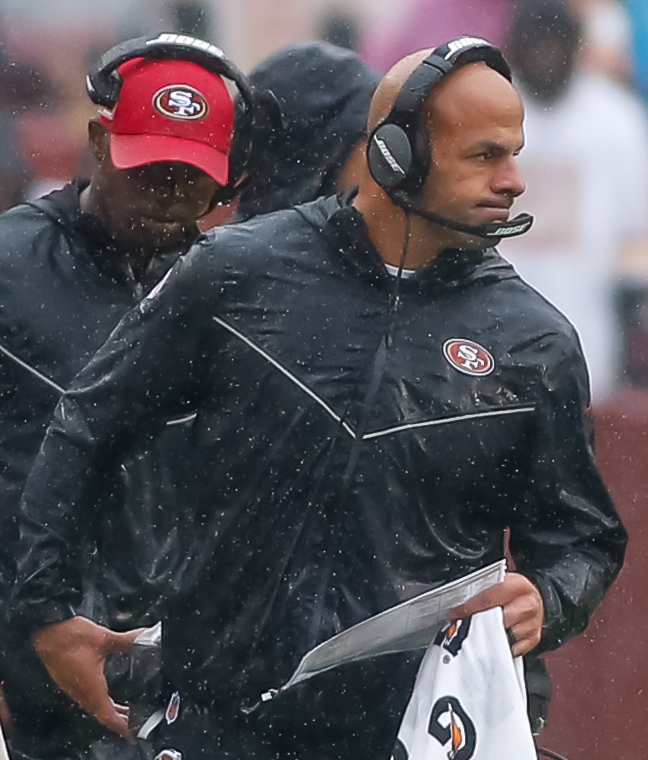
Coaching · Robert Saleh
Head coach entering 2026-2027 (first season). Signed to a five-year contract on January 22, 2026, the 46-year-old defensive-minded leader is tasked with guiding Tennessee back into contention after back-to-back 3-14 seasons. He previously went 20-36 as head coach of the New York Jets (2021-2024) and built top-tier defenses as the San Francisco 49ers' defensive coordinator (2017-2020, 2025), earning Sporting News Coordinator of the Year in 2019. He is the 22nd head coach in Oilers/Titans history and emphasizes culture, accountability, and the development of QB Cam Ward.
Photo: All-Pro Reels, CC BY-SA 2.0 (Wikimedia Commons)
Coming soon
- Playbook Matches
- Key Plays & Audibles
Upgrade to Team Hub Rookie
- Salary cap breakdown
- Depth chart analysis
- Roster needs & scheme fit
- Cut candidates & 5-year outlook
- Full sortable roster