Playbooks
Playbook
MUT CPU Passes Offense
OtherOffenseOverview
The MUT CPU Passes Offense playbook is a compact, pass-first Ultimate Team book with 31 plays across 4 formations and 13 sets. That is small next to a full team playbook, but it is larger than 92% of the game's 13 offensive Ultimate Team playbooks. The identity is clear: Shotgun carries 23 plays (74%) spread across 10 sets. Pistol (3 plays), Split Backs (3 plays) and Singleback (2 plays) round out the rest. The concept list tells you what it is built for: Option Route, Spot, Corner, Flat, Out, Swing and Cover 3 Beater looks. Screen Pass and HB Screen calls act as pressure relief, and only a handful of Run Play calls are included.
This book supports a spread passing game plan where most snaps come from Shotgun in 11 personnel. You attack zone with Spot, Corner and Flat combinations and punish Cover 3 with dedicated beaters. You beat man with Option Route and Cross Drag style concepts. Sample calls like Cross Drag, China Double In, Bench and Dagger show the range: quick in-breakers, triangle reads to the flat and corner, and intermediate shots over the middle. Motion concepts are also included, so you can pre-snap read coverage before committing to a progression.
The real reason to pick the MUT CPU Passes Offense over other Ultimate Team books is the combination of Shotgun depth and a rare wrinkle. Split Backs appears in only 8 of the game's 236 playbooks, which gives you a 21 personnel pass and swing look most opponents have not repped against. You get ten distinct Shotgun sets for alignment variety, plus 12 and 21 personnel options to change the matchup. That lets you keep one passing identity while still forcing the defense to adjust its substitution package.
Scheme Fit
The MUT CPU Passes Offense wants an accurate, quick-release quarterback with strong short and medium accuracy, route-running wide receivers who separate on in-breakers and corners, and a receiving back who can win on swing, flat and screen routes out of Shotgun and Split Backs. Pass-blocking offensive linemen matter more than road graders because so few run calls are included. Pick this book if you are a rhythm passer who likes reading coverage pre-snap and checking between man and zone beaters, not a player who needs a deep run game to set up the pass.
Example Plays from this Playbook
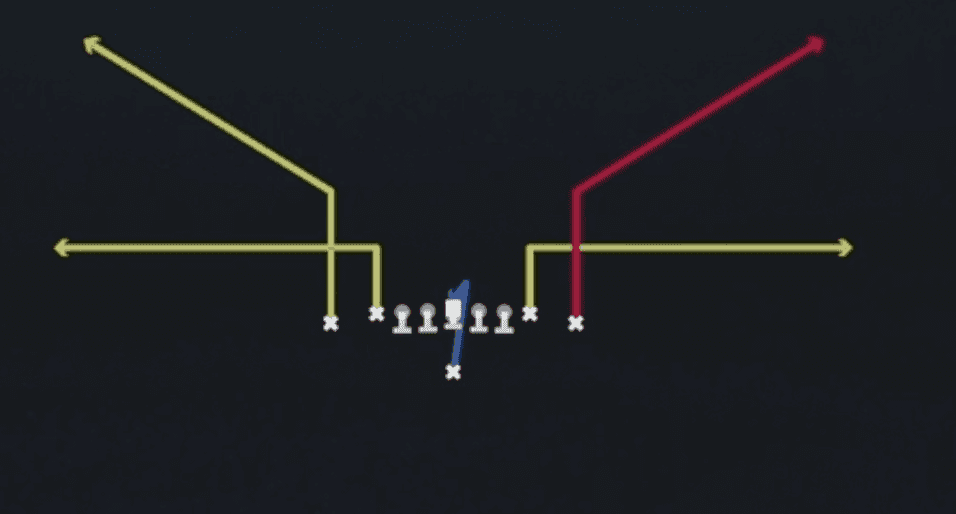


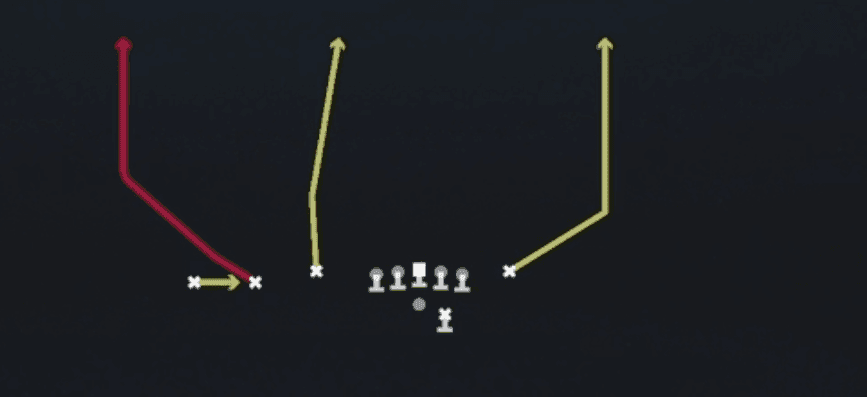
Find plays by concept, not by formation
Search every playbook by tag and personnel grouping, not just MUT CPU Passes Offense.
Strengths
- Ten Shotgun sets across 23 plays let you run the same passing identity from many alignments, so opponents cannot key one formation and sit on your favorite concept
- Split Backs is rare, appearing in only 8 of 236 playbooks, so its 21 personnel swing and flat releases create unfamiliar reads and mismatches against linebackers who rarely defend two back passing sets
- Dedicated Cover 3 Beater, Spot, Corner and Flat concepts give you built-in zone answers, while Option Route and drag concepts like Cross Drag handle man, so you rarely need to hot route your whole progression
- Screen Pass and HB Screen calls pair with the heavy dropback volume to punish nano blitz and heavy pressure, turning aggressive user-controlled rushers into a liability
- The playbook is larger than 92% of offensive Ultimate Team books, giving you more audible depth and more motion-based pre-snap coverage reads than most MUT options
Weaknesses
- With 74% of plays in Shotgun and only a few Run Play calls, opponents can play dime or nickel and drop extra defenders into coverage without fearing a sustained ground game
- Singleback has only 2 plays and Pistol has 3, so under-center style play-action and balanced 12 personnel packages are thin, which limits your ability to exploit light boxes
- The 31 play total is still small compared to full team books, so a patient opponent will see repeated concepts by the second half and can start baiting your go-to reads with user-controlled defenders
- Short-yardage and goal line situations lack dedicated heavy formations, so you have to lean on Split Backs or Singleback runs where a stacked front can load up
- The heavy reliance on quick passing means a defense that plays tight man with a strong pass rush forces you into screens or scrambles if your receivers cannot win off the line
Usage Tips
Build your base audible package around your two or three favorite Shotgun sets, loading one man beater (Option Route or Cross Drag), one zone beater (Spot or Corner flood), one Cover 3 Beater and one screen so you can check out of anything on first and second down
On 3rd and short to medium, reach for Split Backs: the swing and flat releases from 21 personnel give you quick completions to the sticks, and the rarity of the formation means opponents often misalign their linebackers
Use the Motion concepts in Shotgun on early downs to read man versus zone pre-snap; if the defender travels with the motion, stay on your man beater, and if the defense shifts, check to a Spot or Flat concept
Save Pistol and Singleback for 1st and 10 or 2nd and short when the defense is in a light pass-defense package, since the few run and play-action calls there are most effective after you have trained the opponent to expect Shotgun passing
When you see nano blitz or a user shading off the edge on 2nd and long, audible to Screen Pass or HB Screen instead of forcing a deep Dagger or Bench read into pressure
Formations in this playbook

Upgrade to Playbooks Rookie
- Filter every play by tag and concept
- Personnel groupings
- Premium play analysis