Playbooks

Overview
Raiders Defense and NFL Live Raiders Defense are the same playbook. The sibling cut shares all 329 of this book's plays and differs by zero sets, so every formation, personnel group and coverage call you learn here carries over exactly. Pick whichever version your mode offers, because your audibles and muscle memory transfer one to one.
The Raiders Defense playbook is built around sub packages. Nickel alone holds 145 plays (44%) across 8 sets, and Dime adds another 75 plays (23%) across 3 sets. Together that puts two thirds of the book in five and six defensive back looks. The base fronts are a supporting cast: 3-4 (33 plays, 10%), 4-3 (30 plays, 9%), 2-4-5 (18 plays, 5%), and 4-4 (9 plays, 3%). Goal Line Defense (13 plays across 3 sets) and Prevent (6 plays) cover the situational edges. At 329 plays across 8 formations and 22 sets, it is larger than only 32% of the game's 64 defensive team playbooks. Depth is concentrated in Nickel rather than spread across fronts.
The game plan it supports is a coverage-first, match-the-spread defense. You live in Nickel 4-2-5 and Big Nickel 4-2-5 against 11 personnel. You roll into Dime 4-1-6, Big Dime 4-1-6 or Big Dime 2-3-6 on passing downs, and you use the base fronts only when offenses bring extra tight ends or backs. The concept list leans heavily on single high and match coverages: Cover 1, Cover 1 Hole, Cover 3 and Cover 3 Match, mixed with Cover 4, Quarters, Cover 6, Cover 2 and LB Blitz pressure. Calls like Cover 1 Hole, 3 Deep Blitz and Cov 1 QB Contain Spy show the man-with-help and contain identity the book is built on.
Scheme Fit
The Raiders Defense playbook wants a secondary-rich roster: at least three starting-caliber corners with strong man coverage and press ratings for the Cover 1 and Cover 1 Hole calls, plus rangy safeties with zone and play recognition to run Cover 3 Match, Quarters and Cover 6. Up front it rewards a four man rush that can win without help and linebackers with enough speed to cover in space, since so much of the book plays with only one or two backers on the field. Pick it if you are a coverage-minded player who faces spread passing offenses and wants to disguise from Nickel. Look elsewhere if your division is full of heavy run personnel teams.
Example Plays from this Playbook


Find plays by concept, not by formation
Search every playbook by tag and personnel grouping, not just Raiders Defense.
Strengths
- Nickel depth is the headline: 145 plays across 8 sets let you show nearly every coverage shell from the same 4-2-5 alignment, so opponents cannot read the call from the formation and your audibles stay within one personnel package.
- Two distinct nickel personnel groups (Nickel 4-2-5 and Big Nickel 4-2-5) let you answer 11 and 12 personnel without leaving your core formation. A safety-for-corner sub keeps run fits honest against heavier looks while your Nickel coverage calls stay the same.
- Dime carries 75 plays across 3 sets with Dime 4-1-6, Big Dime 4-1-6 and Big Dime 2-3-6 personnel, giving you real third and long variety instead of the thin two or three call Dime menus in base-heavy books.
- The coverage mix pairs Cover 1 and Cover 1 Hole man beaters with Cover 3 Match, Quarters and Cover 6 zone answers. From the same sub package you can toggle between man and match pre-snap and punish opponents who hot route based on the look.
- Specialty calls like Cov 1 QB Contain Spy give you a built-in answer to scrambling quarterbacks in obvious passing situations, without burning a user-controlled defender as a manual spy.
Weaknesses
- Base fronts are thin: 3-4 has only 2 sets, 4-4 has a single set, and 4-3 has 3 sets with 30 plays. Opponents who stay in 21 or 22 personnel and run downhill force you into a small, predictable pool of base calls.
- 2-4-5 sits in a single set with 18 plays, so the light box look you might use against spread run teams runs out of disguise quickly and becomes easy to key on after a few repetitions.
- With 67% of the book in Nickel and Dime, heavy formation offenses can build a gameplan around getting you into sub personnel and then running power at the lighter box. The book gives you limited alternatives outside the Nickel sets.
- Prevent has only 6 plays in one set, and Goal Line Defense spreads 13 plays across 3 sets. End of half and short yardage situations lean on a small menu that experienced opponents will recognize.
- Overall size ranks below roughly two thirds of the game's defensive team playbooks. Outside Nickel, you have fewer sets to cycle through before tendencies show up over a long franchise season.
Usage Tips
Build your primary audible package in Nickel: set one Cover 1 Hole call, one Cover 3 Match call, one Quarters or Cover 6 call and one blitz so you can flip between man and zone beaters from a single alignment on first and ten and second and medium.
On third and 6 or longer, sub into Dime and use Dime 4-1-6 for coverage. Use Big Dime 2-3-6 when you want an extra linebacker-sized body underneath to rob crossers, and reach for Cov 1 QB Contain Spy against quarterbacks who escape the pocket.
When offenses show 12 personnel, stay in Big Nickel 4-2-5 rather than jumping to 4-3. You keep your deep Nickel audible menu while adding a safety who can fit the run, and you only drop to 3-4 or 4-3 when a true fullback or three tight end set appears.
Save 4-4 and Goal Line Defense for third and 1 or inside the 5. Because 4-4 has just 9 plays in one set, alternate it with the 3 Goal Line sets so short yardage opponents cannot pre-read your front.
Use 2-4-5 sparingly on second and long against spread teams that like the quick run. With only 18 plays, treat it as a change-up to break Nickel tendencies rather than a formation you live in.
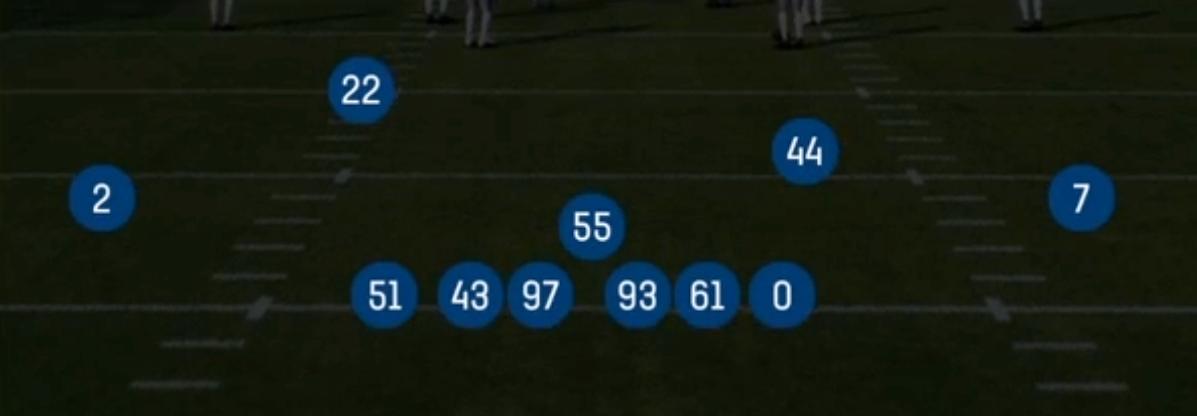
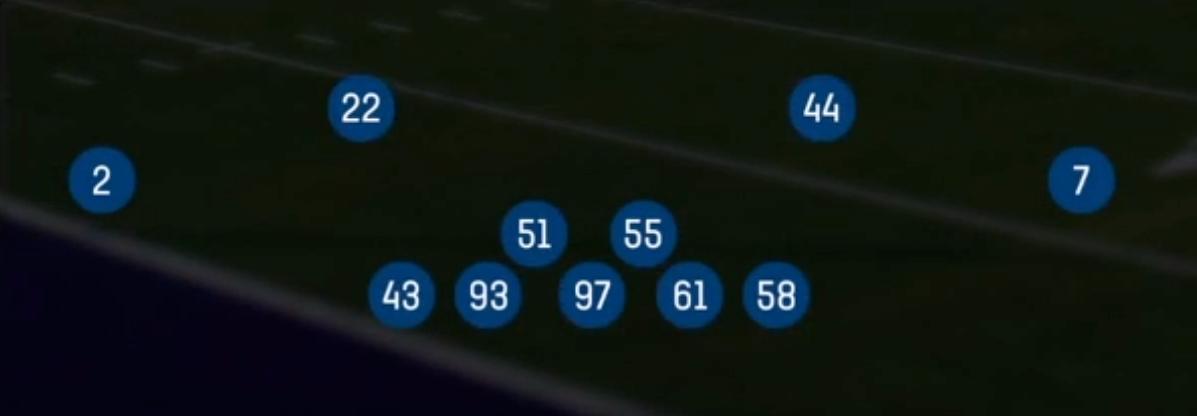
Formations in this playbook

Upgrade to Playbooks Rookie
- Filter every play by tag and concept
- Personnel groupings
- Premium play analysis