Team Hub
AFC West
Las Vegas Raiders
Team Snapshot
Entering the 2026-2027 season, the Las Vegas Raiders are a franchise in the early stages of a full rebuild, coming off a league-worst 3-14 campaign, they have overhauled their leadership with new head coach Klint Kubiak and No. 1 overall draft pick quarterback Fernando Mendoza, betting on a young offensive core (Mendoza, RB Ashton Jeanty, TE Brock Bowers) and star edge rusher Maxx Crosby to climb out of the NFL's basement in a brutal AFC West.
Franchise Difficulty
How hard this franchise is to run well: where the team stands, what the roster gives you, what the cap allows, and what you hold in the draft.
A 77-overall starting quarterback entering the twilight of his career, critical holes at wide receiver, left guard, defensive tackle, and right tackle, a dead-cap figure of $51.8M that ranks 8th most in the league, and only $16.1M in current cap room combine to leave very little margin for error from day one.
Star Players
Scheme Fit
The schemes this team is set to run in-game, and how its roster grades in them.
- Multiple Zone RunoffensiveGood
- Base 4-3defensivePassable
Salary Cap
The Raiders are carrying $51.8M in dead money, the 8th-highest burden in the league, while holding only $16.1M in current cap room, making this a tight and unforgiving cap situation with relief coming next season.
18 contracts expiring
Depth Chart
Madden Tools Analysis
Five starting spots have weak depth behind the starter.
Biggest gaps behind a starter
- HB
- LG
- DT
- WR
- SS
Draft Capital
The Raiders hold six picks in the upcoming draft, including five first-through-fifth-round selections and a total of three first-rounders across the next three years, giving a rebuild genuine resources to work with.
- Traded away: Round 7 to Bills, this draft
Team Ratings
The roster's clear top strength is the pass-rush and edge depth anchored by a 97-overall Maxx Crosby, while the wide receiver group, ranked 31st in starter quality, is the most glaring weakness on the entire team.
Strengths
- C
- LEDGE
- TE
- LT
- SS
Weak spots
- DT
- LG
- RT
- WR
- FS
Offense
Defense
Special teams
Roster Needs
- DThigh
The defensive tackle group is ranked last in starter quality and 29th in depth leaguewide, with Folorunso Fatukasi starting ahead of aging contributors, making interior pass rush an urgent priority.
- LGhigh
Spencer Burford starts at left guard but ranks 31st at the position, and the depth behind him offers little confidence, leaving a significant hole in the interior offensive line.
- RThigh
Trey Zuhn III starts at right tackle at only 72 overall, ranking 28th among starters, and while the depth is better than most needs, the starter quality is a clear liability.
- WRhigh
Tre Tucker leads a receiver room ranked 31st in starter quality, with Jalen Nailor and Jack Bech as backups, leaving Kirk Cousins and Brock Bowers badly undersupported at the skill positions.
- FSmedium
Treydan Stukes starts at free safety at 76 overall but the group still ranks 26th at the position, and the backups behind him are thin in quality.
- MIKElow
Nakobe Dean starts at middle linebacker at 79 overall but ranks 23rd at the position, a manageable gap that still warrants attention in future roster moves.
- QBlow
Kirk Cousins starts at quarterback at 77 overall and ranks 23rd at the position, and while Fernando Mendoza provides interesting depth behind him, the starter's advanced age makes this a real succession question.
Cut Candidates
5-Year Outlook
The Raiders have genuine building blocks in Maxx Crosby, Brock Bowers, Ashton Jeanty, and Tyler Linderbaum, but the franchise is in a fragile spot that demands careful management. Kirk Cousins is entering the late stage of his career, and the receiving corps ranked near the bottom of the league gives him almost nothing to work with outside of Bowers. The offensive line has elite pieces at left tackle and center but is badly exposed at left guard and right tackle. Defensively, Crosby remains a force, but the defensive tackle unit is the weakest positional group on the roster and undermines everything around him. With $51.8M in dead cap this season limiting flexibility, and only $16.1M in current room, big moves are constrained in the short term. The cap does open considerably to $59.7M in projected room next season, which is the real window to address the roster holes. The young core of Bowers, Jeanty, and Treydan Stukes gives the franchise a legitimate foundation to build toward, but the next two seasons require disciplined cap management and smart drafting across six picks to close the gaps before the window with those players matures.
5-Year Plan
Year 1Plug the holes, protect the window
- Release Aidan O'Connell, Thomas Booker IV, Tristin McCollum, and Patrick Johnson to recover over $9M in cap space with minimal dead-money consequences, and use free agency to attack the wide receiver and defensive tackle needs head-on.
- Invest the majority of the team's six draft picks, which fall across five rounds including one first-rounder, at wide receiver, defensive tackle, and left guard to give Kirk Cousins and Maxx Crosby the weapons and support they need immediately.
- Evaluate the Malcolm Koonce and Adam Butler cut decisions carefully, as both carry meaningful dead money, and make the call that best positions the team heading into the $59.7M cap-room window next season.
Year 2Spend smart, build the core
- Use the projected $59.7M in cap room to sign a legitimate wide receiver starter and a starting-caliber defensive tackle, directly attacking the two highest-severity needs that remain from season one.
- Invest in Brock Bowers, now in his second year of a prime development window as an X Factor at 23, by designing the offense around his strengths and pairing him with a proper receiving threat to force defenses to choose their poison.
- Begin building a succession plan at quarterback, as Kirk Cousins is deep into the late stage of his career, by evaluating Fernando Mendoza's Superstar-trait development and determining whether he is the long-term answer or whether external options are needed.
Year 3Jeanty takes the wheel
- With Ashton Jeanty entering his prime as a Star halfback and Brock Bowers fully developed, build the offensive identity around this two-headed threat and commit resources to the offensive line to protect them.
- Resolve the quarterback position definitively, whether through Fernando Mendoza earning the role or a free-agent addition, as continuing to invest in an aging starter at the position is no longer viable in this planning window.
- Use the three-year total of 20 draft picks available across this planning horizon to ensure the defensive tackle and wide receiver positions, still critical needs entering the plan, are no longer liabilities by mid-plan.
Year 4Compete with a full roster
- With committed cap dollars dropping sharply to $80.3M three seasons out, use the financial flexibility to extend Brock Bowers and Ashton Jeanty on long-term deals and lock in the young offensive core.
- Target a contender-level upgrade at cornerback, as Taron Johnson will be well into the later stage of his career by this point and the position will need a new starter regardless of how well he has performed.
- Ensure Maxx Crosby, who is already in an aging window, remains the edge anchor but begin grooming Keyron Crawford, a 22-year-old Star, as his long-term successor so the position does not become a need.
Year 5Sustain the contention window
- With the Bowers and Jeanty partnership entering peak years and the cap dramatically cleared of legacy contracts, make a targeted move for a franchise quarterback if the succession plan has not already been resolved.
- Evaluate Kolton Miller's status at left tackle, as he will be entering the very late stage of his career in this window, and ensure Charles Grant or another developed option is ready to take over protection of the blindside.
- Assess the roster depth built through four seasons of drafting across 20 picks and determine whether the Raiders can push into playoff contention or whether a final strategic reload is needed to close remaining gaps.
Young core
Full Roster
| Player | Pos | OVR | Age | Dev |
|---|---|---|---|---|
| Age 29 | LEDGE | 97 | 29 |  |
| Age 23 | TE | 95 | 23 | |
| Age 30 | LT | 93 | 30 |  |
| Age 26 | C | 88 | 26 | |
| Age 22 | HB | 86 | 22 | |
| Age 30 | CB | 84 | 30 |  |
| Age 28 | SS | 82 | 28 | |
| Age 30 | P | 80 | 30 | |
| Age 26 | WILL | 80 | 26 | |
| Age 25 | MIKE | 79 | 25 | |
| Age 28 | LEDGE | 78 | 28 | |
| Age 27 | REDGE | 78 | 27 | |
Franchise History
The Raiders were founded on January 30, 1960, in Oakland, California, as the eighth charter franchise of the American Football League (AFL), joining as a late replacement after the Minneapolis franchise defected to the NFL. After three losing early seasons, the club hired Al Davis as head coach and general manager in 1963; Davis installed an aggressive vertical passing attack, winning the 1967 AFL Championship and reaching Super Bowl II. Davis became part-owner in 1966 and eventually principal owner, ruling with the motto "Just win, baby" until his death in 2011. The Raiders joined the NFL in the 1970 AFL-NFL merger. Under head coach John Madden (1969-1978) they won their first Super Bowl (XI) after the 1976 season, and Tom Flores led the team to a second title in Super Bowl XV after the 1980 season. In 1982, after Davis won a landmark antitrust battle with the NFL, the franchise relocated to Los Angeles, where the Raiders won Super Bowl XVIII following the 1983 season, the franchise's third title. Davis returned the team to Oakland in 1995; the second Oakland era included a Super Bowl XXXVII appearance after the 2002 season. The NFL approved the team's move to Las Vegas in 2017, and the Raiders began play at Allegiant Stadium as the Las Vegas Raiders in 2020. All told, the franchise has won three Super Bowls, one AFL Championship, and numerous division titles across its Oakland, Los Angeles, and Las Vegas eras.
Notable figures
- Al Davis · Owner/Executive (former head coach)
The architect of the modern Raiders; ran the franchise from 1963 until his death in 2011, winning three Super Bowls; Pro Football Hall of Fame 1992.
 John Madden · Head Coach (1969-1978)
Winningest coach in franchise history (103-32-7 regular season) and led Oakland to its first Super Bowl (XI); later a legendary broadcaster and namesake of the Madden NFL game; Hall of Fame 2006.
Photo: U.S. Senate (office of Susan Collins), public domain (Wikimedia Commons)
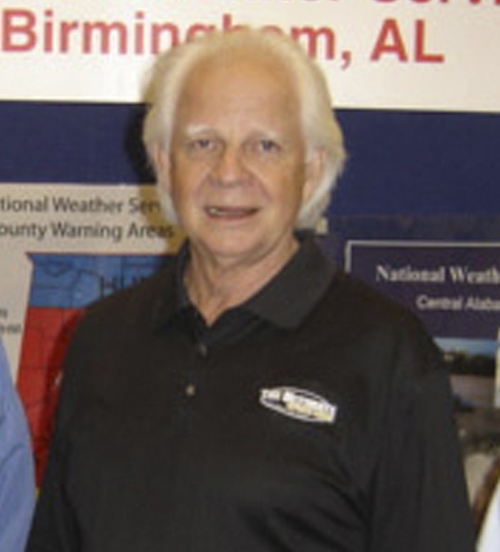 Ken Stabler · Quarterback (1970-1979)
"The Snake," 1974 NFL MVP, led the Raiders to the Super Bowl XI title; Hall of Fame 2016.
Photo: NOAA, public domain (Wikimedia Commons)
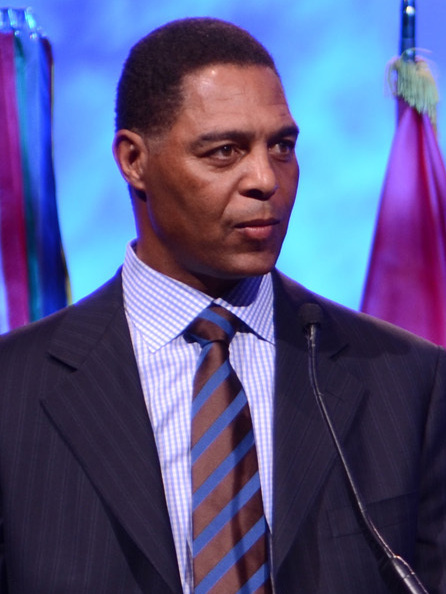 Marcus Allen · Running Back (1982-1992)
Super Bowl XVIII MVP and 1985 NFL MVP; the franchise's all-time leading rusher; Hall of Fame 2003.
Photo: U.S. Army, public domain (Wikimedia Commons)
 Tim Brown · Wide Receiver (1988-2003)
"Mr. Raider," the franchise's all-time leader in receptions and receiving yards; 1987 Heisman winner; Hall of Fame 2015.
Photo: U.S. Navy (PM1 Toiete Jackson), public domain (Wikimedia Commons)
 Howie Long · Defensive End (1981-1993)
Anchor of the Super Bowl XVIII defense, eight-time Pro Bowler, second in franchise history with 84 official sacks; Hall of Fame 2000.
Photo: U.S. Air Force (2nd Lt. Holly Hess), public domain (Wikimedia Commons)
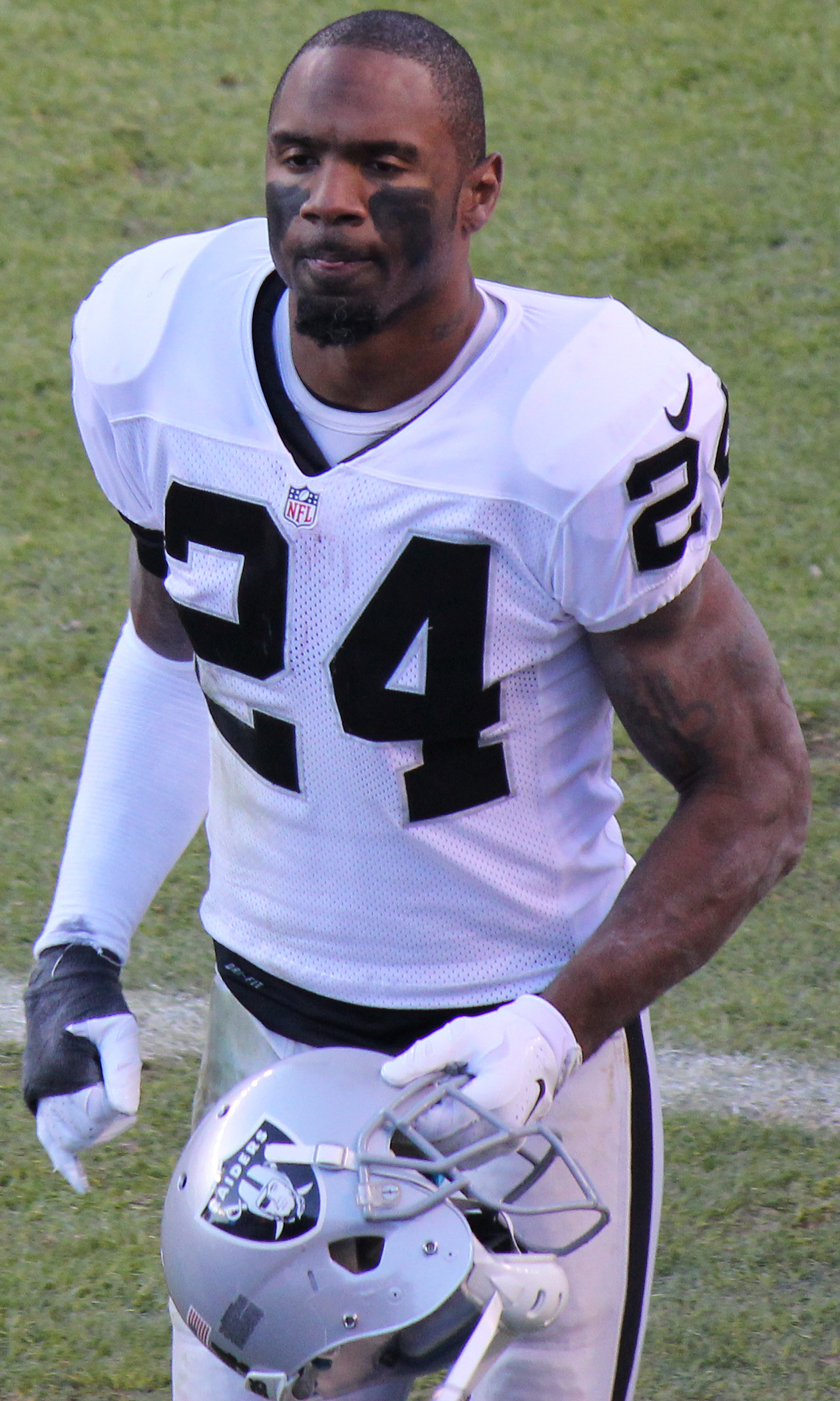 Charles Woodson · Cornerback/Safety (1998-2005, 2013-2015)
1998 Defensive Rookie of the Year and a franchise defensive-back great; Hall of Fame 2021.
Photo: Jeffrey Beall, CC BY 3.0 (Wikimedia Commons)
- Greg Townsend · Defensive End (1983-1993, 1997)
The franchise's all-time sacks leader (107.5) and the only Raider with 100+ career sacks; Super Bowl XVIII champion as a rookie.
 Sebastian Janikowski · Kicker (2000-2017)
The franchise's all-time leading scorer (1,799 points) and longest-tenured player (268 games); tied for the second-longest field goal in NFL history (63 yards).
Photo: BrokenSphere, CC BY-SA 3.0 (Wikimedia Commons)
Record book
- Passing YardsDerek Carr (35,222)
- Passing TDsDerek Carr (217)
- Rushing YardsMarcus Allen (8,545)
- Receiving YardsTim Brown (14,734)
- ReceptionsTim Brown (1,070)
- SacksGreg Townsend (107.5 (official since 1982))
- InterceptionsWillie Brown and Lester Hayes (39 each (tied))
- PointsSebastian Janikowski (1,799)
Team Tips
Playing As
Historically the Raiders' calling card is the vertical passing game, Al Davis's philosophy of speed and getting the ball downfield, paired with a physical downhill running game and, on defense, aggressive man coverage and a relentless pass rush. Under new coach Klint Kubiak, expect a run-first, play-action scheme built around Ashton Jeanty and Brock Bowers, leaning on the pass rush of Maxx Crosby, and aiming to restore explosive plays down the field once quarterback play stabilizes.
Playing Against
Recent Raiders teams have been beaten by attacking a thin, inexperienced secondary and a defensive interior that struggles against the run, and by pressuring shaky quarterback play into turnovers, in 2025 the team went 3-14 and produced a league-high 17 interceptions. Opponents also target the lack of proven wide-receiver depth, loading up to take away Bowers and Jeanty and daring the rest of the offense to beat them.
Coaching · Klint Kubiak
Head coach entering 2026-2027 (first season). Hired February 9, 2026 on a five-year deal as the 25th head coach in Raiders history, after serving as Seattle's offensive coordinator during its Super Bowl LX championship run. Kubiak, 38, is the son of former NFL head coach Gary Kubiak and is known for a run-heavy, play-action, wide-zone scheme; he was brought in to develop No. 1 overall pick QB Fernando Mendoza and maximize young stars Jeanty and Bowers. He replaces Pete Carroll, who was fired after one 3-14 season.
Coming soon
- Playbook Matches
- Key Plays & Audibles
Upgrade to Team Hub Rookie
- Salary cap breakdown
- Depth chart analysis
- Roster needs & scheme fit
- Cut candidates & 5-year outlook
- Full sortable roster