Playbooks

Overview
Bears Defense and NFL Live Bears Defense are functionally the same playbook. They share all 301 plays and differ by zero sets, so every formation, coverage and pressure you practice in one carries over to the other without adjustment. Choosing between them is a matter of which mode you are in, not which scheme you want.
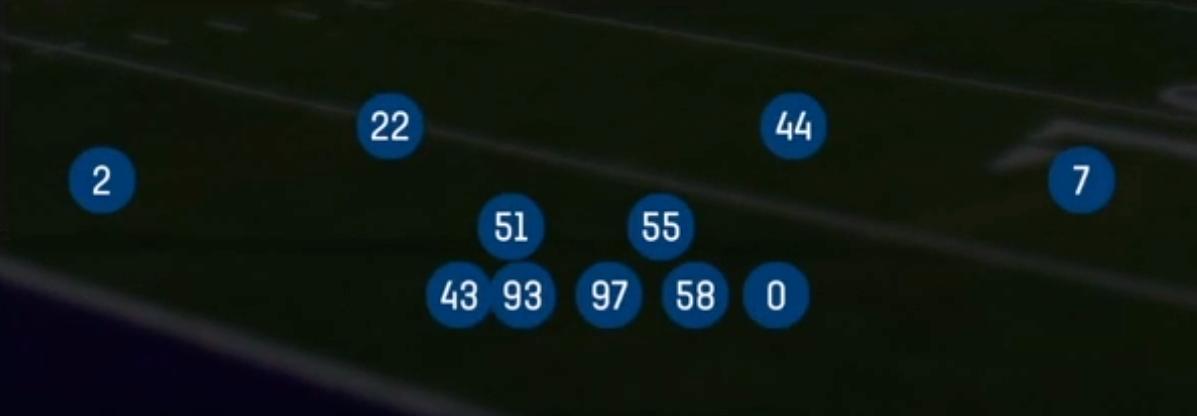
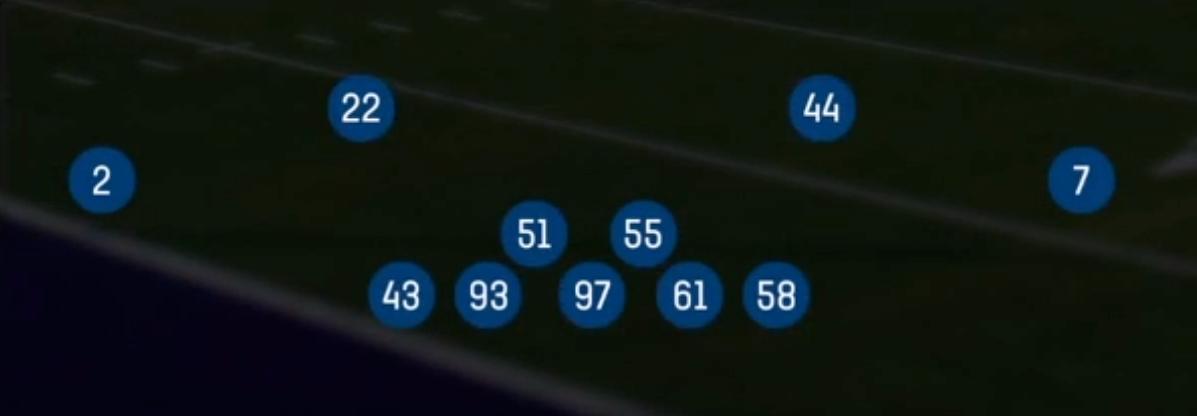
Bears Defense is a nickel-first book. Nickel accounts for 129 of its 301 plays (43%) across 6 sets, while 4-3 and Dime each carry 57 plays (19%). That leaves 3-3-5 at 21 plays and a thin tail of Goal Line Defense (13), Dollar (12), 46 (6) and Prevent (6). At 301 plays it is larger than only 13% of the game's 64 defensive team playbooks, so it trades depth for focus. You get a tight core of Nickel and Dime sub packages backed by a legitimate 4-3 base front, rather than a bloated menu of niche looks.
The game plan it supports is coverage-disguise defense against spread and 11 personnel, with enough 4-3 to hold up against heavier sets. The concept list covers both sides of the coverage split: Cover 1 and man looks like Cover 1 Robber Press, and zone families including Cover 3, Cover 3 Match, Cover 4 and Quarters, with 2 Invert Hard Flat for a two-high change-up. Pressure comes from Corner Blitz, LB Blitz and calls like 3 Deep Blitz and Corner Blitz 2, and Double Wr1 and Double Wr2 brackets let you take away a single elite receiver. The personnel range runs from Base 5-2 and 6-2-3 up to Big Quarter 3-1-7, so the book can match nearly any offensive grouping even when a formation only has a handful of calls.
Scheme Fit
Bears Defense fits a roster with at least three corners who can press and run in man, a slot corner quick enough to handle Nickel responsibilities, and a rangy safety who can play the robber and deep middle in Cover 1 and Cover 3 Match. A four-man front with edge rushers who win without help makes the 4-3 and Nickel pressure packages work, and linebackers with coverage speed keep the LB Blitz and hook-zone calls from being exposed. Pick it if you like to user a safety or nickel defender, disguise coverage from one pre-snap shell, and would rather master a compact, sub-package-heavy book than scroll through a deep menu of base fronts.
Example Plays from this Playbook


Find plays by concept, not by formation
Search every playbook by tag and personnel grouping, not just Bears Defense.
Strengths
- Nickel carries 43% of the book across 6 sets, so you can run a large share of your game plan from one sub package and show the same pre-snap shell while rotating Cover 1 Robber Press, Cover 3 Match, Quarters and Corner Blitz behind it. That makes coverage reads hard for opponents who key on alignment.
- Nickel, Dime and Dollar together make up 66% of the playbook, which gives you real depth against 11, 10 and empty personnel. You can stay in extra defensive back packages on passing downs without falling back on a thin set of calls the way a base-heavy book would.
- The 4-3 front has 57 plays across 4 sets, a genuine base package, so you can match 12 and 21 personnel with a four-man front and still carry Cover 3, Cover 4 and LB Blitz calls instead of guessing from a nickel look against the run.
- Double Wr1 and Double Wr2 bracket concepts sit alongside both man and zone families. You can take away a single dominant receiver with a double while spinning the rest of the coverage, which is a clean answer to opponents who spam one read.
- The personnel range spans Base 5-2, 6-2-3, Base 3-4, Nickel 2-4-5, Big Nickel 5-1-5 and Big Quarter 3-1-7. You can use formation subs to put run stoppers or extra cover players on the field for a specific situation, even though those looks have few calls.
Weaknesses
- At 301 plays the book is larger than only 13% of defensive team playbooks, so there is less variety per formation. Sharp opponents who scout your tendencies will see repeated calls quickly, especially outside Nickel.
- Only 12 plays (4%) come from Dollar and 6 from Prevent, so end-of-half and obvious long-yardage situations lean on a small menu that experienced players will identify and attack with sideline and seam combos.
- The 46 has just 6 plays in 1 set and Goal Line Defense has 13, which leaves short-yardage and heavy-personnel defense thin. Power-run opponents in 22 or 23 personnel can force you into a small group of predictable looks near the goal line.
- The 3-3-5 is a single set with 21 plays. It works as a change-up but cannot carry a game plan, so opponents who solve it early have removed your main odd-front disguise.
- Because the book is so Nickel heavy, a run-first opponent who stays in 12 or 21 personnel pushes you into the 4-3 package. That is your second-largest formation, but it offers far fewer ways to disguise coverage and pressure than Nickel.
Usage Tips
Build your base audible package around Nickel. Carry a Cover 1 look like Cover 1 Robber Press, a Cover 3 Match call, a Quarters or Cover 4 call and a Corner Blitz so you can check between man, match and pressure from the same alignment on first and second down against 11 personnel.
On 3rd and medium or longer, sub into Dime. Its 57 plays across 2 sets give you enough Cover 1, Double Wr1 and blitz options to bracket the opponent's best receiver or bring a disguised rush without leaving the package.
Against 12 and 21 personnel on early downs, audible to the 4-3. Pair Cover 3 with an LB Blitz there, and hot-route the robber or hook defenders into the flats against teams that attack with tight end and back releases.
Use the 3-3-5 as a situational change-up on 2nd and long. Call something like 3 Deep Blitz to show an odd front and bring pressure, then return to Nickel before the opponent adjusts to the single set.
Keep Goal Line Defense and 46 for inside the 5 and 3rd and 1 only, and reserve Dollar and Prevent for two-minute and Hail Mary situations. Their small play counts mean overusing them hands your opponent easy reads.
Formations in this playbook


Upgrade to Playbooks Rookie
- Filter every play by tag and concept
- Personnel groupings
- Premium play analysis