Team Hub
NFC East
New York Giants
Team Snapshot
As they enter the 2026-2027 season, the New York Giants are a proud but long-struggling franchise attempting a hard reset: they hired accomplished Super Bowl-winning coach John Harbaugh in January 2026 to steady a team coming off a 4-13 season and to develop promising dual-threat quarterback Jaxson Dart. Expectations are cautiously high after more than a decade of mostly losing football.
Franchise Difficulty
How hard this franchise is to run well: where the team stands, what the roster gives you, what the cap allows, and what you hold in the draft.
A 78-overall rookie quarterback headlining an offense with a below-average starter at center, a poor strong safety, and shaky cornerback depth, layered on top of $28.3M in dead cap, aging starters at multiple spots, and limited draft capital this cycle, makes this franchise genuinely challenging to run at a high level right away.
Star Players
Scheme Fit
The schemes this team is set to run in-game, and how its roster grades in them.
- Multiple Power RunoffensiveGood
- Base 4-3defensiveGood
Salary Cap
The Giants carry $28.3M in dead cap and only $1.3M in rollover but a clear cap horizon opens at $53.8M next offseason, giving this rebuild a defined financial runway.
27 contracts expiring
Depth Chart
Madden Tools Analysis
Four starting spots have weak depth behind the starter.
Biggest gaps behind a starter
- C
- LEDGE
- WR
- WILL
Draft Capital
The Giants hold five picks this cycle including three first-rounders, and 19 picks across three years, giving this rebuild a meaningful resource base despite forfeiting their fourth and seventh-round picks to Cleveland and Miami this season.
- Traded away: Round 4 to Browns, this draft
- Traded away: Round 7 to Dolphins, this draft
Team Ratings
The roster's clear top strength is its defensive front and edge combination anchored by Andrew Thomas and the pass-rush duo of Burns and Carter, while the team's weakest spot is strong safety, where the starter ranks 27th in the league.
Strengths
- FS
- LT
- REDGE
- WILL
- RT
Weak spots
- SS
- C
- CB
- LG
- QB
Offense
Defense
Special teams
Roster Needs
- SShigh
Tyler Nubin starts at strong safety but the position ranks 27th in starter quality league-wide, making it the single biggest roster hole on the team.
- Cmedium
John Michael Schmitz Jr. holds the starting center job but his 72 overall puts the position 22nd among starters, and the depth behind him is thin at 24th in the league.
- CBmedium
Dru Phillips, Greg Newsome II, and Deonte Banks give the Giants bodies at cornerback, but the starter group ranks 26th league-wide, leaving the position as a meaningful vulnerability.
- LGlow
Jon Runyan starts at left guard but grades out at 74 overall, ranking 21st at the position, and his cut candidacy makes upgrading here a near-term priority.
- QBlow
Jaxson Dart takes the first snap on the depth chart at 78 overall, ranking 21st among starters, but the overall QB depth room is surprisingly strong, ranking 4th league-wide.
- TElow
Isaiah Likely leads a tight end room that ranks second in the league in depth despite the starter grading 22nd, meaning the position needs a higher-end starter more than it needs bodies.
Cut Candidates
5-Year Outlook
The Giants enter this franchise window with a genuinely exciting defensive core headlined by Abdul Carter and Arvell Reese, two Superstar-trait prospects still in the early stages of their careers, flanking an established pass rusher in Brian Burns and an elite left tackle in Andrew Thomas. The offense, however, is in transition: Jaxson Dart takes over at quarterback with upside but unproven starting experience, and the line has real holes at guard and center. Malik Nabers gives Dart a true go-to receiver, and Cam Skattebo provides a physical running back complement. D.J. Reader is entering the late stage of his career and Jermaine Eluemunor, who anchors right tackle, will need a succession plan sooner rather than later. The $29.4M in current cap room offers some flexibility to address the strong safety and cornerback weaknesses, and the cap picture brightens considerably with $53.8M projected available next offseason. This is a roster with a high ceiling if the young core develops on schedule, but it requires active roster management to compete near the top of the conference within the next two to three seasons.
5-Year Plan
Year 1Clear the dead weight, plug the holes
- Release Jihad Ward, Jake Haener, Elijah Campbell, Gunner Olszewski, and Aaron Stinnie to clear roster spots and recover salary, then evaluate the Kayvon Thibodeaux and Jon Runyan situations based on the net cap impact each release generates.
- Use a portion of the $29.4M in current cap room to sign a strong safety upgrade, addressing the team's most glaring positional need ranked 27th league-wide.
- Establish Jaxson Dart as the clear QB1 with a supporting cast built on quick throws to Malik Nabers and early-down runs by Cam Skattebo to ease his transition into the starting role.
Year 2Develop the core, spend the incoming cap space
- Leverage the projected $53.8M in next-year cap room to address the cornerback and center starter quality, both currently ranking outside the top 20 league-wide, with targeted free agent signings.
- Allow Malik Nabers and Abdul Carter, both in the prime development windows of their Superstar careers, to take on expanded roles as featured weapons on offense and defense respectively.
- Begin identifying a long-term right tackle option as Jermaine Eluemunor's timeline shortens, preserving Andrew Thomas's dominance on the left side while building a succession plan on the right.
Year 3Arvell Reese and Carter anchor a defense ready to contend
- Feature Arvell Reese as the centerpiece of the linebacker corps, with his Superstar development trait offering the ceiling to become one of the most complete coverage linebackers in the league at his position.
- With committed cap obligations dropping to $173.4M this season, use the flexibility to extend Brian Burns and lock in the pass-rush pairing with Abdul Carter for the long term.
- Transition the D.J. Reader role toward rotational use and build depth at defensive tackle around younger options already in the building, such as Darius Alexander and Francis Mauigoa on the interior.
Year 4Jaxson Dart leads a contender
- With committed obligations falling to just $44.4M by this point in the plan, the team gains maximum cap flexibility to fill any remaining roster gaps and compete for a championship window built around Dart, Nabers, Carter, and Reese.
- Evaluate and replace any remaining aging starters on the offensive line, particularly at center where the current starter ranks 22nd league-wide, to give Dart a clean pocket as he enters his prime years.
- Use the team's accumulated draft capital, holding three first-round picks across the five-year window plus 19 total picks over three years, to continually inject high-ceiling talent and maintain roster depth.
Year 5Championship window fully open
- With the young Superstar core of Nabers, Carter, and Reese all in their prime, align the roster-building strategy entirely around maximizing the contention window and making a deep playoff run.
- Ensure succession has been completed at the positions vacated by aging contributors from the current roster, keeping the team young enough at skill positions to sustain competitiveness beyond this season.
- Maintain the defensive identity built on the edge-rushing combination of Burns and Carter while continuing to develop interior depth so the front four remains among the league's best units.
Young core
Full Roster
| Player | Pos | OVR | Age | Dev |
|---|---|---|---|---|
| Age 27 | LT | 95 | 27 |  |
| Age 28 | REDGE | 89 | 28 | |
| Age 23 | WR | 86 | 23 | |
| Age 26 | FS | 85 | 26 |  |
| Age 32 | DT | 84 | 32 | |
| Age 32 | FB | 84 | 32 |  |
| Age 24 | HB | 84 | 24 | |
| Age 31 | RT | 83 | 31 | |
| Age 22 | LEDGE | 82 | 22 | |
| Age 28 | MIKE | 82 | 28 | |
| Age 21 | WILL | 82 | 21 | |
| Age 21 | RG | 79 | 21 | |
Franchise History
The New York Giants were founded in 1925 when Tim Mara purchased an NFL franchise for $500, making them one of five teams to join the league that year and the only survivor among them. Playing their early decades at the Polo Grounds, the Giants quickly became one of pro football's marquee franchises, winning their first NFL championship in 1927 behind a dominant defense. Under longtime coach Steve Owen, they added titles in 1934 (the famous "Sneakers Game" over the Bears on an icy field) and 1938. The Giants moved to Yankee Stadium in 1956 and won the NFL championship that year with a Hall of Fame-laden roster (Frank Gifford, Sam Huff, Roosevelt Brown) and assistants Vince Lombardi and Tom Landry. From 1958 to 1963 they reached five NFL Championship Games but lost each, including the 1958 "Greatest Game Ever Played" against the Colts, followed by a drought with no playoff appearances between 1963 and 1981. Modern glory arrived under coach Bill Parcells and defensive superstar Lawrence Taylor: the 1986 team went 14-2 and won Super Bowl XXI, and the 1990 squad captured Super Bowl XXV over Buffalo. Under Tom Coughlin and quarterback Eli Manning, the Giants pulled off two of the greatest upsets in Super Bowl history, beating the previously undefeated Patriots in Super Bowl XLII (2007 season) and again in Super Bowl XLVI (2011 season). Since 2011, the Giants have endured a difficult stretch, only two playoff berths (2016, 2022) and repeated coaching changes, setting the stage for the Harbaugh era. In all, the franchise owns eight NFL championships: four pre-Super Bowl (1927, 1934, 1938, 1956) and four Super Bowls (XXI, XXV, XLII, XLVI).
Notable figures
 Lawrence Taylor · Linebacker (1981-1993)
Widely regarded as the greatest defensive player in NFL history; 1986 NFL MVP and Defensive Player of the Year.
Photo: CC BY-SA 2.0 (Wikimedia Commons)
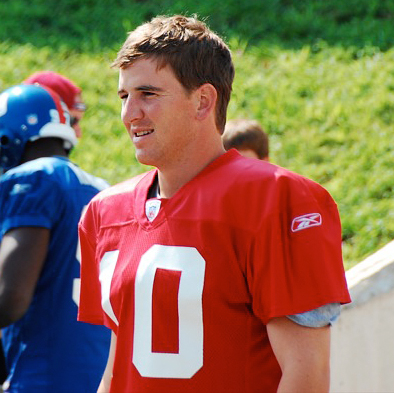 Eli Manning · Quarterback (2004-2019)
Two-time Super Bowl MVP; franchise leader in passing yards and touchdowns.
Photo: Alexa (Flickr), CC BY 2.0 (Wikimedia Commons)
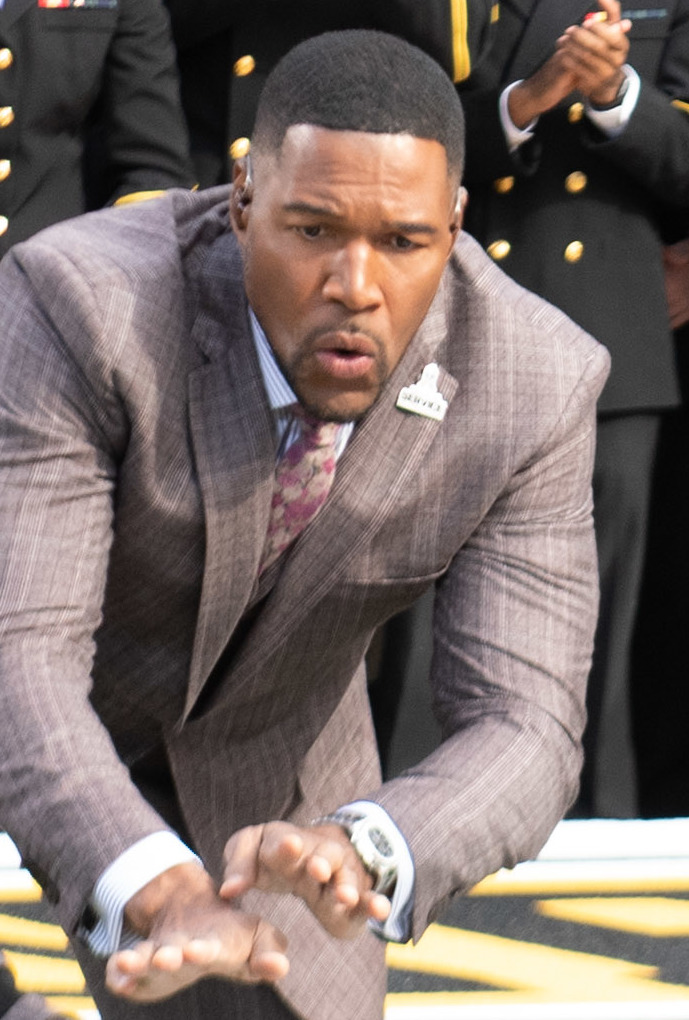 Michael Strahan · Defensive end (1993-2007)
Franchise sack leader (141.5); set the single-season sack record (22.5, 2001); Hall of Fame 2014.
Photo: U.S. Naval Academy, public domain (Wikimedia Commons)
 Frank Gifford · Halfback/flanker (1952-1964)
1956 NFL MVP and champion; Hall of Famer and later famed broadcaster.
Photo: public domain (Wikimedia Commons)
 Phil Simms · Quarterback (1979-1993)
Super Bowl XXI MVP (22-of-25 passing).
Photo: Thomson200, CC0 (Wikimedia Commons)
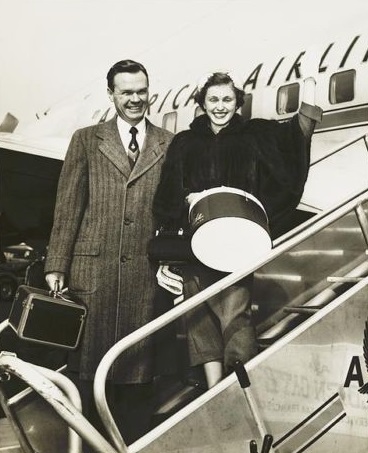 Wellington Mara · Owner/executive (1925-2005)
Son of founder Tim Mara; a guiding force of the franchise and the NFL for decades; Hall of Famer.
Photo: public domain (Wikimedia Commons)
 Emlen Tunnell · Safety (1948-1958)
First African American to play for the Giants and first Black player elected to the Pro Football Hall of Fame; franchise-record 74 interceptions.
Photo: U.S. Coast Guard, public domain (Wikimedia Commons)
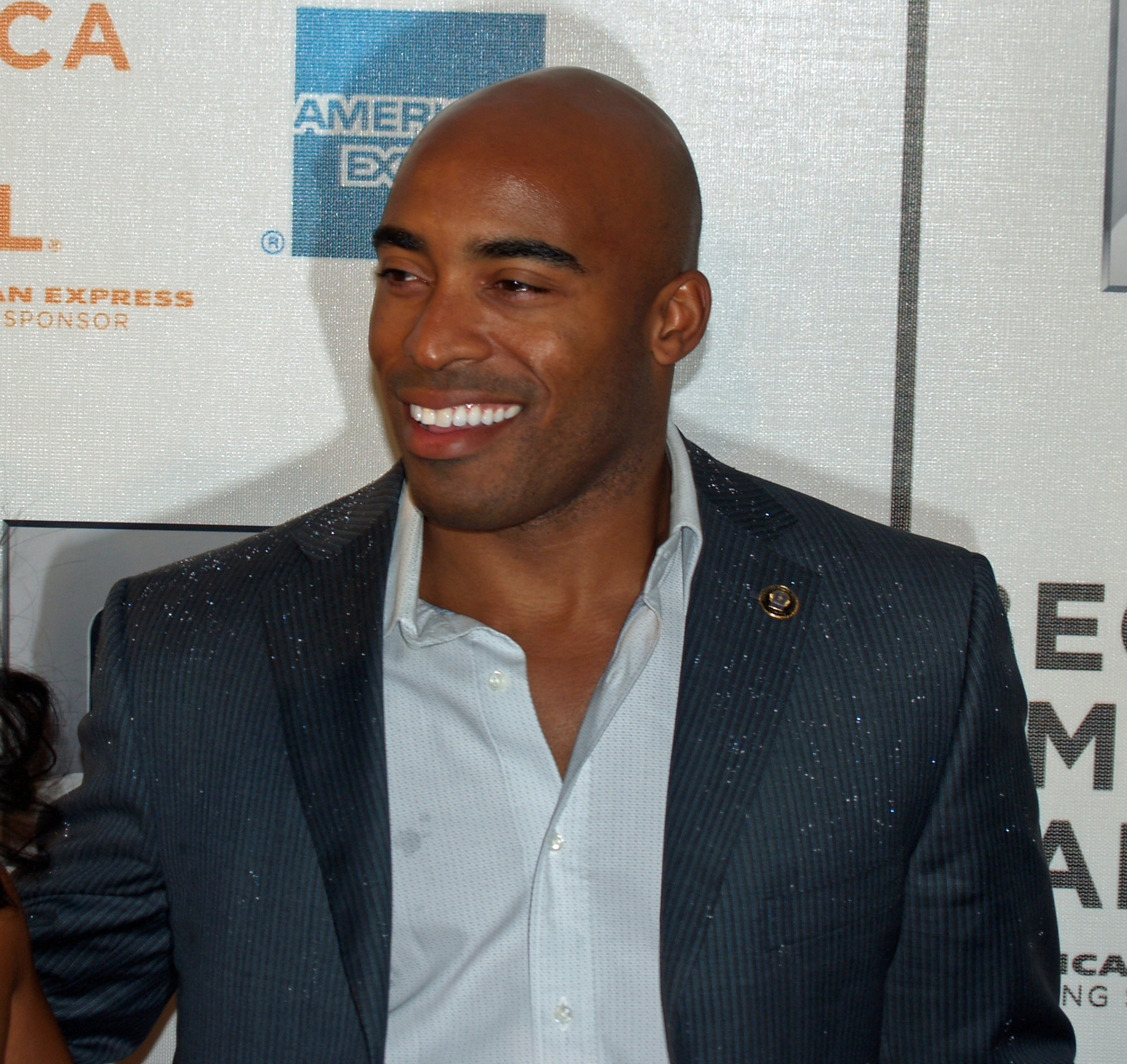 Tiki Barber · Running back (1997-2006)
The franchise's all-time leading rusher (10,449 yards).
Photo: David Shankbone, CC BY-SA 3.0 (Wikimedia Commons)
 Harry Carson · Linebacker (1976-1988)
Nine-time Pro Bowler, sole captain of the 1986 Super Bowl champions; Hall of Famer.
Photo: Reagan White House Photo, public domain (Wikimedia Commons)
Record book
- Passing yardsEli Manning (57,023)
- Passing TDsEli Manning (366)
- Rushing yardsTiki Barber (10,449)
- Receiving yardsAmani Toomer (9,497)
- ReceptionsAmani Toomer (668)
- SacksMichael Strahan (141.5 (official since 1982))
- InterceptionsEmlen Tunnell (74)
- PointsPete Gogolak (646)
Team Tips
Playing As
Under Harbaugh and OC Matt Nagy, build a physical, run-first identity that leans on Jaxson Dart's dual-threat legs (2,272 passing yards, 15:5 TD:INT, 487 rushing yards and nine rushing TDs as a rookie) and a power run game to take pressure off the young passer. Feed Malik Nabers as a genuine No. 1 receiver, protect behind a solid offensive line (11th in pass-block win rate in 2025), and lean on a pass rush led by Brian Burns (16.5 sacks in 2025), Kayvon Thibodeaux, and rookie Abdul Carter.
Playing Against
Attack the Giants' inconsistent secondary and back seven, the 2025 defense ranked near the bottom in points allowed, forced few turnovers, and repeatedly blew double-digit leads. Run the ball to gash a defense that was frequently exposed, and exploit soft intermediate zones behind their aggressive front. Pressure Dart, who takes heavy hits, to force ball-security mistakes, and count on their pre-snap penalties, the Giants led the league in pre-snap flags on both sides of the ball in 2025.
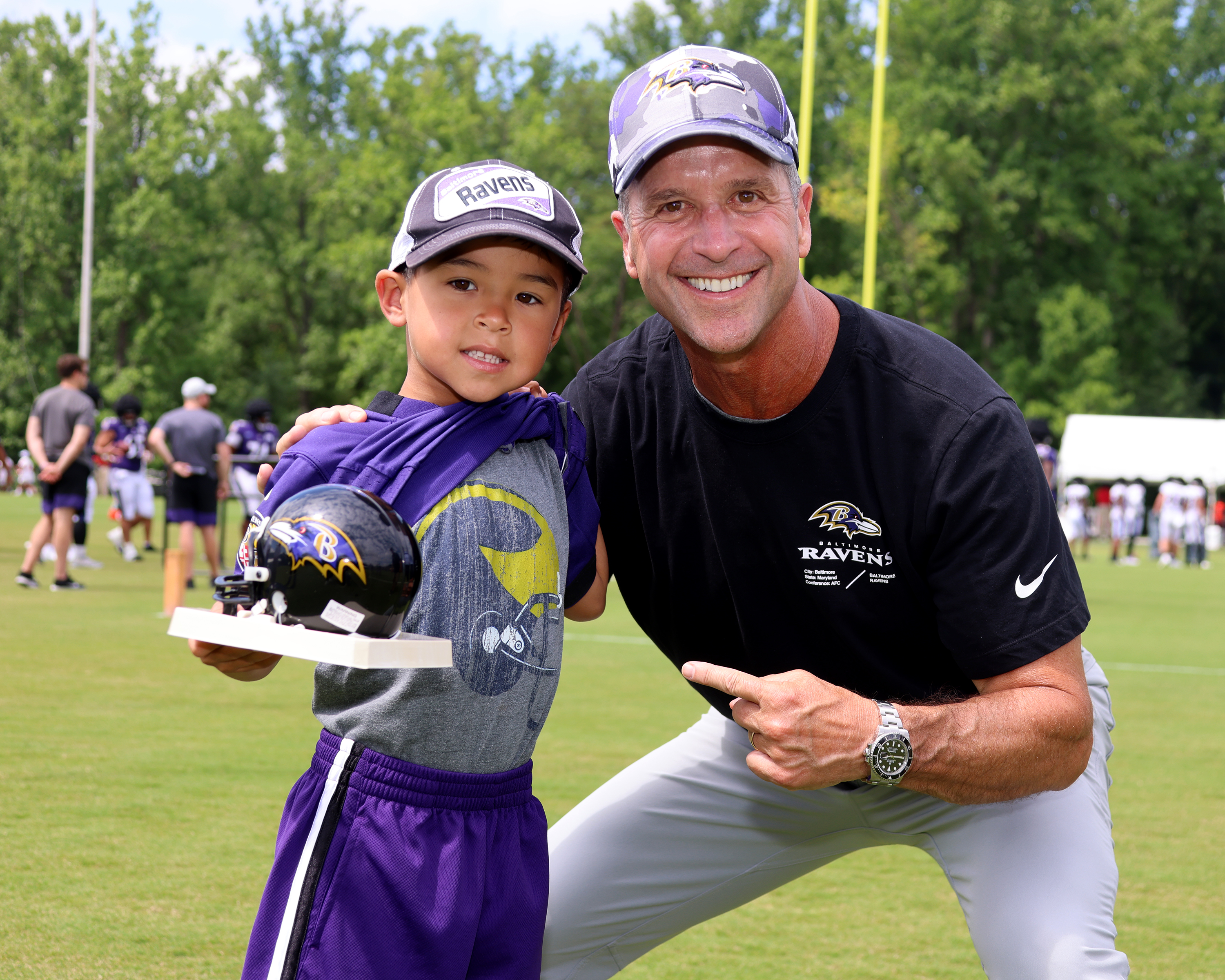
Coaching · John Harbaugh
Hired January 17, 2026 on a reported five-year contract as the 21st head coach in franchise history. Harbaugh spent 18 seasons (2008-2025) with the Baltimore Ravens, going 180-113 in the regular season, winning Super Bowl XLVII and reaching the playoffs 12 times. A disciplined, culture-driven coach who favors a physical, run-oriented approach; his 2026 staff features OC Matt Nagy, DC Dennard Wilson, and STC Chris Horton. With brother Jim, he is part of the first pair of brothers to both serve as NFL head coaches.
Photo: Maryland GovPics, CC BY 2.0 (Wikimedia Commons)
Coming soon
- Playbook Matches
- Key Plays & Audibles
Upgrade to Team Hub Rookie
- Salary cap breakdown
- Depth chart analysis
- Roster needs & scheme fit
- Cut candidates & 5-year outlook
- Full sortable roster