Team Hub
NFC West
Seattle Seahawks
Team Snapshot
The Seattle Seahawks enter 2026-2027 as the defending Super Bowl LX champions, returning head coach Mike Macdonald for his third season and most of a young, dominant roster led by the league's best defense and QB Sam Darnold. The one major cloud over an otherwise championship-caliber outlook is off the field: the Paul G. Allen estate has begun selling the franchise, a process expected to run through the 2026 offseason.
Franchise Difficulty
How hard this franchise is to run well: where the team stands, what the roster gives you, what the cap allows, and what you hold in the draft.
A 99 overall X Factor receiver, a strong young secondary, clean cap books carrying only $1.8M in dead money, a capable starting quarterback, and three first-round picks over the next three years combine to hand the franchise-mode player a roster that is already competitive and financially flexible.
Star Players
Scheme Fit
The schemes this team is set to run in-game, and how its roster grades in them.
- Multiple Zone RunoffensivePassable
- Base 3-4defensiveGood
Salary Cap
With $22.8M in current room, nearly zero dead money at $1.8M, and $56.3M projected next year, Seattle's cap situation is one of the cleanest in the league.
23 contracts expiring
Depth Chart
Madden Tools Analysis
Four starting spots have weak depth behind the starter.
Biggest gaps behind a starter
- RT
- LEDGE
- MIKE
- WILL
Draft Capital
Seven picks this cycle including three first-rounders over the next three years gives Seattle genuine ammunition to accelerate the rebuild at any position of need.
- Acquired: Round 7 from Falcons, this draft
- Traded away: Round 4 to Browns, this draft
- Traded away: Round 7 to Jets, next draft
Team Ratings
The roster's top strength is the receiver and secondary pairing, where Smith-Njigba and Witherspoon both rate among the best at their positions, while the interior offensive line, particularly center, is the weakest spot on the depth chart.
Strengths
- WR
- CB
- DT
- FS
- LEDGE
Weak spots
- C
- RG
- SAM
- TE
- REDGE
Offense
Defense
Special teams
Roster Needs
- Chigh
Jalen Sundell (69 overall) starts at center, ranking 30th among starters league-wide, making this the most glaring line weakness on the roster.
- RGhigh
Anthony Bradford (72 overall) holds the starting job but ranks 28th at the position, so upgrading the right guard pairing with Beau Stephens behind him is a priority.
- SAMhigh
Tyrice Knight (75 overall) starts at SAM but the position ranks 11th of 13 in starter quality, signaling a need for a legitimate difference-maker at the spot.
- TEhigh
A.J. Barner (75 overall) leads a tight end room ranked 28th in starter quality and 19th in depth, making it one of the most underpowered position groups on the team.
- REDGEmedium
Derick Hall starts at REDGE but the position ranks 25th in starter quality, with Dante Fowler Jr. deep into the twilight of his career in the backup role.
- HBlow
Zach Charbonnet (83 overall) gives Seattle a capable starter, but the position ranks 21st overall and the depth behind him is unproven.
Cut Candidates
5-Year Outlook
Seattle hands the franchise-mode player one of the most complete rosters in the game, headlined by Jaxon Smith-Njigba at 99 overall and a secondary anchored by Devon Witherspoon and young Star safety Nick Emmanwori. Sam Darnold at 86 overall gives the offense a functional starter, and Charles Cross and Abraham Lucas form a reliable tackle duo protecting him. The concern on offense is interior line depth, where the center and right guard spots rank near the bottom of the league. Defensively, Leonard Williams is the engine of the line but is entering the later stage of his career, and DeMarcus Lawrence is even further along, making edge and interior succession a real priority heading into the middle seasons. The cap picture is healthy, with $22.8M in room now and $56.3M projected next year, and three first-round picks over the next three draft cycles give the front office real ammunition to fill holes and develop the young core of Smith-Njigba, Emmanwori, and Byron Murphy II into perennial contributors.
5-Year Plan
Year 1Patch the trenches, trim the fat
- Release Patrick O'Connell, Nick Kallerup, and Brandon Pili to clear clean cap space and open roster spots at positions of need.
- Use the current $22.8M in cap room to target upgrades at center and tight end, the two positions ranked near the bottom of the league in starter quality.
- Evaluate the seven picks this draft cycle, which include three picks in rounds one, two, and six, to address SAM and REDGE depth.
Year 2Grow the young core
- Build the offensive game plan around Jaxon Smith-Njigba entering his prime development window as an X Factor receiver, and push Zach Charbonnet as the feature back behind an improved line.
- Give Nick Emmanwori and Byron Murphy II starter reps to accelerate their Star trait development at safety and defensive tackle respectively.
- With $56.3M in projected cap room next year, pursue a legitimate upgrade at tight end or REDGE to close positional gaps identified in season one.
Year 3Secure the succession pipeline
- Begin transition planning at LEDGE as DeMarcus Lawrence moves deeper into the late stage of his career, investing in Derick Hall or a drafted replacement as the future starter.
- Lock in extensions for Charles Cross and Abraham Lucas to keep the tackle bookends intact through the contention window.
- Leverage three first-round picks accumulated across this three-year draft window to address any remaining holes at center, SAM, or interior line.
Year 4Make a run
- With Emmanwori, Murphy II, and Smith-Njigba all in their prime seasons, structure the roster and scheme to maximize their collective impact in a contention push.
- Find Leonard Williams' successor at DT1 through the draft or free agency, as he will be well into the back half of his career by this point.
- Use improved cap flexibility from the committed-money rolloff, with commitments dropping from $267.0M to $176.7M by the second year out, to retain key contributors and add proven talent.
Year 5Sustain or reload
- Evaluate Sam Darnold's trajectory and decide whether to extend him or transition to Jalen Milroe, who will have had four seasons to develop behind a strong supporting cast.
- Use the financial flexibility from contracts falling off the books, with only $124.3M committed three seasons out, to re-sign the best pieces of the young core and fill any aging roster gaps.
- Assess the secondary depth behind Witherspoon and Terrion Arnold and invest draft capital accordingly to keep the defensive back group elite into the next cycle.
Young core
Full Roster
| Player | Pos | OVR | Age | Dev |
|---|---|---|---|---|
| Age 24 | WR | 99 | 24 |  |
| Age 25 | CB | 91 | 25 |  |
| Age 32 | DT | 90 | 32 | |
| Age 34 | LEDGE | 87 | 34 | |
| Age 29 | QB | 86 | 29 |  |
| Age 30 | P | 86 | 30 | |
| Age 22 | SS | 86 | 22 | |
| Age 28 | FS | 86 | 28 | |
| Age 25 | LT | 85 | 25 | |
| Age 26 | MIKE | 85 | 26 | |
| Age 23 | DT | 85 | 23 | |
| Age 27 | RT | 84 | 27 | |
Franchise History
The NFL awarded Seattle an expansion franchise in June 1974, and the Seahawks began play in 1976 alongside the Tampa Bay Buccaneers. They are the only NFL team to switch conferences twice in the post-merger era: they played their inaugural 1976 season in the NFC West, swapped with Tampa Bay to join the AFC West from 1977 through 2001, then returned to the NFC West in 2002 following league realignment. The team played in the Kingdome (1976-1999), Husky Stadium (2000-2001), and since 2002 at Lumen Field. Early success came under coach Chuck Knox in the 1980s, with Jim Zorn, Steve Largent, and Kenny Easley leading teams that reached the 1983 AFC Championship Game and posted a then-best 12-4 record in 1984. The Mike Holmgren era produced the franchise's first Super Bowl appearance: a 13-3 team in 2005 that lost Super Bowl XL to the Pittsburgh Steelers. The defining dynasty arrived under Pete Carroll (hired 2010) and QB Russell Wilson (drafted 2012). Powered by the "Legion of Boom" secondary and RB Marshawn Lynch, the Seahawks won Super Bowl XLVIII after the 2013 season, routing the Denver Broncos 43-8, then returned to Super Bowl XLIX but lost to the Patriots on the goal-line interception of Wilson by Malcolm Butler. After a rebuild that saw Wilson traded (2022) and Carroll's departure, Seattle hired Mike Macdonald in January 2024. In 2025 the team went a franchise-record 14-3, won the NFC West, secured the NFC's No. 1 seed, and captured Super Bowl LX over the New England Patriots (29-13), the franchise's second title. Weeks later, on February 18, 2026, the Paul Allen estate announced it would sell the team.
Notable figures
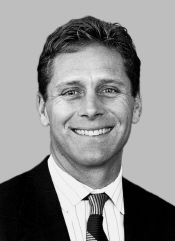 Steve Largent · Wide receiver (1976-1989)
The franchise's first superstar and first Pro Football Hall of Famer (1995); retired holding every major NFL receiving record.
Photo: U.S. House of Representatives, public domain (Wikimedia Commons)
- Cortez Kennedy · Defensive tackle (1990-2000)
Dominant interior lineman; 1992 NFL Defensive Player of the Year on a 2-14 team; Hall of Fame 2012; No. 96 retired.
 Walter Jones · Left tackle (1997-2008)
Nine-time Pro Bowl left tackle, regarded as one of the greatest ever; Hall of Fame 2014; No. 71 retired.
Photo: Gage Skidmore, CC BY-SA 3.0 (Wikimedia Commons)
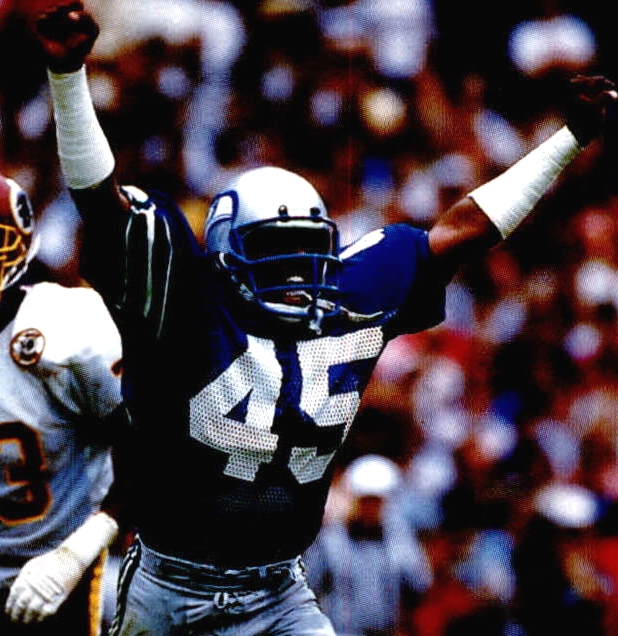 Kenny Easley · Safety (1981-1987)
"The Enforcer"; 1984 NFL Defensive Player of the Year; Hall of Fame 2017.
Photo: Seattle Seahawks (1987 Police card), public domain (Wikimedia Commons)
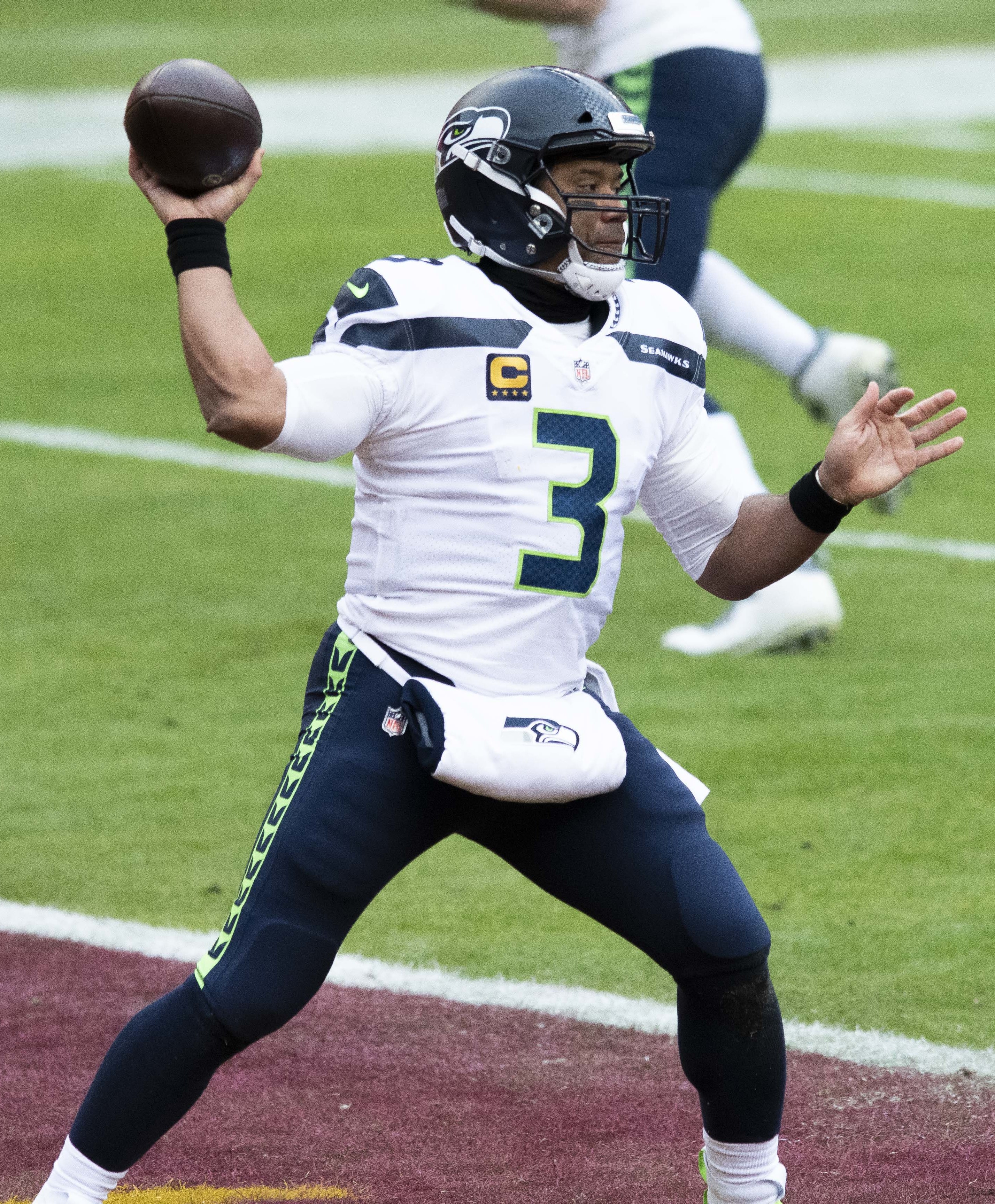 Russell Wilson · Quarterback (2012-2021)
Franchise's all-time passing leader; nine Pro Bowls; won Super Bowl XLVIII.
Photo: All-Pro Reels, CC BY-SA 2.0 (Wikimedia Commons)
 Marshawn Lynch · Running back (2010-2015, 2019)
"Beast Mode"; the heart of the Super Bowl teams; author of the Beast Quake run.
Photo: U.S. Army (Stephanie Rush), public domain (Wikimedia Commons)
 Richard Sherman · Cornerback (2011-2017)
All-Pro cornerstone of the Legion of Boom; led the NFL in interceptions in 2013.
Photo: Jeffrey Beall, CC BY-SA 3.0 (Wikimedia Commons)
 Bobby Wagner · Linebacker (2012-2021, later returns)
Middle-linebacker anchor; multiple-time first-team All-Pro and NFL tackles leader; 2010s All-Decade Team.
Photo: Keith Allison, CC BY-SA 2.0 (Wikimedia Commons)
 Earl Thomas · Safety (2010-2018)
Rangy free-safety "eraser" of the Legion of Boom; three-time first-team All-Pro; 2010s All-Decade Team.
Photo: Jeffrey Beall, CC BY-SA 3.0 (Wikimedia Commons)
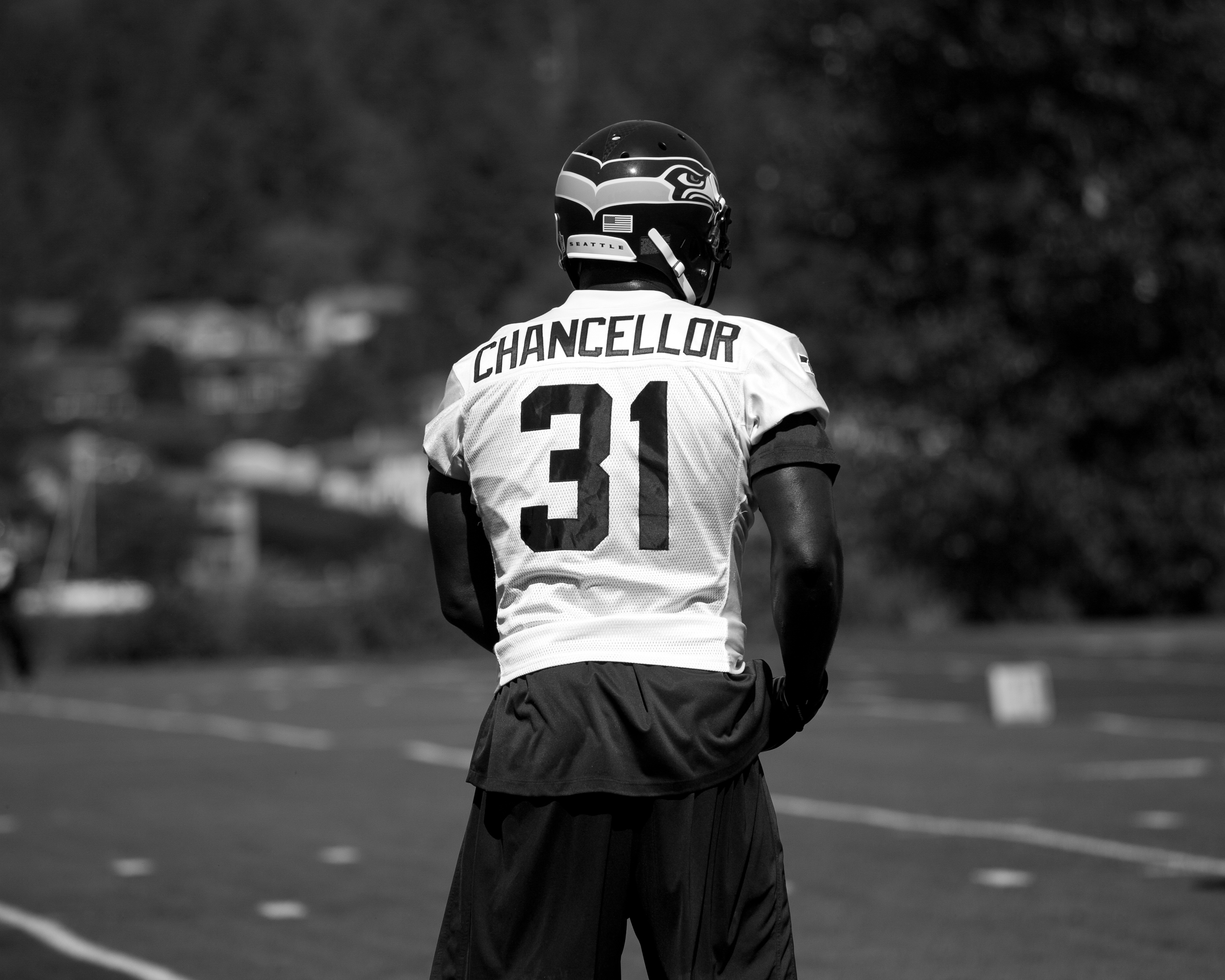 Kam Chancellor · Safety (2010-2017)
Hard-hitting strong safety and tone-setter of the Legion of Boom.
Photo: Ryan Lock, CC BY-SA 2.0 (Wikimedia Commons)
 Pete Carroll · Head coach (2010-2023)
Winningest coach in franchise history (147-98-1 including playoffs); won the franchise's first Super Bowl.
Photo: Daveblack, CC BY-SA 3.0 (Wikimedia Commons)
 Jim Zorn · Quarterback (1976-1984)
The expansion team's first quarterback and a Ring of Honor inductee; threw for 20,122 yards and 107 TDs.
Photo: Keith Allison, CC BY-SA 2.0 (Wikimedia Commons)
Record book
- Passing yardsRussell Wilson (37,059)
- Passing TDsRussell Wilson (292)
- Rushing yardsShaun Alexander (9,429)
- Receiving yardsSteve Largent (13,089)
- ReceptionsSteve Largent (819)
- SacksJacob Green (97.5)
- InterceptionsDave Brown (50)
- PointsJason Myers (892)
Team Tips
Playing As
Win with the elite, versatile "Dark Side" defense that led the NFL in scoring defense (17.2 PPG) and ranked No. 1 by DVOA in 2025. Play predominantly nickel/dime with two deep safeties (Cover 2/Cover 4), lean on a four-man front that can win without blitzing (Leonard Williams, Byron Murphy II), and disguise pressures. On offense, pair Sam Darnold's aggressive vertical passing with No. 1 target Jaxon Smith-Njigba (franchise-record 1,793 receiving yards, 2025 AP Offensive Player of the Year) and a physical run game led by Kenneth Walker III (Super Bowl LX MVP).
Playing Against
The chief vulnerability is turnovers, Darnold led the NFL in total turnovers (18) with 14 interceptions in 2025 and has a high-variance career history, so bait him into mistakes and jump routes. Because the Dark Side plays light in the box with undersized linebackers, the theoretical counter is power/heavy-personnel running, though Seattle largely neutralized that approach throughout 2025 (and committed zero turnovers across the entire postseason).

Coaching · Mike Macdonald
Head coach entering 2026-2027, his third season. Hired in January 2024 as the ninth head coach in franchise history and then the NFL's youngest, the former Baltimore Ravens defensive coordinator (born June 26, 1987) is a defensive mastermind whose aggressive, disguise-heavy scheme produced the NFL's No. 1 defense and a Super Bowl LX title in just his second year. His stated ethos is to make Seattle "a place nobody wants to play."
Photo: SounderBruce, CC BY-SA 4.0 (Wikimedia Commons)
Coming soon
- Playbook Matches
- Key Plays & Audibles
Upgrade to Team Hub Rookie
- Salary cap breakdown
- Depth chart analysis
- Roster needs & scheme fit
- Cut candidates & 5-year outlook
- Full sortable roster