Team Hub
AFC East
New York Jets
Team Snapshot
Entering 2026-2027, the New York Jets are a rebuilding, defense-oriented franchise trying to climb out of the NFL's longest active playoff drought (15 seasons and counting) under second-year head coach Aaron Glenn, who is on the hot seat after a 3-14 debut and has now taken over defensive play-calling while veteran QB Geno Smith and new offensive coordinator Frank Reich attempt to fix a historically bad offense.
Franchise Difficulty
How hard this franchise is to run well: where the team stands, what the roster gives you, what the cap allows, and what you hold in the draft.
A 74-overall quarterback in Geno Smith who is late in his career, cornerback and left tackle units that rank near the bottom of the league, $95.2M in dead cap money that suffocates roster-building flexibility, and thin developmental talent at premium positions all combine to make this one of the most demanding franchises to manage well.
Star Players
Scheme Fit
The schemes this team is set to run in-game, and how its roster grades in them.
- Multiple Power RunoffensivePassable
- Base 4-3defensiveGood
Salary Cap
The Jets carry a brutal $95.2M in dead money, ranked 4th most in the league, but $34.1M in current cap room and a projected $98.2M next season signal that the financial pain is cresting and relief is close.
27 contracts expiring
Depth Chart
Madden Tools Analysis
Six starting spots have weak depth behind the starter.
Draft Capital
With nine picks in the upcoming draft including three first-rounders, and 23 total selections across a three-year window with five first-rounders accumulated, the Jets have among the best draft resources in the league to fund a rebuild despite their current roster limitations.
- Acquired: Round 6 from Chiefs, this draft
- Acquired: Round 1 from Colts, this draft
- Acquired: Round 1 from Cowboys, this draft
- Acquired: Round 6 from Eagles, this draft
- Acquired: Round 7 from Seahawks, next draft
- Traded away: Round 7 to Chargers, next draft
- Traded away: Round 6 to Vikings, this draft
- Traded away: Round 7 to Panthers, this draft
Team Ratings
The roster's top strength is its run game and safety play, anchored by Breece Hall, Minkah Fitzpatrick, and Demario Davis, while cornerback is the clearest weakness, with the starting group ranking 29th leaguewide in a unit that is also 28th in depth.
Strengths
- MIKE
- SS
- HB
- LG
- RG
Weak spots
- CB
- QB
- C
- DT
- FB
Offense
Defense
Special teams
Roster Needs
- CBhigh
Brandon Stephens starts at corner on a unit ranked 29th in starter quality and 28th in depth, making cornerback the most urgent need on the entire roster.
- QBhigh
Geno Smith starts under center but ranks 27th among starting quarterbacks leaguewide, and with Cade Klubnik as the only backup the position is both weak and thin.
- Cmedium
Josh Myers is the starter at center but the unit ranks 22nd leaguewide, and the backup options behind him are interior linemen filling in rather than true centers.
- DTmedium
T'Vondre Sweat leads a defensive tackle group that ranks 26th in starter quality, though the depth ranks a respectable 10th, suggesting an upgrade at the top matters most.
- FBmedium
Andrew Beck starts at fullback and ranks 9th among the 15 teams that roster a fullback starter, a serviceable but unspectacular situation for a team running a zone-run scheme.
- LEDGEmedium
Will McDonald IV starts at left edge but ranks 24th leaguewide, and the depth behind him is thin, making an upgrade at LEDGE an important secondary priority.
- LTmedium
Olu Fashanu starts at left tackle but ranks 26th leaguewide, and the backup depth ranks 22nd, so developing Fashanu quickly or adding competition is necessary.
- TEmedium
Kenyon Sadiq starts at tight end but the position ranks 26th in starter quality, though the depth pool ranks 8th, meaning positional volume exists but top-end talent is missing.
- FSlow
Dane Belton starts at free safety in a group that ranks 23rd leaguewide, a lower-priority hole backed by Andre Cisco but still worth monitoring as the roster is upgraded.
Cut Candidates
5-Year Outlook
The Jets hand you a roster with genuine strengths on the interior offensive line, at receiver with Garrett Wilson, and in the secondary around Minkah Fitzpatrick and Demario Davis, but the franchise is constrained by circumstances that make a quick turnaround difficult. Geno Smith is the starting quarterback and ranks near the bottom of the league at the position, which caps the ceiling of any offense built around him. Davis, a 90-overall anchor at MIKE and an X Factor, is deep into his career and cannot be counted on to carry the defense for more than another season or two. Fitzpatrick, while still elite, is also entering a phase of his career where succession planning should begin. On the positive side, the young core of Armand Membou at right tackle and David Bailey at REDGE gives the defense a Superstar-trait pass rusher at 23 and a 22-year-old Star lineman to build around. Breece Hall at 25 and Garrett Wilson at 26 give the offense proven playmakers in their primes. The $95.2M in dead cap is the most paralyzing factor, but $34.1M in current cap room and a projected $98.2M in cap room next season mean financial relief is coming. With three first-round picks among nine total upcoming selections, the Jets have meaningful draft capital to accelerate the rebuild, and the path forward runs through upgrading the quarterback, the corners, and the edge while the young core matures.
5-Year Plan
Year 1Cut the fat, find a quarterback
- Release Harrison Phillips, Jordan Meredith, Jack Heflin, and Marcelino McCrary-Ball to recover cap space with minimal dead money, then target cornerback and quarterback upgrades in free agency using the available $34.1M in cap room.
- Start Olu Fashanu at left tackle and commit to his development, while using the two first-round picks acquired from the Colts and Cowboys to address the quarterback and cornerback needs.
- Keep Demario Davis as the defensive leader and let him set the tone for one more season while identifying his long-term successor at MIKE.
Year 2Build around the young core
- Lean on Armand Membou, now entering his third season, as a Star right tackle whose ceiling is still rising, and pair him with a developing Olu Fashanu to lock in the tackle tandem.
- Feature David Bailey as the primary pass rusher off the right edge, giving the 23-year-old Superstar the snaps and scheme fits to break out as a foundational piece of the defense.
- Use the projected $98.2M in cap room next season to sign a legitimate starting quarterback, addressing the single biggest competitive gap on the roster.
Year 3Close the gaps, sharpen the identity
- With David Onyemata entering his mid-30s and deep into his career, prioritize a long-term partner for T'Vondre Sweat at defensive tackle through the draft or free agency.
- Establish Garrett Wilson and Breece Hall as the twin engines of a settled offense around a new starting quarterback, and evaluate whether Kenyon Sadiq has grown into a legitimate receiving threat at tight end.
- Begin transitioning defensive leadership away from Demario Davis, whose role should become a mentorship one, by elevating Trevin Wallace or another interior linebacker into a featured role.
Year 4Compete for the division
- With Membou and Fashanu entering their prime seasons, the offensive line should be a top-half unit leaguewide, giving the quarterback a clean pocket and opening lanes for Breece Hall.
- David Bailey, now a seasoned Superstar edge rusher, should anchor a pass rush that complements a retooled corner group, targeting a top-fifteen defense as a realistic benchmark.
- Evaluate the five first-round picks accumulated over the three-year draft window and assess whether any have developed into starters who push the team into genuine playoff contention.
Year 5Win or reload with purpose
- If the quarterback investment has paid off and the young core has developed, chase a playoff seed with an all-in approach on the remaining expiring contracts that match your competitive window.
- Minkah Fitzpatrick will be well into his career by this point, so have a plan to transition the safety room around Andre Cisco or another developed contributor rather than relying on him as a centerpiece.
- Use the organizational depth built through three years of strong drafting, with 23 picks across the three-year window, to maintain roster continuity and avoid a hard rebuild if the contention window requires adjustment.
Young core
Full Roster
| Player | Pos | OVR | Age | Dev |
|---|---|---|---|---|
| Age 37 | MIKE | 90 | 37 |  |
| Age 29 | SS | 88 | 29 |  |
| Age 25 | HB | 87 | 25 |  |
| Age 26 | WR | 87 | 26 | |
| Age 22 | RT | 83 | 22 | |
| Age 25 | RG | 82 | 25 | |
| Age 23 | REDGE | 81 | 23 | |
| Age 27 | LG | 79 | 27 |  |
| Age 25 | DT | 79 | 25 | |
| Age 27 | LEDGE | 78 | 27 | |
| Age 33 | DT | 78 | 33 | |
| Age 25 | FS | 77 | 25 | |
Franchise History
The Jets were born in 1960 as the Titans of New York, a charter member of the upstart American Football League, founded by Harry Wismer and playing their first seasons at the Polo Grounds in upper Manhattan. Coached by Hall of Famer Sammy Baugh, the Titans went 7-7 in both 1960 and 1961 but hemorrhaged money; by 1962 the AFL had to assume the team's operating costs. In 1963 a five-man syndicate led by Sonny Werblin bought the bankrupt franchise for $1 million, renamed the team the New York Jets, switched the colors to green and white, and hired Weeb Ewbank as coach and general manager. The defining moment came after the Jets signed Alabama quarterback Joe Namath to a then-record three-year, $427,000 contract in January 1965. New York posted its first winning record in 1967, won the AFL Championship in 1968, and then pulled off one of the greatest upsets in sports history: three days after Namath 'guaranteed' a win, the Jets beat the heavily favored Colts 16-7 in Super Bowl III on January 12, 1969, as roughly 18-point underdogs. Namath was MVP; the victory legitimized the AFL ahead of the 1970 merger. It remains the franchise's only Super Bowl appearance and only championship. Since then the arc has been mostly frustration punctuated by flashes: the 'New York Sack Exchange' defensive line and playoff berths in the early 1980s, a Bill Parcells-led resurgence and 1998 AFC title-game run, and back-to-back AFC Championship Game appearances in 2009 and 2010 under Rex Ryan. The Jets have not returned to the playoffs since that 2010 run, the longest active postseason drought in North America's major men's sports leagues, pushed to 15 straight seasons by their 2025 elimination.
Notable figures
 Joe Namath · Quarterback (1965-1976)
"Broadway Joe," Super Bowl III MVP, Hall of Famer, and the face of the franchise; the guarantee and the win define Jets history. Franchise all-time leader in passing yards and touchdowns.
Photo: New York Jets, public domain (Wikimedia Commons)
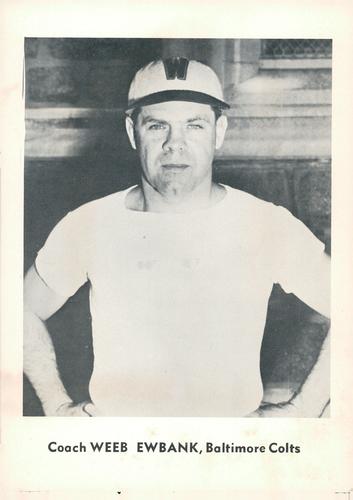 Weeb Ewbank · Head coach (1963-1973)
The only coach to win championships in both the NFL and AFL; built and coached the Super Bowl III team. Hall of Famer; franchise's winningest coach (73-78-6).
Photo: Jay Publishing, public domain (Wikimedia Commons)
 Don Maynard · Wide receiver (1960-1972)
An original Titan and Hall of Famer; franchise all-time leader in receptions (627) and receiving yards (11,732).
Photo: Jay Publishing, public domain (Wikimedia Commons)
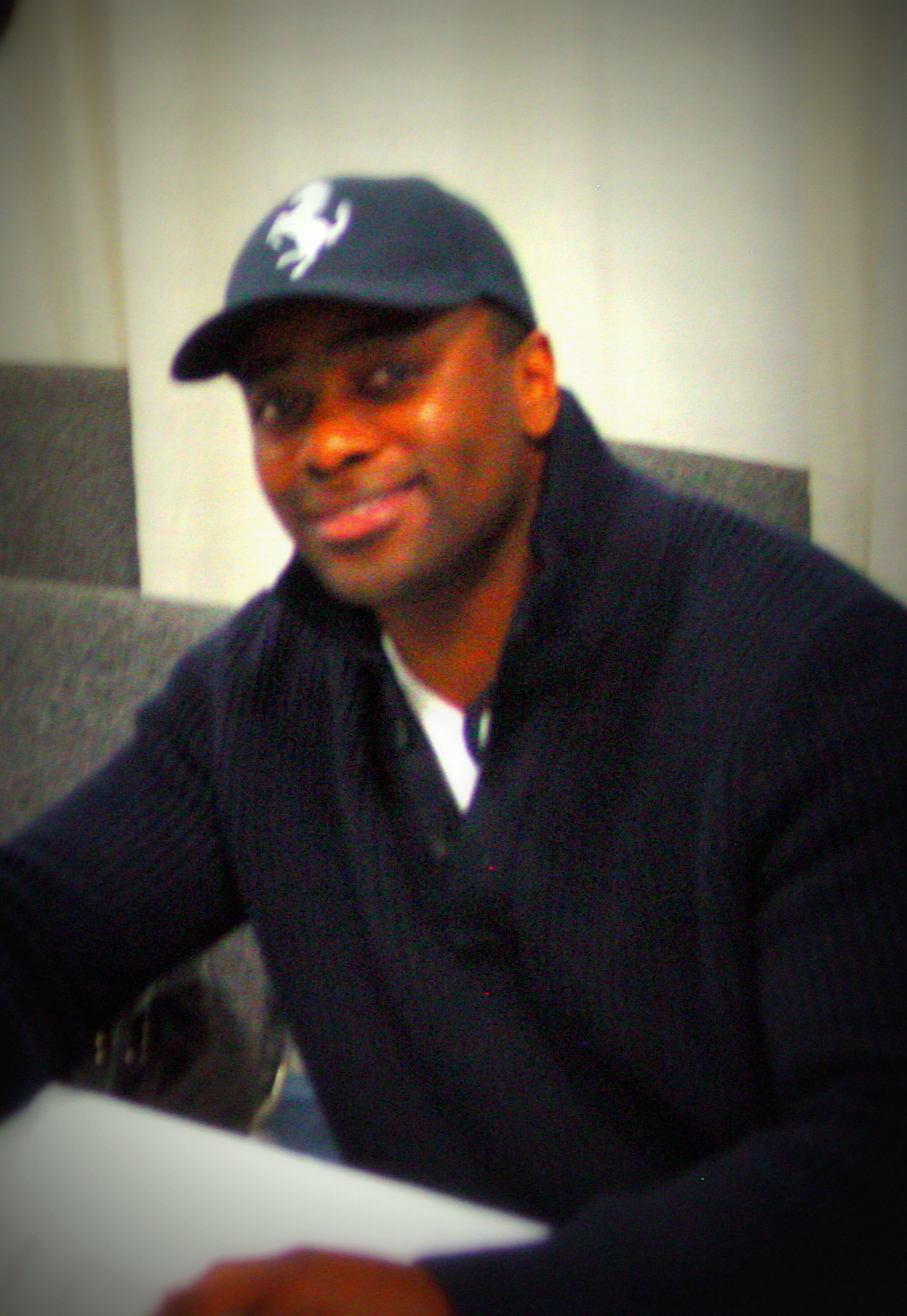 Curtis Martin · Running back (1998-2005)
Hall of Famer and franchise all-time leading rusher (10,302 yards); won the 2004 NFL rushing title at age 31. No. 28 retired.
Photo: The Writer 2.0, CC BY-SA 3.0 (Wikimedia Commons)
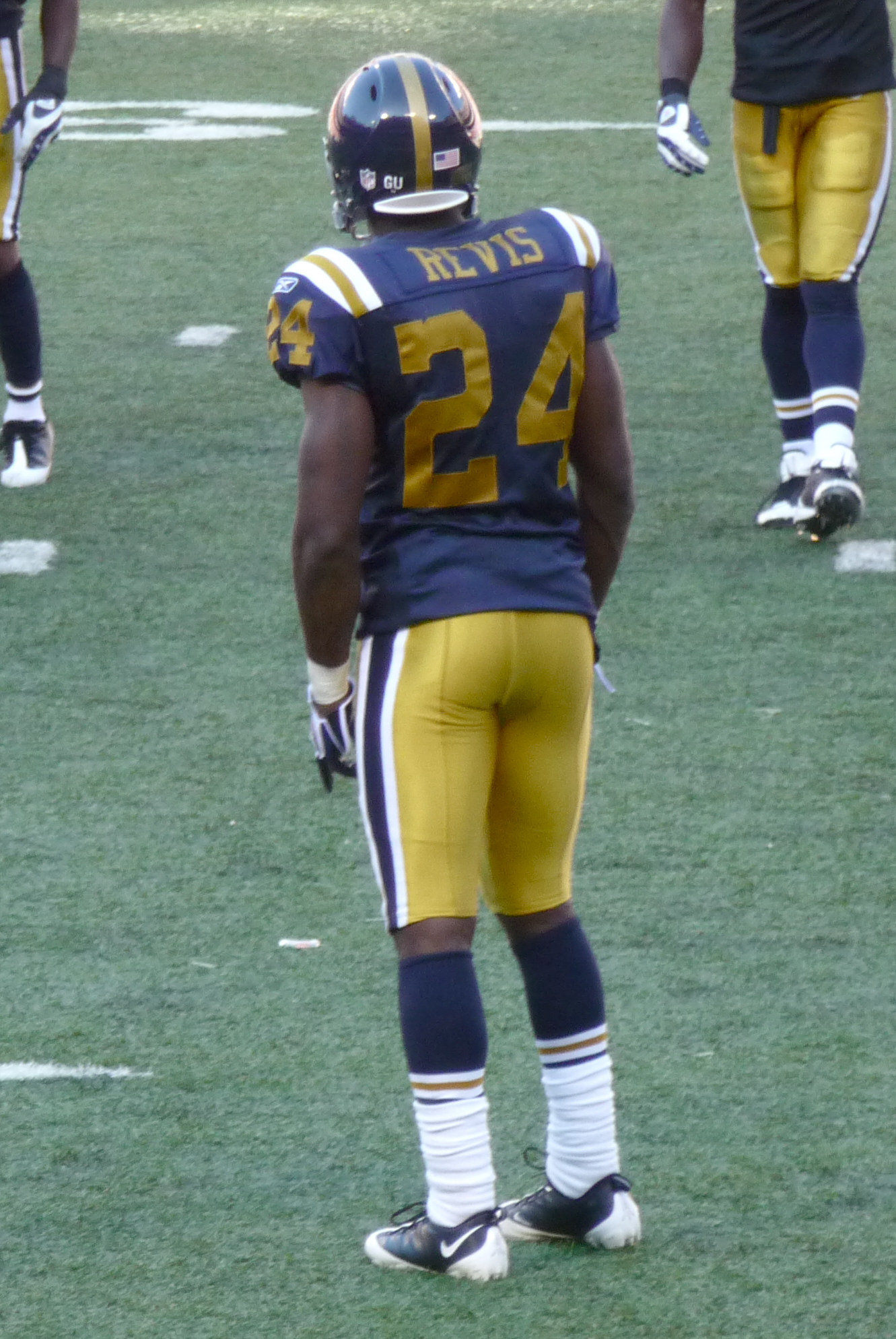 Darrelle Revis · Cornerback (2007-2012, 2015)
"Revis Island" shutdown corner and first-ballot Hall of Famer (Class of 2023); the best cornerback of his era. No. 24 not reissued.
Photo: Wheels897, public domain (Wikimedia Commons)
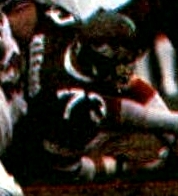 Joe Klecko · Defensive lineman (1977-1987)
Anchor of the "New York Sack Exchange," 1981 NFL Defensive Player of the Year, and the only player selected to the Pro Bowl at three different defensive line positions. Hall of Famer (Class of 2023); No. 73 retired.
Photo: Jeno's, public domain (Wikimedia Commons)
- Mark Gastineau · Defensive end (1979-1988)
The flamboyant "Sack Dance" star, 1982 Defensive Player of the Year, and franchise sack leader; set the then-NFL single-season record with 22 sacks in 1984. Ring of Honor.
 Nick Mangold · Center (2006-2016)
Seven-time Pro Bowl center and heart of the line that reached two AFC title games; Ring of Honor. Died October 25, 2025, at 41 from complications of kidney disease.
Photo: Anthony Quintano, CC BY 2.0 (Wikimedia Commons)
 Wayne Chrebet · Wide receiver (1995-2005)
Undrafted Hofstra walk-on turned "Mr. Third Down"; franchise's second-leading receiver (580 catches) and beloved everyman. Ring of Honor.
Photo: Tech. Sgt. Armando Vasquez (NJDMAVA/PA), public domain (Wikimedia Commons)
Record book
- Passing yardsJoe Namath (27,057)
- Passing TDsJoe Namath (170)
- Rushing yardsCurtis Martin (10,302)
- Receiving yardsDon Maynard (11,732)
- ReceptionsDon Maynard (627)
- SacksMark Gastineau (74.0 official (107.5 including unofficial 1979-81 totals))
- InterceptionsBill Baird (34)
- PointsPat Leahy (1,470)
Team Tips
Playing As
Build to win with defense and the running game. Glenn's staff emphasizes a physical, run-first offense, the 2025 Jets averaged 128.5 rushing yards per game (7th in the NFL), behind a young, ascending offensive line and RB Breece Hall, paired with a more balanced play-action passing approach under OC Frank Reich and QB Geno Smith. On defense, favor an aggressive, front-four-driven scheme that prioritizes winning the line of scrimmage and situational, disguised pressure, backed by an overhauled veteran secondary led by safety Minkah Fitzpatrick.
Playing Against
The Jets' offense is the fundamental weakness, in 2025 they were the NFL's worst passing offense and became the first team in NFL history to record zero interceptions in a season. Attack by loading up to stop the run, forcing the Jets into obvious passing situations, and daring an unstable quarterback room to beat you through the air. After trading away All-Pros Sauce Gardner and Quinnen Williams during 2025, the defense relies on stabilizing veterans rather than stars, so attack a thinner front and an unproven set of blitzers.

Coaching · Aaron Glenn
Head coach entering his second season. Hired January 22, 2025, Glenn is a former Jets first-round pick (1994) and three-time Pro Bowl cornerback who came from four seasons as Detroit's defensive coordinator. After a 3-14 debut, he overhauled his staff, hired Frank Reich as OC, and is taking over defensive play-calling himself in 2026, a make-or-break year in which he opened the offseason atop multiple 'hot seat' lists.
Photo: New York Jets, CC BY 3.0 (Wikimedia Commons)
Coming soon
- Playbook Matches
- Key Plays & Audibles
Upgrade to Team Hub Rookie
- Salary cap breakdown
- Depth chart analysis
- Roster needs & scheme fit
- Cut candidates & 5-year outlook
- Full sortable roster