Team Hub

NFC South
New Orleans Saints
Team Snapshot
The New Orleans Saints are a franchise in transition: a proud Super Bowl-winning organization now rebuilding around a young core and coach Kellen Moore, entering 2026-2027 aiming to end a playoff drought that dates to Drew Brees's final season in 2020.
Franchise Difficulty
How hard this franchise is to run well: where the team stands, what the roster gives you, what the cap allows, and what you hold in the draft.
A debilitating $107.6M dead-cap burden (second-most in the league) squeezes a roster carrying glaring holes at cornerback, defensive tackle, and linebacker around a first-time starting quarterback, leaving the franchise short on both spending flexibility and established difference-makers to overcome those gaps quickly.
Star Players
Scheme Fit
The schemes this team is set to run in-game, and how its roster grades in them.
- West Coast Zone RunoffensivePassable
- Base 3-4defensivePassable
Build the playbook for this roster.
Playbook Genius ranks the schemes that fit the New Orleans Saints and builds a playbook and call sheet around them.
Salary Cap
Crippled by $107.6M in dead money right now, the Saints are one year away from breathing room, with $55.9M in projected cap space next season.
26 contracts expiring
Depth Chart
Madden Tools Analysis
Six starting spots have weak depth behind the starter.
Draft Capital
Six picks this draft and three first-rounders banked over the next three years give New Orleans genuine rebuild fuel despite the cap crunch.
- Acquired: Round 6 from Chargers, this draft
- Acquired: Round 7 from Cowboys, next draft
- Acquired: Round 7 from Patriots, next draft
- Acquired: Round 6 from Texans, next draft
- Traded away: Round 6 to Patriots, this draft
- Traded away: Round 7 to Broncos, this draft
- Traded away: Round 7 to Texans, next draft
- Traded away: Round 6 to Cowboys, next draft
Team Ratings
The roster's clearest strength is its skill-position trio of Olave, Etienne, and McCoy, while cornerback is the weakest spot by a wide margin, ranking 31st in starter quality and 30th in depth league-wide.
Strengths
- C
- LG
- WILL
- FS
- LEDGE
Weak spots
- CB
- DT
- LT
- MIKE
- RG
Offense
Defense
Special teams
Roster Needs
- CBhigh
The Saints rank 31st in starter quality and 30th in depth at cornerback, making it the single most urgent position on the roster.
- DThigh
New Orleans ranks 30th in DT starter quality, and cutting Davon Godchaux or Nathan Shepherd only deepens a group already thin on proven contributors.
- LThigh
Kelvin Banks Jr is the starter at 78 overall but ranks 24th among LT starters league-wide, and the backup behind him is Asim Richards at just 64 overall.
- MIKEhigh
Pete Werner starts at 75 overall but ranks 28th at the position, and the two backups, Danny Stutsman and Jaylan Ford, are both below 70 overall.
- RGlow
Cesar Ruiz holds the job at 76 overall and ranks 23rd at starter quality, a low-severity need that free cap space next year could address.
- SSlow
Jonas Sanker starts at 76 overall and ranks 21st, a manageable weakness given Julian Blackmon provides solid secondary depth behind him.
Cut Candidates
5-Year Outlook
The Saints are a roster in transition built around a handful of genuine stars and a wave of young contributors, but weighed down by the league's second-largest dead-cap figure of $107.6M and only $15.4M in current cap room. Tyler Shough steps into the starting role for the first time, and while Chris Olave at 88 overall and Travis Etienne Jr at 85 give him real weapons, the defense has critical gaps at cornerback and defensive tackle that will test any young signal-caller. Chase Young and Kaden Elliss anchor the linebacker and edge groups, though Elliss is entering the late stage of his career and succession there must be addressed. Cameron Jordan, even further along in his career, still starts at REDGE but cannot be counted on as a multi-year centerpiece. The saving grace is the cap picture one year out: $55.9M in projected room next season (14th in the league) means this situation improves sharply if the front office manages the roster wisely this year. Kelvin Banks Jr at 22 and Christen Miller at 22, along with Jonas Sanker and Jordyn Tyson, give the team young building blocks, but the volume and severity of current needs mean this is a team that must prioritize ruthlessly before it can genuinely contend.
5-Year Plan
Year 1Cut the fat, patch the holes
- Release Davon Godchaux, Nathan Shepherd, Jordan Howden, Kevin Austin Jr, Treyton Welch, and William Sherman to reclaim available cap space and clear dead roster spots.
- Use the six picks in this draft class, spread across rounds 1 through 6, to target cornerback and defensive tackle depth, the two positions ranked bottom-five league-wide.
- Give Tyler Shough a full season as starter while letting Chris Olave and Travis Etienne Jr carry the offensive load and establish a functional identity.
Year 2Spend smart with room to breathe
- Leverage the projected $55.9M in cap room next season to sign at least one proven cornerback, addressing the 31st-ranked starter quality at the position.
- Target a starting-caliber MIKE linebacker in free agency or through the draft to upgrade Pete Werner's 75 overall and the 28th-ranked starter slot.
- Continue developing Kelvin Banks Jr, Christen Miller, Jonas Sanker, and Jordyn Tyson, all 24 or younger, as the cornerstones of the next competitive window.
Year 3Build the defense around the young core
- Establish Christen Miller and Bryan Bresee as the long-term DT rotation, reducing reliance on veterans who will no longer be cost-effective to retain.
- Begin succession planning at WILL behind Kaden Elliss, who cannot be counted on as a multi-year defensive centerpiece at this stage of his career.
- Evaluate Tyler Shough's trajectory and, if needed, use the three first-round picks accumulated over the three-year window to address quarterback if the position demands it.
Year 4Contend or commit to the next cycle
- With Chase Young, Olave, Etienne, Banks, and Sanker all in prime windows, determine whether the roster is close enough to add the remaining missing starters via free agency.
- Plan for life after Cameron Jordan at REDGE, where Carl Granderson and Chris Rumph II will need to step into larger roles or be replaced by this point.
- Ensure dead-cap commitments from the current era are fully cleared, giving the front office the flexibility to make aggressive moves at the trade deadline or in free agency.
Year 5Compete for the division
- With the dead-cap hangover resolved and the young core fully matured, make a legitimate playoff push built around the Star-trait nucleus of Olave, Etienne, Chase Young, and Shough.
- Commit long-term to whichever cornerback and linebacker additions from seasons 1 and 2 proved themselves, locking in the defensive identity for the next era.
- Use any remaining draft capital to fill depth and rotational spots rather than starting positions, a sign the rebuild has succeeded.
Full Roster
| Player | Pos | OVR | Age | Dev |
|---|---|---|---|---|
| Age 26 | WR | 88 | 26 |  |
| Age 29 | C | 87 | 29 | |
| Age 27 | HB | 85 | 27 | |
| Age 31 | WILL | 83 | 31 | |
| Age 27 | LEDGE | 83 | 27 | |
| Age 29 | FS | 81 | 29 | |
| Age 29 | TE | 80 | 29 |  |
| Age 26 | QB | 80 | 26 | |
| Age 29 | LG | 79 | 29 | |
| Age 29 | REDGE | 79 | 29 | |
| Age 37 | REDGE | 79 | 37 | |
| Age 33 | LS | 79 | 33 | |
Franchise History
The Saints were awarded to New Orleans on November 1, 1966, All Saints' Day, and began play in 1967 as the NFL's 16th franchise, founded by John W. Mecom Jr., David Dixon, and the city. Rookie John Gilliam returned the opening kickoff of the first regular-season game (Sept. 17, 1967) 94 yards for a touchdown, but the team lost and spent two decades in futility, going 20 consecutive seasons without a winning record. The nadir was the 1-15 campaign of 1980, when disgusted fans began wearing paper bags over their heads and calling the team the 'Aints.' One early bright spot: on November 8, 1970, Tom Dempsey booted a then-record 63-yard field goal to beat Detroit 19-17 on the game's final play. The franchise's first winning season and playoff berth came in 1987 under coach Jim Mora, powered by the 'Dome Patrol' linebacker corps (Rickey Jackson, Sam Mills, Pat Swilling, Vaughan Johnson). The first playoff win did not arrive until January 2001, the team's 34th season. The defining era began in 2006, when the Saints hired coach Sean Payton and signed free-agent QB Drew Brees months after Hurricane Katrina devastated New Orleans and the Superdome in 2005. The era peaked in the 2009 season: a 13-0 start and a 31-17 win over the Indianapolis Colts in Super Bowl XLIV (Feb. 7, 2010), with Brees named MVP. The title was later shadowed by 'Bountygate,' the 2012 revelation of a pay-for-injury bounty program that drew unprecedented NFL sanctions. Two gut-punch playoff moments bookend the late-Brees years: the 'Minneapolis Miracle' that ended the 2017 divisional playoff, and the 'NOLA No-Call' in the January 2019 NFC Championship Game, when uncalled pass interference helped the Rams win in overtime. Brees retired after the 2020 season, and the franchise has not returned to the playoffs since.
Notable figures
 Drew Brees · Quarterback (2006-2020)
The greatest player in franchise history; Super Bowl XLIV MVP, franchise leader in passing yards/TDs, and a Pro Football Hall of Fame Class of 2026 inductee.
Photo: Tammy Anthony Baker, CC BY 2.0 (Wikimedia Commons)
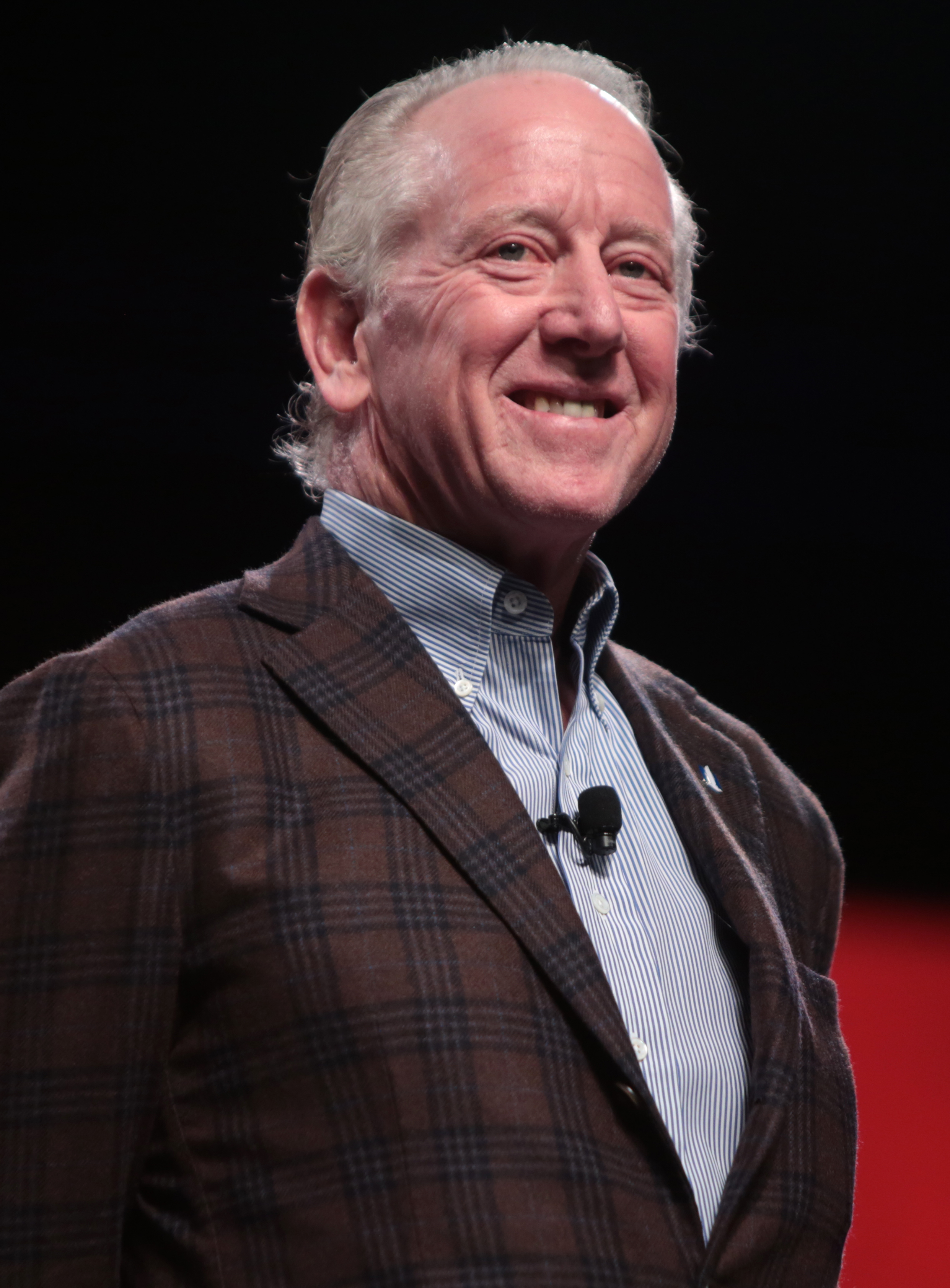 Archie Manning · Quarterback (1971-1982)
Beloved face of the early franchise, two-time Pro Bowler, and patriarch of the Manning football family; inaugural Saints Hall of Fame and Ring of Honor member.
Photo: Gage Skidmore, CC BY-SA 3.0 (Wikimedia Commons)
- Rickey Jackson · Linebacker (1981-1993)
Dome Patrol anchor and the first player primarily a Saint enshrined in Canton (2010); a franchise all-time leader in tackles and forced fumbles.
 Willie Roaf · Offensive tackle (1993-2001)
Dominant left tackle, 11-time Pro Bowler, and Pro Football Hall of Famer (2012).
Photo: U.S. Army (Spc. Karah Cohen), public domain (Wikimedia Commons)
- Sam Mills · Linebacker (1986-1994)
Undersized (5-9) leader of the Dome Patrol; posthumously inducted into the Pro Football Hall of Fame (2022).
 Deuce McAllister · Running back (2001-2008)
Former franchise rushing leader and fan favorite; Saints Hall of Fame (2012).
Photo: John Seb Barber, CC BY 2.0 (Wikimedia Commons)
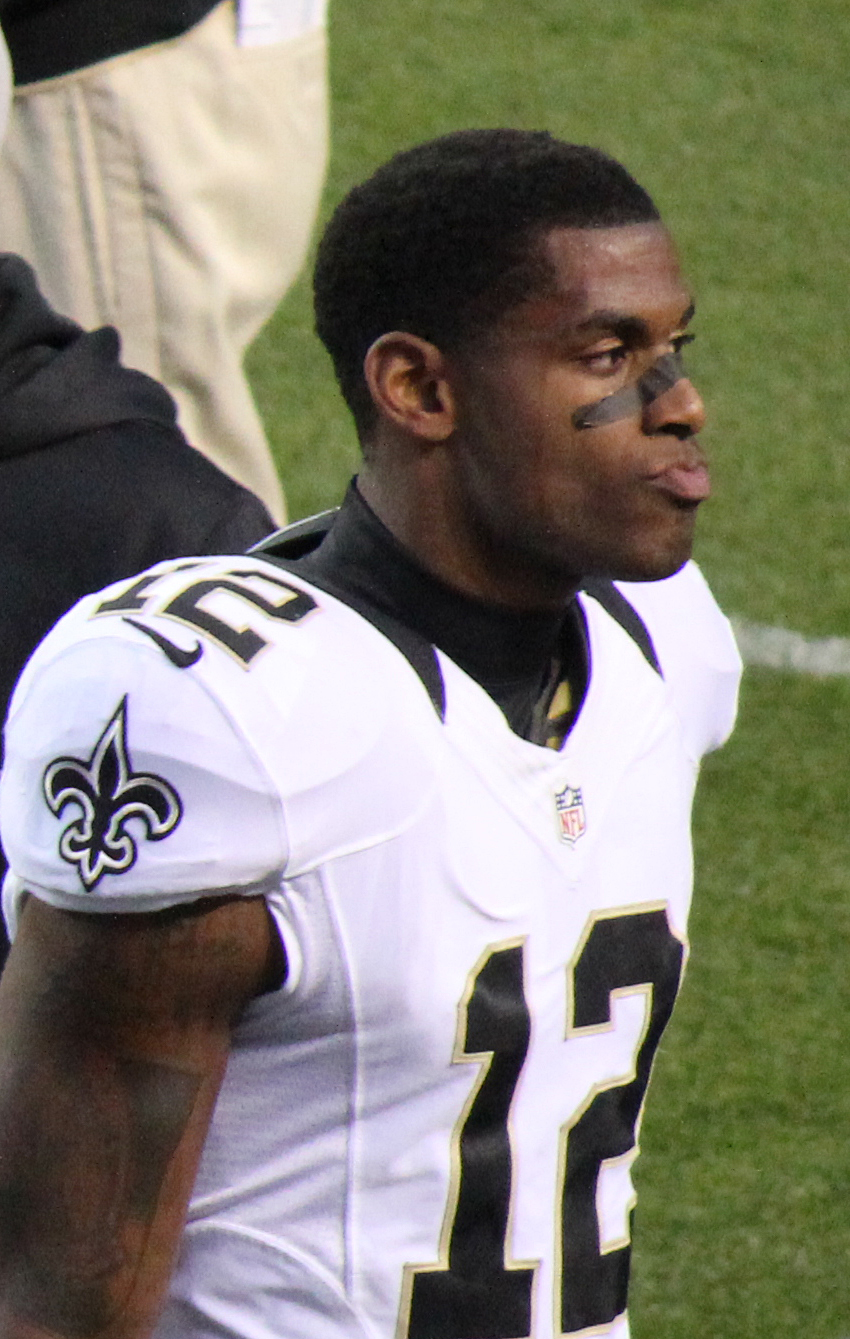 Marques Colston · Wide receiver (2006-2015)
A seventh-round steal who became the franchise's all-time leader in receptions, receiving yards, and receiving TDs.
Photo: Jeffrey Beall, CC BY-SA 3.0 (Wikimedia Commons)
 Sean Payton · Head coach (2006-2021)
Architect of the Super Bowl XLIV championship and the winningest coach in franchise history (161-97 including playoffs).
Photo: All-Pro Reels, CC BY-SA 2.0 (Wikimedia Commons)
 Tom Benson · Owner (1985-2018)
Bought the team in 1985 and kept it in New Orleans after Katrina; Saints Hall of Fame and Ring of Honor member.
Photo: U.S. Navy, public domain (Wikimedia Commons)
 Morten Andersen · Kicker (1982-1994)
Franchise all-time scoring leader (1,318 points) and Pro Football Hall of Famer (2017).
Photo: Samjudge, CC BY 2.0 (Wikimedia Commons)
 Alvin Kamara · Running back (2017-present)
2017 Offensive Rookie of the Year and the franchise's all-time leading rusher; still on the roster entering 2026.
Photo: EuphoricOrca, CC BY-SA 4.0 (Wikimedia Commons)
 Cameron Jordan · Defensive end (2011-present)
Eight-time Pro Bowler and the franchise's all-time sack leader (132); re-signed for a 16th season.
Photo: Jeffrey Beall, CC BY-SA 3.0 (Wikimedia Commons)
Record book
- Passing yardsDrew Brees (68,010)
- Passing TDsDrew Brees (491)
- Rushing yardsAlvin Kamara (7,250)
- Receiving yardsMarques Colston (9,759)
- ReceptionsMarques Colston (711)
- SacksCameron Jordan (132)
- InterceptionsDave Waymer (37)
- PointsMorten Andersen (1,318)
Team Tips
Playing As
Lean on a run-oriented offense built around Alvin Kamara and additions like Travis Etienne while developing young quarterback Tyler Shough. The 2025 defense under coordinator Brandon Staley was much improved, allowing 4.84 yards per play, the best single-season mark by a Saints defense since 1997, so play situational, disciplined football and use the loud home dome environment as a genuine edge.
Playing Against
Attack early, recent Saints teams have been crippled by slow starts, with opponents scoring first in 15 of 17 games in 2025 and New Orleans outscored 122-29 in the opening quarter. Their special teams ranked among the NFL's worst by DVOA, so press for field-position and return advantages, and pressure the young quarterback to expose passing-game inconsistency.

Coaching · Kellen Moore
Head coach entering 2026-2027 (hired early 2025, entering his 2nd season). A former Boise State record-setting QB and NFL backup, Moore rose as an offensive play-caller with the Cowboys and Chargers and was the Philadelphia Eagles' offensive coordinator when they won Super Bowl LIX before taking the Saints job. His first Saints team went 6-11; he emphasizes team chemistry and 'weathering the storm,' and after assembling one of the franchise's strongest free-agency classes in years, he enters 2026 with Coach of the Year buzz.
Photo: Kevind810, CC BY-SA 3.0 (Wikimedia Commons)
Coming soon
- Playbook Matches
- Key Plays & Audibles
Upgrade to Team Hub Rookie
- Salary cap breakdown
- Depth chart analysis
- Roster needs & scheme fit
- Cut candidates & 5-year outlook
- Full sortable roster