Team Hub

NFC West
Arizona Cardinals
Team Snapshot
Entering 2026-2027, the Arizona Cardinals are a rebuilding team hitting the reset button, coming off a franchise-record 14-loss season (3-14), they have a brand-new offensive-minded head coach in Mike LaFleur, a new quarterback room after moving on from Kyler Murray, and a young talent core they hope can climb out of the NFL's toughest division, the NFC West.
Franchise Difficulty
How hard this franchise is to run well: where the team stands, what the roster gives you, what the cap allows, and what you hold in the draft.
A 31st-ranked starting quarterback in Jacoby Brissett hands you one of the weakest signal-callers in the league, while the roster simultaneously carries critical holes at left edge, defensive tackle, cornerback, and right tackle, a $59.3M dead-cap burden ranks among the heaviest in the league, and a thin young dev-trait pool offers limited internal solutions.
Star Players
Scheme Fit
The schemes this team is set to run in-game, and how its roster grades in them.
- West Coast Zone RunoffensiveGood
- Tampa 2defensivePassable
Salary Cap
Arizona carries $59.3M in dead money, one of the heaviest burdens in the league, but $37.9M in current room and a projected $123.0M available next season give the front office a real financial reset coming fast.
30 contracts expiring
Depth Chart
Madden Tools Analysis
Six starting spots have weak depth behind the starter.
Draft Capital
Arizona holds seven picks in the upcoming draft, all in the first round, and three first-rounders across the next three years, giving a rebuilding team rare resources to accelerate its timeline.
Team Ratings
The roster's clearest strength is its tight end and offensive line interior anchored by McBride, Johnson, and Froholdt, while quarterback is the weakest spot by a significant margin with Brissett starting on a unit ranked 31st leaguewide.
Strengths
- SS
- TE
- C
- LG
- REDGE
Weak spots
- CB
- DT
- LEDGE
- QB
- RT
Offense
Defense
Special teams
Roster Needs
- CBhigh
Arizona's cornerback group ranks 28th in starters and 22nd in depth, with Garrett Williams, Will Johnson, and Max Melton forming an unproven trio that needs an upgrade.
- DThigh
The defensive tackle position ranks 27th in starters and 29th in depth, leaving Walter Nolen III and Andrew Billings as a thin and inconsistent pairing inside.
- LEDGEhigh
Zaven Collins starts at left edge but the position ranks 27th, and with Eku Leota as the primary backup, quality depth is a critical concern.
- QBhigh
Jacoby Brissett starts under center with the position ranked 31st leaguewide, making quarterback the most glaring roster hole on this team.
- RThigh
Jedrick Wills Jr. holds the starting right tackle spot but the position ranks 31st among starters, exposing a serious vulnerability on the right side of the line.
- WILLhigh
Cody Simon starts at WILL linebacker on a unit that ranks 30th at that spot, with little proven depth behind him to cover for any shortfall.
- HBmedium
Despite ranking 24th in starters, Arizona's backfield depth ranks second overall thanks to Jeremiyah Love, Tyler Allgeier, and James Conner providing impressive positional depth.
- RGmedium
Chase Bisontis starts at right guard and the unit ranks 24th, but at just 22 with a Star dev trait he has meaningful upside to improve that standing.
- WRmedium
The receiver group ranks 26th in starters and 24th in depth, with Michael Wilson and Marvin Harrison Jr. as a promising but still-developing top pair.
- FSlow
Andrew Wingard and Dadrion Taylor-Demerson man free safety, a spot that ranks 23rd leaguewide, representing a low-severity gap with some addressable depth already on hand.
Cut Candidates
5-Year Outlook
The Cardinals are a team caught between a promising young core and a roster riddled with critical gaps. Trey McBride at tight end is a generational asset, and Paris Johnson Jr. gives the offense a true franchise left tackle at 25. Jeremiyah Love, a 21-year-old Superstar halfback, adds a long-term backfield pillar. But those pieces are orbiting a quarterback situation that ranks near the bottom of the league, with Jacoby Brissett holding the starting job ahead of Gardner Minshew II and Carson Beck. The defensive line needs significant investment at both tackle and left edge, and the cornerback group is thin from starter to depth. Budda Baker remains an elite safety but is entering the late stage of his career, meaning the team must identify his long-term successor in the coming seasons. The $59.3M dead-cap figure constrains moves this year, but with $123.0M in projected cap room next season Arizona has a genuine financial runway to address multiple holes in one offseason. The seven picks in the upcoming draft, including three first-rounders over the next three years, give the front office real tools to accelerate a rebuild around the young core.
5-Year Plan
Year 1Clear the deck, find a quarterback
- Release Dante Stills, Eku Leota, Joey Blount, and L.J. Collier to recover over $7M in clean cap space and open roster spots at positions of need.
- Use the five available picks this season to target a franchise quarterback and a starting-caliber left edge rusher to address the two most critical holes on the roster.
- Leverage the $37.9M in current cap room to sign a veteran upgrade at right tackle, replacing the 31st-ranked starter situation around Jedrick Wills Jr.
Year 2Build around the young core
- Commit to Jeremiyah Love as the featured back and design the offense around his Superstar development window alongside Trey McBride.
- Use the $123.0M in projected next-year cap room to sign multiple starters at cornerback and defensive tackle, addressing the two highest-depth-chart needs on defense.
- Evaluate Marvin Harrison Jr., Will Johnson, and Chase Bisontis, all 24 or younger with Star dev traits, for contract extensions that lock in the young core.
Year 3Develop the trenches, find Budda's successor
- Walter Nolen III, a 22-year-old Superstar DT, should be the focal point of a defensive line now needing him to take a starring role as veteran depth ages out.
- Begin the transition plan at strong safety, as Budda Baker will be deep into the late stage of his career and the team needs Kitan Crawford or another option ready to step in.
- With committed salary dropping to $126.4M two seasons out, use the financial flexibility to extend Paris Johnson Jr. before his deal expires and protect the left tackle position long-term.
Year 4Push for contention
- With the three first-round picks accumulated over the draft cycle now developed, evaluate whether the team has a legitimate franchise quarterback and make a win-now move if so.
- Isaac Seumalo and Hjalte Froholdt will be well past their current ages by this point, so plan for interior line succession using younger options like Chase Bisontis.
- With committed salary falling to $81.6M three seasons out, use the cap flexibility to add proven veteran contributors at corner and linebacker to round out a contending roster.
Year 5Compete for a championship
- McBride, Love, Johnson Jr., and Nolen III should represent a core capable of anchoring a Super Bowl run if the quarterback question has been answered in prior seasons.
- Use any remaining draft capital and cap space to fill the last positional gaps on the offensive and defensive lines, targeting the championship window before the core ages.
- Reassess the roster's dev-trait distribution and identify any Star or Superstar players signed or developed over the plan period who can extend the competitive window beyond year five.
Young core
Full Roster
| Player | Pos | OVR | Age | Dev |
|---|---|---|---|---|
| Age 26 | TE | 99 | 26 |  |
| Age 30 | SS | 90 | 30 | |
| Age 25 | LT | 86 | 25 |  |
| Age 29 | REDGE | 85 | 29 |  |
| Age 30 | C | 83 | 30 | |
| Age 21 | HB | 82 | 21 | |
| Age 26 | WR | 82 | 26 | |
| Age 26 | HB | 81 | 26 |  |
| Age 28 | MIKE | 81 | 28 | |
| Age 31 | HB | 80 | 31 | |
| Age 32 | LG | 80 | 32 | |
| Age 22 | DT | 78 | 22 | |
Franchise History
The Cardinals are the oldest continuously operating professional football team in the United States, tracing to 1898 when Chicago contractor Chris O'Brien organized the Morgan Athletic Club on the city's South Side. The club took the "Cardinals" name around 1901 after O'Brien described faded, second-hand University of Chicago maroon jerseys as "cardinal red." In 1920 the team became a charter member of the American Professional Football Association (renamed the NFL in 1922), making the Cardinals and the Chicago Bears the only two surviving charter franchises still operating. The team was awarded the 1925 NFL title (still disputed by Pottsville Maroons supporters) and won the 1947 NFL Championship 28-21 over the Philadelphia Eagles behind the famed "Dream Backfield," then lost a snowbound 1948 rematch 7-0, the franchise's only two championships and now the longest active title drought in North American major pro sports (78 seasons). The franchise has called three cities home: Chicago (1920-1959), St. Louis (1960-1987), and Arizona since 1988, being renamed the "Arizona Cardinals" in 1994. In St. Louis they won NFC East titles in 1974 and 1975 under Don Coryell but never won a playoff game there. The Arizona high point came in the 2008 season, when 37-year-old Kurt Warner led the team to Super Bowl XLIII, a 27-23 last-minute loss to the Pittsburgh Steelers, and Arizona won a franchise-best 13 games in 2015 under Bruce Arians. Never relocated in more than a century under continuous Bidwill-family ownership (begun in 1932 under Charles Bidwill; Michael Bidwill is the current owner).
Notable figures
 Larry Fitzgerald · Wide receiver (2004-2020)
The franchise's greatest player and one of the most productive receivers in NFL history; holds franchise records for receptions (1,432), receiving yards (17,492) and touchdowns (121), with career yardage and receptions ranking second all-time behind Jerry Rice. Pro Football Hall of Fame Class of 2026.
Photo: Jeffrey Beall, CC BY 3.0 (Wikimedia Commons)
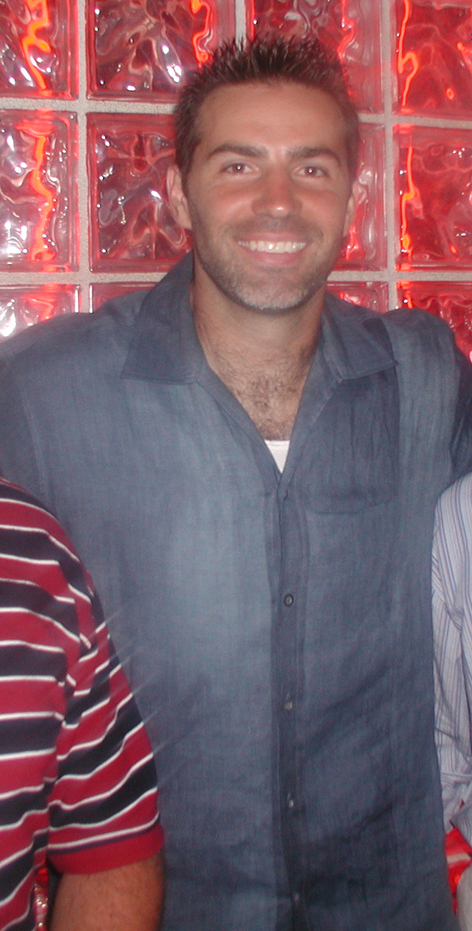 Kurt Warner · Quarterback (2005-2009)
Hall of Fame quarterback who led the 2008 team to its only Super Bowl appearance; an undrafted-to-two-time-MVP career and Super Bowl XXXIV MVP.
Photo: U.S. Air Force, public domain (Wikimedia Commons)
 Charley Trippi · Halfback/quarterback (1947-1955)
Hall of Fame "Dream Backfield" star; scored two touchdowns (a 44-yard run and a 75-yard punt return) in the 1947 championship win and remains a defining figure of the Cardinals' title era.
Photo: Unknown author, public domain (Wikimedia Commons)
 Ernie Nevers · Fullback (1929-1931)
Charter Pro Football Hall of Fame inductee (1963). On Nov. 28, 1929 he scored all 40 of the Cardinals' points (six rushing TDs, four extra points) in a 40-6 win over the Bears; his single-game records for rushing TDs (six) and points (40) are the oldest individual records in NFL history.
Photo: Underwood & Underwood, public domain (Wikimedia Commons)
 Larry Wilson · Safety (1960-1972)
Hall of Fame free safety who popularized the safety blitz; the franchise's all-time interceptions leader (52) and a 30-plus-year franchise executive. His No. 8 is retired.
Photo: Glendale Stamps, public domain (Wikimedia Commons)
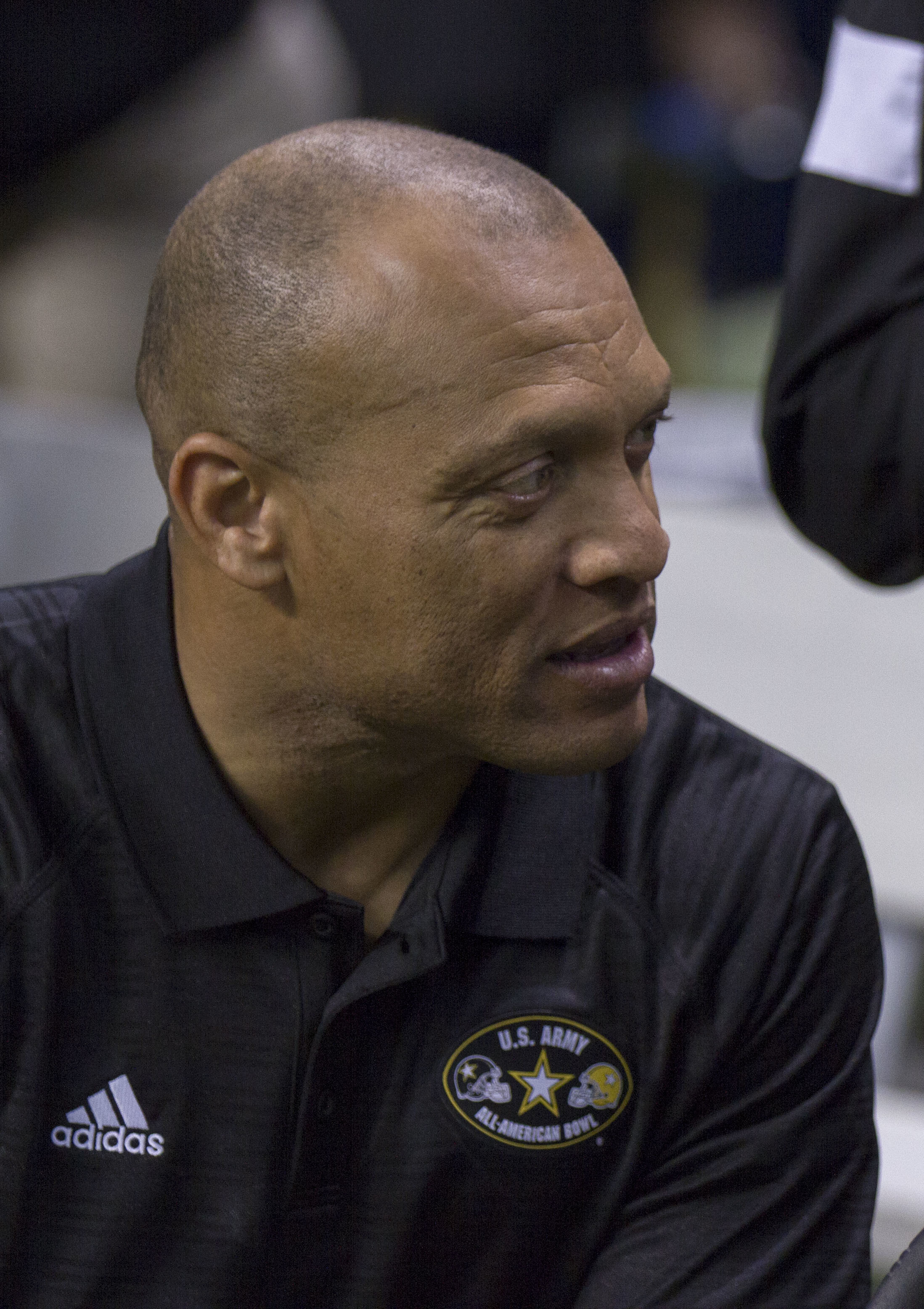 Aeneas Williams · Cornerback (1991-2000)
Hall of Fame cornerback (inducted 2014); an eight-time Pro Bowler and one of the premier ball-hawking defensive backs of the 1990s during the Phoenix/Arizona era.
Photo: Spc. James Larimer, U.S. Army, public domain (Wikimedia Commons)
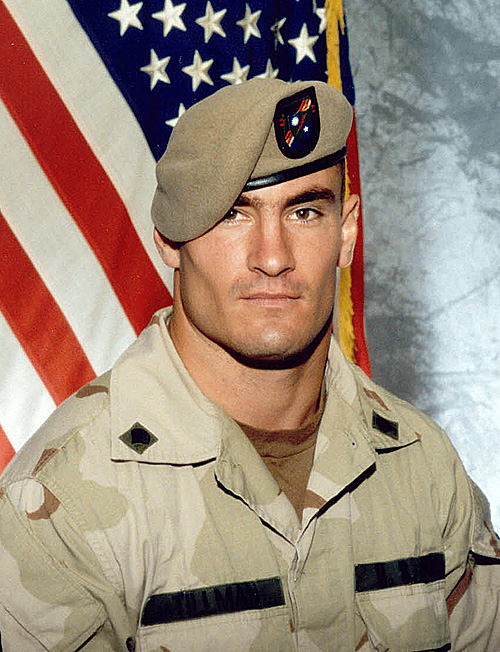 Pat Tillman · Safety (1998-2001)
Turned down a $3.6M Cardinals contract to enlist in the Army Rangers after 9/11 and was killed by friendly fire in Afghanistan in 2004; his No. 40 is retired and he endures as a national symbol of sacrifice.
Photo: U.S. Department of Defense, public domain (Wikimedia Commons)
- Jim Hart · Quarterback (1966-1983)
The franchise's all-time passing leader (34,639 yards, 209 TD); a durable four-time Pro Bowler who quarterbacked the mid-1970s "Cardiac Cards" division winners.
Record book
- Passing yardsJim Hart (34,639)
- Passing TDsJim Hart (209)
- Rushing yardsOttis Anderson (7,999)
- Receiving yardsLarry Fitzgerald (17,492)
- ReceptionsLarry Fitzgerald (1,432)
- SacksChandler Jones (71.5 (sacks official since 1982))
- InterceptionsLarry Wilson (52)
- PointsJim Bakken (1,380)
Team Tips
Playing As
Run LaFleur's Shanahan/McVay-derived offense, heavy pre-snap motion, condensed formations, one-cut outside/wide-zone rushing, bootlegs, jet sweeps, and play-action from under center. Lean on rookie RB Jeremiyah Love (No. 3 overall) paired with Tyler Allgeier and James Conner, feature elite pass-catching TE Trey McBride, and scheme WRs Marvin Harrison Jr. and Michael Wilson into advantageous looks. On defense, deploy the 3-4 anchored by safety Budda Baker, edge rusher Josh Sweat (12 sacks in 2025), and a young, deep cornerback group (Will Johnson, Denzel Burke, Max Melton).
Playing Against
Attack the quarterback play, Jacoby Brissett is a stopgap, so force Arizona into obvious passing downs and make the QB win from the pocket. The offensive line is unsettled at guard and right tackle, so interior pressure and disrupting the zone-run timing pay off. Arizona finished 29th in points allowed in 2025 (488 points, 28.7 per game), so balanced, explosive offenses can test the secondary's depth and a pass rush that leans heavily on Sweat.

Coaching · Mike LaFleur
Hired Feb. 1, 2026 on a five-year contract as the 45th head coach in franchise history, the 38-year-old LaFleur is a first-time NFL head coach from the Kyle Shanahan/Sean McVay coaching tree (Rams OC 2023-2025; Jets OC 2021-2022; 49ers passing-game coordinator 2017-2020) and the younger brother of Packers head coach Matt LaFleur. His philosophy: a disciplined, run-oriented, motion-heavy wide-zone offense emphasizing clean pre-snap operation, with LaFleur calling plays himself. He replaces Jonathan Gannon, fired after the 3-14 2025 season.
Photo: Thomson200, CC0 (Wikimedia Commons)
Coming soon
- Playbook Matches
- Key Plays & Audibles
Upgrade to Team Hub Rookie
- Salary cap breakdown
- Depth chart analysis
- Roster needs & scheme fit
- Cut candidates & 5-year outlook
- Full sortable roster