Playbooks
Scheme Playbook
Multiple D Defense
SchemeDefenseOverview
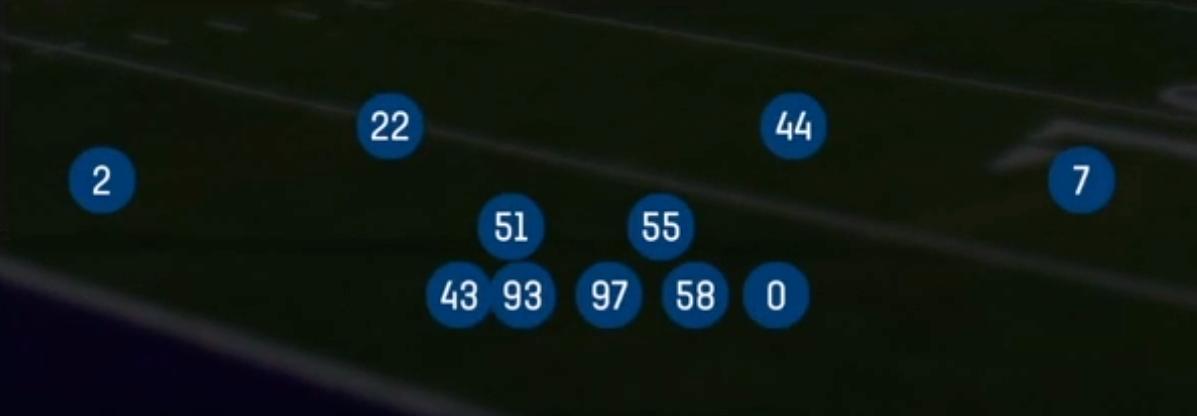
Multiple D Defense is the biggest defensive scheme playbook in the game: 304 plays across 9 formations and 21 sets, larger than every one of the other defensive scheme books. It is built for sub package defense against spread offenses. Nickel carries 126 plays (41%) across 6 sets, and Dime adds 60 plays (20%) across 3 sets, so over 60% of the book lives in five and six defensive back looks. Personnel groups range from Nickel 4-2-5, Big Nickel 4-2-5 and Nickel 3-3-5 to Dime 4-1-6 and Big Dime 3-2-6, which lets you match three and four receiver sets without leaving your core scheme.
The rest of the book supplies base and specialty fronts. You get 39 plays of 4-3, 21 of 3-4, 18 of 2-4-5, 15 of Quarter (Big Quarter 3-1-7), 13 of Goal Line Defense across 3 sets including a 6-2-3 grouping, and 6 each of 5-2 and Prevent. The 5-2 appears in only 15 of the game's 236 playbooks, so a Base 5-2 run stop look is something most opponents rarely have to diagnose. The tagged concepts cover Run Stop, Blitz, LB Blitz, Pinch, Line Stunt, Zone Coverage, Man Coverage, Cover 1, Cover 1 Hole, Cover 3 and Cover 3 Sky. That is a single-high foundation with pressure and front games layered on top.
Choose Multiple D Defense if you want one book that can run both a 4-3 and a 3-4 base, dip into a rare 5-2 on short yardage, and still spend most snaps in deep Nickel and Dime menus. You give up the specialization of a book built around one front. In exchange you get the widest set of personnel answers in any defensive scheme playbook, which matters most in head-to-head play where opponents flip personnel to hunt mismatches.
Scheme Fit
Multiple D Defense wants a secondary deep enough to field five and six defensive backs, meaning at least two slot corners with strong man coverage and safeties who can play deep single-high or rotate down for Cover 1 Hole and Cover 3 Sky. Up front it rewards edge rushers who can win in a four-man Nickel front plus a stout nose or interior tackle for the 3-4 and 5-2 looks, and a rangy linebacker who can stay on the field in Dime 4-1-6. It fits the head-to-head or franchise player who subs by personnel every snap and wants the widest set of front and coverage answers in one defensive scheme book.
Example Plays from this Playbook


Find plays by concept, not by formation
Search every playbook by tag and personnel grouping, not just Multiple D Defense.
Strengths
- Six Nickel sets and 126 Nickel plays give you the deepest sub package menu among defensive scheme books, so you can stay in Nickel against 11 personnel all game and still vary Cover 1, Cover 1 Hole, Cover 3 Sky, pinch and stunt calls without repeating a look.
- Three Dime sets, including Dime 4-1-6 and Big Dime 3-2-6, let you answer empty and 10 personnel with a sixth defensive back instead of leaving a linebacker exposed on a slot receiver in man coverage.
- Having both 4-3 and 3-4 base fronts in one book means you can flip fronts by personnel or by opponent tendency, and change which gap your nano blitz attacks without switching playbooks.
- The Base 5-2 set shows up in only 15 of 236 playbooks, so on short yardage it gives you a front with extra linemen stacked across the line that most opponents have not repped against, making their run checks and inside zone reads less reliable.
- Quarter (Big Quarter 3-1-7) and Prevent packages give you dedicated two minute and end of half coverage shells, so you are not forced to drop a Nickel call into deep zones and hope your hard flats hold.
Weaknesses
- The 5-2 and Prevent carry only 6 plays each, so an opponent who sees the 5-2 on short yardage a few times can predict the pressure and coverage behind it and adjust with play action or quick outside throws.
- The 3-4 has just 21 plays across 2 sets. If you want to live in a 3-4 base against heavy personnel, you will cycle through a thin menu and give a patient opponent tendencies to key on.
- With 61% of the book in Nickel and Dime, you spend a lot of snaps light in the box, and power runners out of 12 or 21 personnel can lean on your sub packages if you are slow to sub into 4-3 or Goal Line Defense.
- The tagged coverage concepts center on Cover 1, Cover 1 Hole and Cover 3 variants. Two-high shells are not among the highlighted concepts, so smart opponents will attack single-high weak spots with seams, deep crossers and flood concepts.
- The book is huge, and 304 plays across 21 sets can bloat your audible package. Players who do not trim it down end up calling plays without knowing which ones hold up against specific route combos.
Usage Tips
Build your base audible package in Nickel 4-2-5: pair a Cover 1 Hole man call, a Cover 3 Sky zone, a pinch or line stunt pressure and a Cover 1 blitz, then use it on 1st and 10 and 2nd and medium against 11 personnel.
On 3rd and 7 or longer, and against empty sets, sub into Dime 4-1-6 or Big Dime 3-2-6 so every eligible receiver draws a defensive back. Show Cover 1 pre snap and rotate to Cover 3 with coverage adjustments to bait hot routes.
When the offense comes out in 21 or 22 personnel on 1st and 10 or 2nd and short, switch to Base 4-3 run stop calls or the Base 3-4, and use LB Blitz calls to shoot the A gaps against inside zone.
Save the Base 5-2 for 3rd and 1, 4th and short and red zone inside the 5. Because it appears in so few playbooks, call it sparingly so opponents never get enough reps to build a check against it, then lean on the 6-2-3 Goal Line Defense grouping for true goal line snaps.
In the final two minutes, when protecting a lead, use Big Quarter 3-1-7 on 2nd and long and Prevent only on the final snap or two, since the 6 Prevent plays are easy to read if you overuse them.
Formations in this playbook


Upgrade to Playbooks Rookie
- Filter every play by tag and concept
- Personnel groupings
- Premium play analysis