Playbooks
Scheme Playbook
Cover 2 Defense
SchemeDefenseOverview
The Cover 2 Defense playbook is a two-high shell book built around keeping the ball in front of you, rallying to the catch, and forcing offenses to drive the field in small chunks. Its concept list starts with Cover 2, Tampa 2 and Quarters, then adds Cover 1, Cover 1 Hole, Cover 1 Robber, Press Man and Line Stunt calls. That lets you disguise single-high man pressure behind the same pre-snap alignments you use for your base zone. At 163 plays across 6 formations and 12 sets, it sits on the leaner side of the six defensive scheme playbooks. The menu is focused rather than bloated, which makes it easier to learn every look and build a tight audible package.
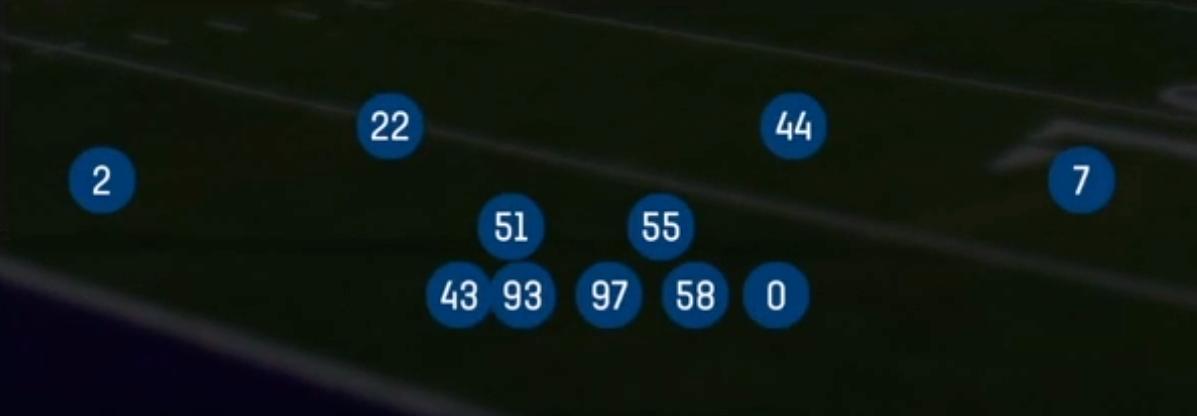
The book is heavily sub-package oriented. Nickel carries 72 plays (44%) across three sets, including both Nickel 3-3-5 and Nickel 4-2-5 personnel, so nearly half of your calls put five defensive backs on the field. Base 4-3 adds 39 plays (24%) across three sets for run downs and heavy personnel. Dime 4-1-6 (18 plays) and Big Quarter 3-1-7 (15 plays) cover passing downs. Goal Line Defense in 6-2-3 personnel (13 plays across three sets) and a 6-play Prevent set handle the edges of the game.
Choose the Cover 2 Defense playbook if you want a modern, pass-first defense that spends most snaps in Nickel. The appeal is that you keep a 4-3 base on hand without committing to a three-safety or odd-front identity. It suits players who win by limiting explosives, baiting throws into Tampa 2 and Cover 2 windows, and mixing in Cover 1 Robber or Press Man. Those man calls punish offenses that have started pre-snap reading two high safeties as automatic zone.
Scheme Fit
The Cover 2 Defense playbook wants a rangy, fast Mike linebacker who can carry the seam in Tampa 2, two cornerbacks with strong zone and press ratings to hold up in both Cover 2 and Press Man, and at least one safety with high play recognition to run Cover 1 Robber. You also need a four-man rush with good finesse and power moves, since most pressure comes from Line Stunt calls rather than exotic blitzes. It fits patient, disciplined players who prefer to live in Nickel, force underneath throws, and win with coverage disguise and user-controlled defenders rather than all-out pressure.
Example Plays from this Playbook


Find plays by concept, not by formation
Search every playbook by tag and personnel grouping, not just Cover 2 Defense.
Strengths
- Nickel depth is the backbone: 72 plays across three sets, including both Nickel 3-3-5 and Nickel 4-2-5. You can stay in five-DB personnel against 11 personnel all game and still toggle between a three-man and four-man front without subbing out of your nickel package.
- The concept mix inside the same shells lets you disguise coverage. Tampa 2, Cover 2 and Quarters share looks with Cover 1 Hole, Cover 1 Robber and Press Man, so offenses that hot route slants or quick outs against a two-high read can get jumped by a robber or pressed at the line.
- The 39-play 4-3 base across three sets gives you a legitimate answer to 12 and 21 personnel without leaving the book's identity. You can play Cover 2 and Cover 3 with seven in the box on early downs and use Line Stunt calls to create interior pressure without blitzing.
- Passing-down coverage stacks deep, with Dime 4-1-6 (18 plays) and Big Quarter 3-1-7 (15 plays). You can flood the field with seven DBs on 3rd and long and play Quarters or Cover 4 over the top while user-controlling a safety or the lone linebacker in the hole.
- A compact 163-play size makes the book easy to master. With only 12 sets, you can learn every play's assignments, set a full audible package from Nickel, and know exactly which calls pair with coverage shading and zone drop adjustments.
Weaknesses
- The heavy Nickel lean (44%) is exploitable by power run teams. If an opponent goes 12 or 21 personnel and forces you into the 39-play 4-3 menu, you are working from far fewer calls and your tendencies become easier to read.
- Goal Line Defense has 13 plays split across three sets, so short-yardage looks are thin on each individual set. Opponents who live in goal line and short-yardage packages can cycle through their calls faster than you can vary fronts.
- Dime and Big Quarter each exist as a single set. Against empty or trips-heavy passing attacks, your seven-DB and six-DB answers come from one alignment each, which makes alignment-based pre-snap reads easier on 3rd and long.
- Pressure is built mostly around Line Stunt calls and Cover 1 man blitzes, not a deep dedicated pressure package. Players who rely on nano blitz setups or overload pressure from multiple fronts will find fewer options than in more aggressive schemes.
- The two-high identity leaves the seams and deep middle vulnerable if your Mike is slow. Offenses that attack Tampa 2 and Cover 2 with four verticals or dig-post combos can stress the hole every time they read a two-high shell.
Usage Tips
Build your main audible package around the Nickel sets. Use a Nickel 4-2-5 Cover 2 or Tampa 2 call as your default against 11 personnel on 1st and 10, and keep a Cover 1 Robber or Press Man call from the same set on the audible wheel so you can check into man when you see a quick-game formation.
Switch to the 4-3 sets on 2nd and short or whenever the offense shows two backs or two tight ends. Pair a Cover 3 call with a Line Stunt call so you can play the run with seven in the box without giving up your deep coverage.
On 3rd and 7 or longer, go to Dime 4-1-6 for Cover 1 Hole or Cover 2 looks, and to Big Quarter 3-1-7 on 3rd and 12 or longer or in two-minute situations. Play Quarters or Cover 4 there and user the robber or hole defender to take away the middle-of-field conversion throw.
Use Nickel 3-3-5 on passing downs where you want to disguise rushers. The three-man front paired with Cover 1 and Line Stunt calls lets you show a light box and then bring an extra rusher, which pressures quarterbacks who read the front instead of the coverage.
Reserve Goal Line Defense 6-2-3 for inside the 3 and 4th and inches, rotating across its three sets so the offense cannot key on one alignment. Save the lone Prevent set strictly for end-of-half Hail Mary situations.
Formations in this playbook


Upgrade to Playbooks Rookie
- Filter every play by tag and concept
- Personnel groupings
- Premium play analysis